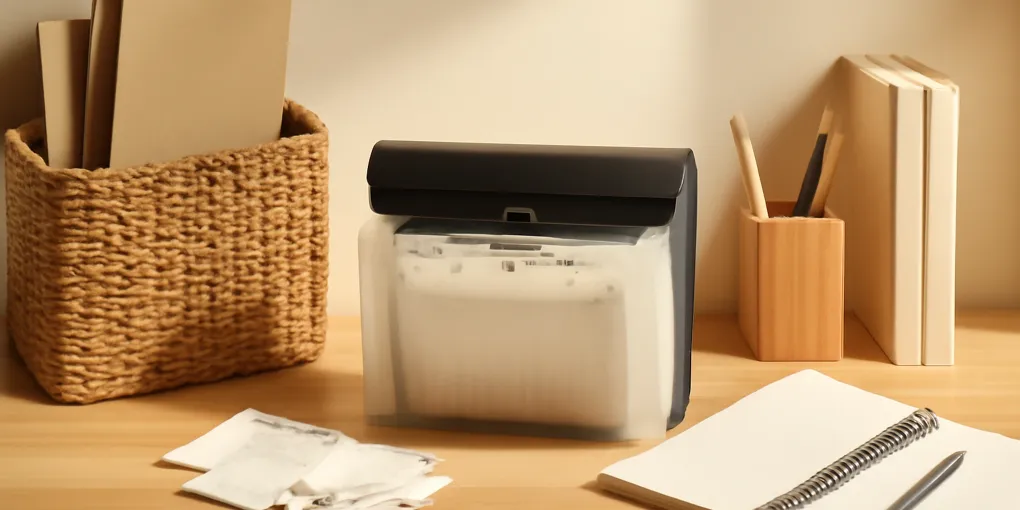
Best Receipt Organizers for Taxes, Returns, and Small Home Offices
Buyer's GuideAccordion receipt file
Best overallBest For: monthly tax and return categories
$8–18
Quick picks
| Product | Key Specs |
|---|---|
| See price on Amazon |
|
| See price on Amazon |
|
| See price on Amazon |
|
| See price on Amazon |
|
Product availability, certifications, and retailer details can change; check the current Amazon page before buying.
Receipts are small, but they create outsized paper clutter because they represent possible future needs: returns, taxes, reimbursements, warranties, and proof of purchase. The best receipt organizer does not preserve every slip forever. It helps you capture receipts quickly, decide why they matter, and remove them when they no longer matter.
Quick picks
Use this as a shortcut to the products mentioned below; verify dimensions and mounting limits against your space before buying.
- accordion receipt file organizer: See current price on Amazon
- desktop receipt inbox tray: See current price on Amazon
- portable receipt organizer wallet: See current price on Amazon
- small desktop file box receipts: See current price on Amazon
Compare current labels, prices, sellers, dimensions, and return policies before buying so the organizer fits your tax, returns, and home-office workflow.
How We Evaluated Receipt Organizers
A receipt organizer should make the first action easy. If a receipt has nowhere to go when you walk in the door, it lands on a counter.
| Criterion | Why it matters |
|---|---|
| Capture speed | Receipts need a low-friction first stop |
| Category clarity | Taxes, returns, and reimbursements should not mix indefinitely |
| Review rhythm | The system must invite weekly or monthly cleanup |
| Footprint | Small papers should not require bulky furniture |
| Capacity control | Overstuffed organizers hide decisions |
1. Accordion Receipt File — Best Overall
Search: accordion receipt file organizer (See current price on Amazon)
An accordion receipt file is the best starting point for most households. It is cheap, portable, and easy to label.
What Works
Use broad sections such as returns, tax, reimburse, warranty, and review. Monthly tabs can work for tax-heavy households, but purpose-based tabs are easier for most people.
Tradeoffs
Accordion files can become paper coffins. Put a recurring monthly reminder on your calendar to empty outdated return receipts and scan or file anything important.
2. Desktop Receipt Inbox Tray — Best Daily Capture
Search: desktop receipt inbox tray (See current price on Amazon)
A tray is not a full receipt system. It is a capture tool. That makes it valuable because capture is where many paper systems fail.
What Works
Place the tray near where receipts currently land: entry table, kitchen command center, or home-office desk. The tray should hold unsorted receipts only until the weekly review.
Tradeoffs
A tray without a review habit becomes a pile with nicer edges. Pair it with a weekly paper appointment.
3. Portable Coupon and Receipt Wallet — Best for Returns
Search: portable receipt organizer wallet (See current price on Amazon)
A small receipt wallet is useful when returns and reimbursements happen outside the house. It gives active receipts a travel home.
What Works
Keep current return receipts, gift receipts, and reimbursement slips in the wallet. Clean it out after each errand day or pay period.
Tradeoffs
Capacity is limited by design. That is a feature if you use it for active receipts only, but a problem if you try to archive a year of purchases.
4. Small Desktop File Box — Best for Mixed Paperwork
Search: small desktop file box receipts (See current price on Amazon)
A desktop file box works when receipts are mixed with warranties, school forms, medical papers, and tax records.
What Works
Use hanging folders for broad categories and a small envelope inside each folder for receipts. This prevents tiny slips from disappearing among full-size documents.
Tradeoffs
A file box takes more room and can encourage keeping too much. If receipts are your only issue, start smaller.
A Weekly Receipt Reset
- Empty pockets, bags, and the daily tray.
- Recycle receipts with no return, tax, warranty, or reimbursement value.
- Put return receipts in a portable wallet.
- Put tax or reimbursement receipts in the accordion file.
- Scan only important receipts that need digital access.
- Remove expired return receipts once a month.
Evidence-Informed Clutter Notes
Receipts create cognitive load because their value is uncertain. A category-based system reduces uncertainty: each receipt either has a reason to stay or it leaves. The system works when it supports decisions, not when it stores avoidance.
How We Score
ClutterScience uses a weighted editorial scoring model so recommendations are not based on aesthetics alone. The scoring framework for this article is:
| Factor | Weight | What we looked for |
|---|---|---|
| Research fit | 30% | The option addresses a real household clutter pattern, not just a staged-photo problem. |
| Evidence quality | 25% | The recommendation is consistent with research on visual clutter, cognitive load, habit formation, or household stress. |
| Value | 20% | The product or protocol solves a recurring friction point without requiring a full-room overhaul. |
| User signals | 15% | The option is easy to understand, easy to return to, and compatible with common home layouts. |
| Transparency | 10% | Tradeoffs, limits, and affiliate-link practices are stated plainly. |
A high score does not mean everyone should buy something. For clutter problems, the best answer is often to reduce volume first, then add the smallest tool that makes the reset easier.
Bottom Line
Start with an accordion receipt file plus one daily capture tray. Add a portable receipt wallet if returns and reimbursements are common. Use a desktop file box only when receipts must live with other household records.
The best receipt organizer is the one that makes deletion easier, not just storage prettier.
References
- Sweller, J. (1988). Cognitive load during problem solving: Effects on learning. Cognitive Science.
- Rosenholtz, R., Li, Y., & Nakano, L. (2007). Measuring visual clutter. Journal of Vision.
- Saxbe, D. E., & Repetti, R. (2010). No place like home: Home tours correlate with daily patterns of mood and cortisol. Personality and Social Psychology Bulletin.
Setup Walkthrough
Use this walkthrough before you buy or install anything for receipt organizers. The goal is to diagnose the friction first. Products help only when they make the next correct action obvious.
1. Name the failure point
Write one sentence that describes what keeps happening. Examples: receipts pile up on the counter, receipts get hidden behind other items, or receipts have no clear review time. A precise sentence prevents you from buying a broad organizer for a narrow habit problem.
2. Count the active inventory
Separate active items from archive items. Active means the item is used, reviewed, returned, or updated at least monthly. Archive means it may need to be kept but should not occupy prime space. Most failed organization systems mix these two groups, which makes the daily system feel heavier than it is.
3. Choose the smallest boundary
A boundary can be a tray, divider, folder, bin, hook, calendar appointment, or shelf zone. Choose the smallest boundary that stops spillover. If one tray solves the problem, do not buy a cabinet. If one folder handles active paperwork, do not build a thirty-tab archive.
4. Put the boundary at the point of use
The system should live where the mess starts. If clutter begins at the entryway, the capture spot belongs near the entryway. If it begins at a desk, the tool belongs at the desk. Distance creates friction, and friction creates piles.
5. Define the reset rule
Every organizer needs a rule for what happens when it fills. The rule should be visible and boring: empty weekly, review monthly, donate when the zone is full, or archive after the return window. Without a reset rule, storage simply delays clutter.
Maintenance Plan
Use a two-level maintenance plan. The daily level should take less than two minutes and only returns items to their assigned home. The weekly level should make decisions: remove extras, archive what is finished, discard what expired, and adjust labels if the category name is confusing.
For the first two weeks, do not judge the system by how pretty it looks. Judge it by these questions:
- Did the item have an obvious home?
- Could another household member understand the home without asking?
- Did the system reduce search time?
- Did it make cleanup easier at the end of the day?
- Did anything overflow repeatedly?
Repeated overflow is data. It usually means the category is too broad, the container is too small, the location is wrong, or too many inactive items are competing with active items.
When Not to Buy
Do not buy a new organizer for receipt organizers if the main problem is excess volume. First remove duplicates, expired items, damaged items, and items that belong somewhere else. A product should create a boundary for a realistic amount of inventory. It should not be asked to hide an unlimited amount of deferred decisions.
Also avoid buying when the real problem is a missing routine. If the category needs review, schedule the review before upgrading storage. A better box will not pay a bill, return a form, donate a bag, or clear a surface by itself.
Household Handoff Tips
Shared systems need plain-language labels and low-friction returns. Avoid clever names that only make sense to the person who built the system. If children, partners, roommates, or caregivers use the zone, choose labels that describe the contents or action directly. Good labels include returns, daily bags, tax receipts, school forms, chargers, and donate. Weak labels include later, misc, important, and stuff.
If the system is new, walk the household through it once. Do not give a lecture. Show where items enter, where they wait, when they are reviewed, and what full means. The simpler the explanation, the more durable the system is likely to be.
Buying Checklist
Before placing an order, confirm:
- The dimensions fit the exact shelf, drawer, door, desk, or counter.
- The material works for the room conditions, including moisture, dust, and daily handling.
- The organizer can be cleaned or emptied without disassembly.
- Replacement parts, labels, or inserts are not required for basic use.
- The product solves a repeated problem you observed, not a hypothetical future problem.
This checklist is intentionally conservative. Clutter reduction usually improves when systems are smaller, clearer, and easier to reset.
Troubleshooting
If the system still fails after a week, use a short troubleshooting pass instead of starting over. First, watch the moment when the item is supposed to return home. If the return requires moving another object, opening an awkward lid, walking to another room, or deciding between similar categories, the system has too much friction. Move the storage closer, reduce the number of categories, or remove one step.
Second, check whether the category name is too vague. Broad labels invite delay because they do not tell the next person exactly what belongs there. Replace vague labels with concrete nouns or actions.
Third, check capacity. A good home is usually no more than 70 to 80 percent full during normal use. That empty space is not wasted. It is the operating margin that lets the system absorb a busy week without collapsing.
Finally, decide whether the clutter is actually a calendar problem. Some categories need a review appointment more than a container. If the item represents a bill, return, decision, donation, or repair, give it a dated action instead of a prettier hiding place.
This extra margin matters because receipt clutter usually returns during busy weeks, not during ideal maintenance days.
Practical reader notes for best receipt organizers for taxes returns home office
Use the scoring notes above to narrow the practical choice: match the product or protocol to your space, risk tolerance, maintenance capacity, and the specific constraints described above.
For product comparisons, prioritize fit and repeat use over impressive feature lists. A cheaper item that is easy to place, clean, dose, adjust, or return often beats a premium item that adds friction. Check dimensions, serving size, material notes, warranty language, and whether replacement parts or refills are easy to find. For health and wellness topics, compare the article’s evidence notes with your own risk profile, medications, sleep schedule, training load, and clinician guidance. Stop using any protocol that creates pain, dizziness, allergic symptoms, digestive distress, or a behavior pattern that feels hard to control.
A useful first test is a two-week trial with a clear success metric. Choose one outcome that matters: fewer missed sessions, faster cleanup, less morning stiffness, better adherence, lower noise, easier travel, or a more predictable measurement routine. Keep the rest of the setup stable so you can tell whether the change helped. If the result is neutral, return or retire the item quickly instead of expanding the system around it. If it helps, document the settings, dose, location, or schedule that made it work so the benefit survives busy weeks.
Readers should also separate evidence strength from personal fit. Stronger evidence can justify trying a category, but it does not guarantee that a particular brand, accessory, or routine will be the best match. Weak or emerging evidence does not automatically make a topic useless; it means the trial should be lower cost, lower risk, and easier to abandon. This is why our recommendations emphasize transparent trade-offs, realistic setup instructions, and situations where skipping the purchase is the smarter move.
Finally, revisit the choice after the novelty period. If the product is not used, if the protocol creates more steps than it saves, or if the article’s safety caveats apply to you, the right answer may be to simplify. The goal is not to own the highest-scoring option. The goal is to solve the reader problem with the least friction and the most honest understanding of benefits, limits, and uncertainty.
Frequently Asked Questions
- Use one fast capture spot, then sort receipts weekly into taxes, returns, reimbursements, warranties, and discard.
- Keep paper only when you need proof for taxes, reimbursement, returns, or warranties. Scan important receipts if digital retrieval matters.
- It depends on the purpose. Return receipts can often go after the return window; tax-related receipts should follow current tax-record guidance from a qualified source.