Best Reusable Moving Bags for Soft Household Goods
Buyer's GuideQuick picks
VENO 2 Pack Heavy Duty Moving Bags
TICONN 6 Pack Extra Large Moving Bags
The short answer
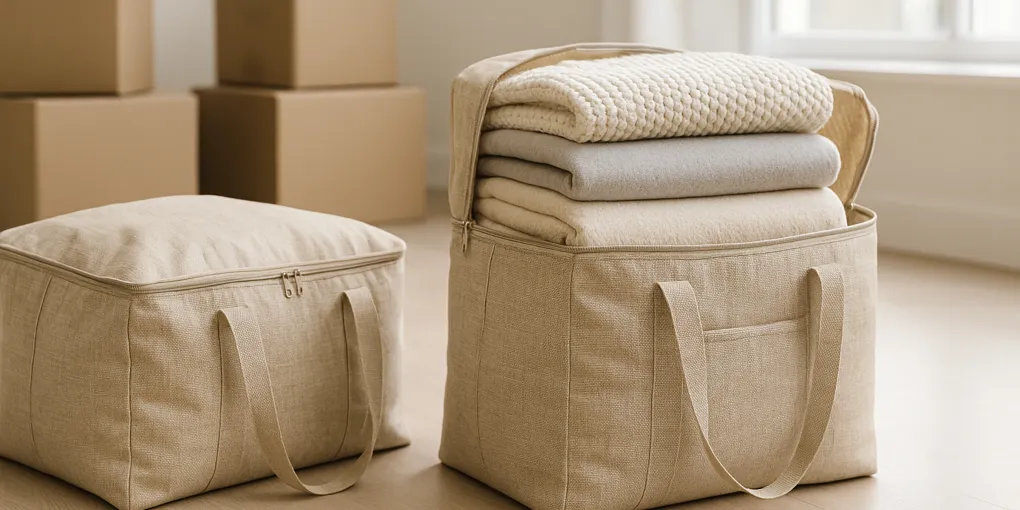
Reusable moving bags are a practical format for bulky soft household goods: clothes, linens, towels, and blankets. They fold flat between moves and let you group a soft-goods category without committing that category to a rigid box shape.
They are not a replacement for every container. For fragile, sharp, or dense contents, choose a rigid container instead. The useful first decision is the contents, then the format—not a universal product winner.
Quick picks: compare current details on Amazon
VENO 2 Pack Heavy Duty Moving Bags — two-bag option for a small soft-goods group
Consider this two-bag candidate when you are separating a limited number of soft-goods categories. Skip it if your packing plan calls for more separate bags or the current listing does not document the dimensions, included pieces, closure, and handle details you need.
TICONN 6 Pack Extra Large Moving Bags — six-bag option for several soft-goods categories
Consider this six-bag candidate when you want more separate bag slots for clothes, linens, towels, or blankets. Skip it if the exact current listing leaves a material, size, included-piece, or terms question unanswered.
Start with the container job
The decision gets easier when each container has one job. A reusable moving bag suits a soft category that can be folded or compressed into its own bag: bedding from one room, winter coats, bath towels, or a closet shelf’s folded clothes. A rigid container suits a category that calls for a different format, including fragile, sharp, or dense contents.
This is also where reusable bags differ from wardrobe moving boxes. A wardrobe box is a separate choice for clothing you plan to keep on hangers; our wardrobe moving box guide covers that format. This page focuses on folded soft household goods.
Compare the exact listing, not the product name alone
The two retained candidates offer different pack counts. That is a useful starting point, but not a verdict about how much any bag will hold or how it will perform. Before buying, open the exact current Amazon listing and confirm:
- the included bag count;
- stated dimensions and material;
- zipper or closure arrangement;
- handle configuration; and
- the current return and warranty terms.
Those checks keep a bag set tied to your category plan instead of an old listing description or a product photo. If the details do not answer a fit question, pause rather than assume a related version has the same configuration.
Use bags for the soft-goods part of a mixed move
A mixed move does not need one container type. You might reserve bags for bedding, towels, off-season clothes, and other foldable household textiles while using other containers for the rest of the move. That separation makes it easier to keep each bag’s contents clear.
Pair the bag decision with a labeling method that describes both the room and the category. Our moving box label guide is a separate guide for that handoff. If you are choosing a broader packing setup, see moving box organizers for a different container-and-labeling decision.
Make a current-listing comparison sheet
The two candidates are a two-bag VENO set and a six-bag TICONN set. Their pack counts are the clearest documented difference to begin with, but a count alone does not tell you whether the bags fit your packing plan. Treat the current Amazon listing as a product-identity check, not a shortcut to a recommendation.
Use a small comparison sheet before you order:
| Check | VENO two-bag candidate | TICONN six-bag candidate |
|---|---|---|
| How many soft-goods groups need separate bags? | Compare your list with two included bags. | Compare your list with six included bags. |
| Does the stated size fit the category you named? | Check the exact current dimensions. | Check the exact current dimensions. |
| Does the current configuration match your plan? | Check material, closure, and handle details. | Check material, closure, and handle details. |
| What would change the decision? | A missing detail, different included pieces, or terms that do not work for you. | A missing detail, different included pieces, or terms that do not work for you. |
This format keeps the comparison bounded. It does not assume either set has the same dimensions, fabric, handles, or included pieces as a similarly named listing. It also does not turn “heavy duty” or “extra large” from a product name into a performance promise. Confirm the exact listing rather than relying on those words.
Let category count lead, not a vague room label
“Bedroom” is rarely a useful bag label because it can hide several different types of contents. Break the room into soft-goods categories instead: bedding, folded clothes, towels, spare blankets, or soft seasonal items. Then decide which categories need their own bag and which can share one label.
That category count gives the two-bag versus six-bag choice a concrete job. A smaller move may only need two defined groups. A larger move may need more separation so each bag has a readable destination and contents label. The right number is the number of groups in your plan, not a claim about a bag set’s capacity or value.
If one category is clothing that you prefer to keep on hangers, do not force it into this comparison. Return to the wardrobe moving box guide and assess that separate format. Keeping the articles separate avoids treating a foldable-bag choice as an answer for hanging clothing.
Decide what would make you skip a bag set
A product name and a hero image cannot answer every purchase question. Skip either candidate when the current listing does not document the detail that matters to your plan—for example, the stated dimensions, included bag count, material, closure layout, handle configuration, or applicable retailer terms.
Also skip the bag format for any category you have already decided needs a rigid container. The point is not to convert a whole move to one style of container. It is to make the soft-goods portion easier to identify and pack as its own group.
Check retailer terms after the fit details
Once a candidate’s documented configuration matches your category plan, check the current return and warranty information on Amazon. Those details can change, and they may vary with the exact listing. Do not infer them from an older product page, a search result, or another version of a bag set.
Use the same order every time: name the soft-goods category, count the separate groups, confirm the exact configuration, then read the current retailer terms. It is a short process, but it makes the two product links useful without pretending that a moving bag is the only container a move requires.
Read the current product configuration in context
For this comparison, “current details” means facts attached to the exact model and listing you are considering. The VENO candidate and the TICONN candidate were both available when the approved product-verification workflow ran, but that check does not settle a later listing question. Open the current Amazon page before deciding whether either one belongs in your move.
Start with the title and included-piece description. Confirm that the page still names the two-bag VENO set or the six-bag TICONN set you meant to compare. Then look at the stated dimensions and material. Those are fit details, not reasons to assume a particular bag is better for every household.
Next, check the closure and handle description in the exact listing. A product photo can show a general shape, but it cannot substitute for the current product documentation when you are comparing configurations. If Amazon presents a variation selector, make sure the chosen variation is the one whose details you are reading.
Finally, review the retailer terms on that same exact page. Keeping these checks together prevents a common mismatch: using one listing’s images, another version’s specifications, and a third page’s terms to make one purchase decision. If anything is unclear, leave that candidate out of the plan until the current listing answers the question.
Pack by category, then verify the bag details
Make a brief category list before opening product pages: one bag for bedding, another for towels, or a separate bag for folded closet items. Count those categories, then compare the two-bag and six-bag options against the current documented configuration.
For each bag, use one room-and-category label rather than a vague label such as “miscellaneous.” Keep a short note of the exact product model and the Amazon details you checked, especially if a size, material, closure, return, or warranty term matters to your decision.
FAQ
What should go in reusable moving bags?
They fit a soft-goods packing plan: clothes, linens, towels, blankets, and similar foldable household textiles. Choose a rigid container when the contents need a different format.
How do I choose between a two-bag and six-bag set?
Count the soft-goods categories you want to keep separate, then compare that number with the current exact listing’s included pieces, stated dimensions, and other documented details.
Should I use moving bags instead of every box?
No. Bags and boxes can have different jobs in the same move. Choose the format based on the contents and the container arrangement you need.
What should I check on Amazon before choosing a moving bag set?
Check the exact current listing for dimensions, material, included pieces, closure and handle details, return terms, and warranty information before buying.