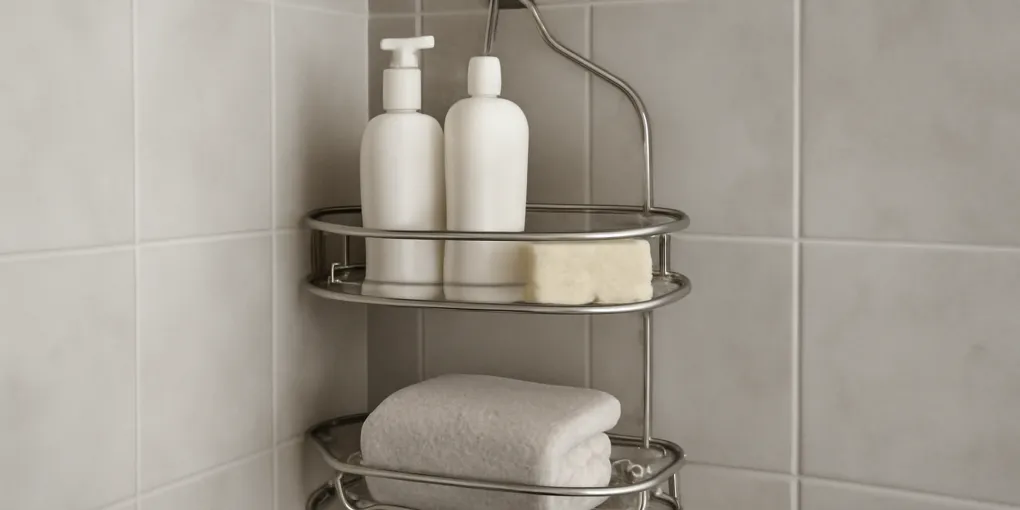
Aluminum or stainless hanging shower caddy
Best renter-safe first pickBest For: One shower head, two or three daily bottles, no drilling
$18-40
Quick picks
| Product | Key Specs |
|---|---|
| See price on Amazon |
|
| See price on Amazon |
|
| See price on Amazon |
|
Product availability, certifications, and retailer details can change; check the current Amazon page before buying.
A small shower does not need more shelves everywhere. It needs one place where the bottles you actually use can drain, stay reachable, and not fall into the tub. The wrong caddy creates a second problem: rusty corners, mildewed suction cups, and pump bottles balanced where someone can knock them down.
Start with the shower surface and bottle count, not the prettiest product photo. If the bathroom also has counter clutter, pair this with our guide to bathroom counter organizers instead of asking one shower caddy to store every grooming product in the room.
Quick picks
- Hanging rust-resistant caddy: Search Amazon for rust proof hanging shower caddy for renters with a standard shower head.
- Tension pole corner caddy: Search Amazon for tension pole corner shower caddy when several people share tall bottles.
- Adhesive corner shelves: Search Amazon for adhesive corner shower shelves for smooth tile and low-profile storage.
- Mesh shower tote: Search Amazon for quick dry mesh shower tote for dorms, shared bathrooms, and products that should leave the shower.
Choose by mounting method
| Shower condition | Best caddy type | Why it works |
|---|---|---|
| Rental with standard shower head | Hanging caddy | No drilling and easy removal |
| Tall tub corner with family bottles | Tension pole | Moves weight to the corner instead of the shower neck |
| Smooth tile, few bottles | Adhesive shelf | Keeps the shower head clear |
| Textured tile or fiberglass wall | Hanging caddy or tote | Adhesive may fail or damage the surface |
| Shared dorm or guest bath | Mesh tote | Products leave the wet zone after use |
Hanging caddies are easy to try first, but they should not pull the shower head forward or rest against the handle. Tension poles hold more, yet they need a flat corner and enough vertical pressure to stay still. Adhesive shelves can look clean but are only as good as the surface prep and load rating.
Rust and material tradeoffs
Look for aluminum, stainless steel, coated steel with clear warranty language, or durable plastic that drains well. Cheap chrome-coated wire often looks fine for a month and then rusts at joints, hooks, and welded corners. Rust is not just ugly; it stains grout and makes cleaning harder.
Plastic caddies avoid rust but can trap soap film if the shelves are solid. Choose wide drainage slots, rounded corners, and removable trays if the bathroom stays humid. Bamboo belongs outside the wet stream unless it is sealed and designed for shower use.
Drainage matters more than shelf count
A small bathroom encourages product crowding. That is how the bottom shelf turns into a wet shampoo archive. Pick fewer, larger spaces over many tiny ledges. Bottles need air around them, and bar soap needs a raised dish or slotted tray.
The EPA’s mold guidance focuses on moisture control. In a shower caddy, that means products should dry between uses and the caddy should not hold standing water against tile, caulk, or bottle bottoms. If a shelf has no drain path, it is not a good wet-zone organizer.
Safety and placement details
Do not place heavy glass bottles where they can fall into the tub. Do not hang a loaded caddy from a loose shower head. Do not let a tension pole block grab bars or shower controls. CDC fall-prevention guidance emphasizes reducing bathroom hazards; a caddy that drops bottles onto the floor works against that goal.
Households with children should keep razors, medicated washes, and small caps out of reach. HealthyChildren childproofing guidance is a useful reminder that bathroom storage still counts as household safety storage.
Bottle-count scenarios
For one adult with two bottles and a razor, a hanging caddy or one adhesive shelf is usually enough. The key is to keep the shower head, handle, and spray path clear. A caddy that holds six bottles will invite six bottles, so do not buy family-size storage for a one-person shower unless you actually rotate products weekly.
For two adults sharing a small tub shower, split products by shelf instead of by person when possible: hair care on one shelf, body wash and shaving on another, soap in a draining dish. This keeps duplicate bottles visible. If each person needs a separate routine, a mesh tote for occasional products may keep the permanent caddy from becoming crowded.
For families, bottle weight becomes the deciding factor. A tension pole or corner shelf spreads weight better than a shower-head caddy loaded with pump bottles. Keep kids’ products low enough for supervised reach but keep razors, medicated washes, and cleaning products out of the shower caddy entirely.
What to avoid
Avoid caddies that show perfectly packed sample bottles but no drainage path. A flat shelf under wet bottles leaves rings and slime. Avoid narrow hooks that dig into the shower pipe. Avoid shelves that depend on adhesive over grout lines, painted walls, stone that needs special care, or textured fiberglass.
Also avoid buying a caddy before removing old products. Expired sunscreen, nearly empty shampoo, duplicate conditioners, and hotel bottles are not storage problems. They are decision problems. The smaller bathroom gets easier when the shower holds only current-use items and one backup lives outside the wet zone.
Product details worth paying for
Pay for stable hooks, capped feet, smooth welds, and shelves deep enough for the bottles you own. A low price is less attractive if the caddy tilts every time someone presses a pump bottle. In small showers, a slightly narrower caddy that stays put is better than a wide one that blocks elbows or shower controls.
Check the return policy before installing adhesive shelves or tension poles. The only real test is your tile, your ceiling height, and your bottle weight. Keep packaging until the caddy has survived several showers, one cleaning session, and a normal restock day.
For shared bathrooms, consider two smaller zones instead of one large tower: daily shower items in the wet zone and occasional products in a dry bin under the sink. That keeps the shower from becoming the only storage location in the room.
Cleaning and maintenance
A shower caddy should be removable enough to clean. Once a week, lift bottles, rinse the shelf, and clear hair or soap paste from drainage slots. Once a month, remove the caddy if possible and clean the contact points where hooks, suction cups, or feet touch tile. Those contact points are where rust stains and mildew usually begin.
If rust appears at a weld or screw, replace the caddy before it stains grout. If adhesive shelves creep down the wall, unload them immediately rather than waiting for a crash. If a tension pole twists or slips, reset it with less weight or switch to a different mounting method.
Setup protocol
- Remove every bottle from the shower.
- Keep only products used at least weekly.
- Measure shower head clearance, corner height, and tile texture.
- Choose the lowest-risk mount that fits the surface.
- Put heavy pump bottles on the lowest stable shelf.
- Keep razors and small accessories in a separate covered or high location.
- Clean soap residue weekly so drainage holes stay open.
- Recheck after two weeks; if bottles pile on the tub ledge, the caddy is too small or the product count is too high.
Five-minute reader test
Before checkout, name the exact mounting point, the three heaviest bottles, and the cleaning path. If you cannot answer all three, the product is probably being bought because the bathroom feels crowded, not because it fits the shower. A good caddy makes the daily shower easier without hiding damp clutter.
One more check is the door or curtain path. A caddy that looks fine when the shower is empty may collide with a curtain liner, glass door, handheld sprayer hose, or bath mat routine. Test the reach path with wet hands in mind: can you grab shampoo without stepping around fallen bottles, and can you rinse the shelf without removing the whole organizer? Those details determine whether the caddy stays useful after the first week. If the product only works when perfectly staged, choose a simpler mount with fewer shelves and more clearance for everyday use and safer cleaning access. Prioritize stable drainage over decorative capacity, especially in narrow tub-shower combos.
Shower caddy FAQ
Is stainless steel always better than plastic?
Not always. Stainless or aluminum is better for open wire storage, but well-drained plastic can be easier to clean and cannot rust. Avoid coated metal when reviews mention rust at welds.
Can a suction-cup caddy hold shampoo bottles?
Treat suction cups as stabilizers, not primary support for heavy bottles. Smooth tile helps, but heat, soap film, and water can loosen them.
How many bottles should stay in a small shower?
Most small showers work better with two to five daily-use bottles plus soap. Backups, guest products, and special treatments belong in a dry cabinet.
Sources
- CDC: Preventing falls at home
- EPA: Mold cleanup in your home
- HealthyChildren: Childproofing your home
Frequently Asked Questions
- A rust-resistant hanging caddy is usually the safest first choice for renters and one-person bathrooms. A tension pole is better when several people share the shower and the corner can support it.
- Only if the lease allows adhesive products and the wall surface is smooth, clean, and dry. Test removal rules before loading shelves with glass bottles.
- Choose open wire or perforated shelves, keep bottles separated, remove empty products, and clean soap residue before it blocks drainage.