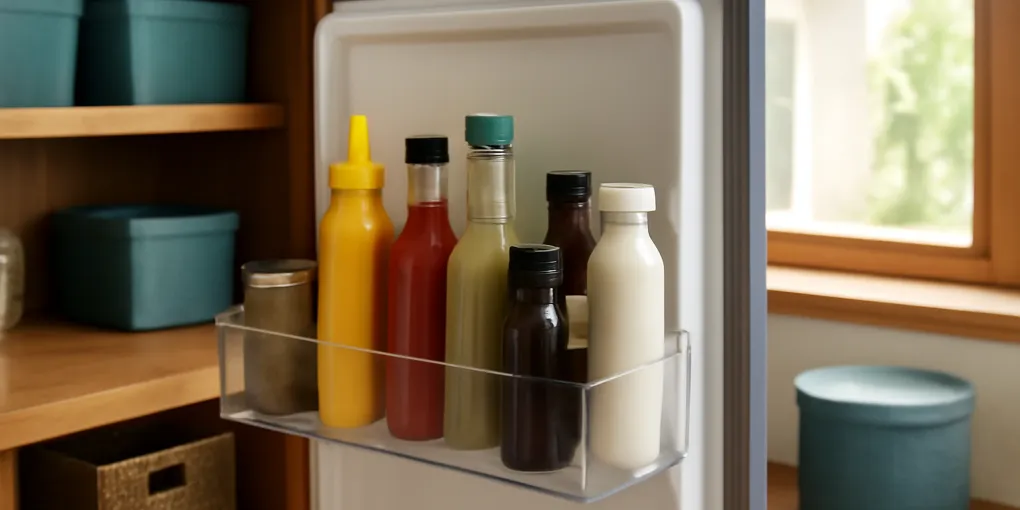
Fridge Door Condiment Bin Protocol for Less Expired Sauce Clutter
ProtocolQuick picks
| Product | Key Specs |
|---|---|
| See price on Amazon |
|
| See price on Amazon |
|
| See price on Amazon |
|
Product availability, certifications, and retailer details can change; check the current Amazon page before buying.
Fridge-door clutter is rarely caused by one bottle. It happens when sauces enter faster than they leave, duplicates hide behind taller bottles, and no one knows which jar was opened last summer. A condiment bin helps only if it supports a protocol: edit, group, date, and cap the door space.
This protocol is for households with door shelves full of mustard, hot sauce, jam, salad dressing, taco sauce, pickles, and half-used marinades. If your bigger issue is old leftovers and forgotten produce, start with why fridge clutter causes food waste. If the whole cold-storage zone needs a reset, use fridge freezer declutter protocol first.
Quick picks
- Best first product: Search Amazon for narrow clear fridge-door condiment bins.
- Best shelf alternative: Search Amazon for fridge condiment turntables.
- Best control tool: Search Amazon for washable food date labels.
- Skip buying anything until expired bottles and true duplicates are removed.
A good bin makes one category easy to lift out and review. It should not create a second layer where labels vanish or where sticky bottles can leak unnoticed for weeks.
Step 1: empty only the door
Do not begin by emptying the whole refrigerator. That creates a cold-food time problem and turns a small reset into a kitchen project. Empty the door shelves onto the counter, grouping items by category as they come out: everyday sauces, breakfast spreads, cooking sauces, pickled items, duplicate backups, and uncertain items.
The FDA’s refrigerator and freezer storage chart is a useful reminder that cold storage is still time-limited storage. Follow package labels and discard items with spoilage signs, damaged lids, or unknown opening history when safety is uncertain. Do not taste-test suspicious sauces to decide whether they stay.
Step 2: remove duplicate friction
Duplicates are the main reason the door feels full even when nothing looks individually large. Keep the most-used open bottle in the easiest lane. Put unopened backups in a pantry or backstock zone if the label allows shelf storage. If two open bottles of the same sauce exist, consolidate only when the products are identical, clean, and within safe dates; otherwise choose the fresher one and discard the other.
A narrow clear bin is helpful because it makes the duplicate count visible. One hot-sauce bin with six bottles tells a clearer story than six bottles scattered across three shelves.
Do not make a backup bin inside the door. Backup bottles belong behind the active bottle only when the door has extra space and the second bottle will be opened soon. Otherwise, keep unopened shelf-stable items in pantry backstock so the cold zone stays reserved for opened or label-required products.
Step 3: assign door zones
Use fewer zones than you think you need. Three to five is enough for most households. For example: everyday sauces on the middle shelf, breakfast spreads together, cooking sauces together, pickled jars in one heavier zone, and one short review bin for items that need a decision this week.
Heavy glass jars should sit low where possible. Tall bottles need enough clearance to lift out without tilting over neighboring items. Short jars often work better on an interior shelf turntable than in the door because they disappear behind taller bottles.
Step 4: choose the right product
Choose a narrow clear bin when the door shelf is deep enough and bottles already stand upright. The bin should slide out without scraping the shelf above. If the bin fills the entire shelf depth, labels on back-row bottles become harder to read.
Choose a lazy Susan when the problem is a wide interior shelf full of short jars. Turntables are less useful in narrow door shelves because the door rail already defines the space.
Choose washable date labels when opening dates are the real failure. Date labels are especially useful for sauces that last a while but are easy to forget. Put the date on the lid or shoulder where it remains visible from above.
Step 5: add a review cadence
Set one recurring cue: trash night, grocery day, or meal-plan day. During that cue, pull one bin, check dates, wipe sticky rings, and return only bottles that still earn door space. The goal is not a perfect refrigerator. The goal is preventing one category from quietly multiplying until the door shelf cracks or nothing fits.
If a condiment has not been used through two grocery cycles, move it to the review bin. If it still does not get used, it leaves. The door is prime real estate, not an archive of every sauce tried once.
Fridge condiment FAQ
Can I put all condiments in one bin?
Only if the household owns a very small set. Most doors work better with two or three narrow bins so breakfast spreads do not hide behind cooking sauces.
Are clear bins better than opaque bins?
For the refrigerator, yes. Clear bins make duplicates and leaks visible before they become a sticky shelf problem.
Where should unopened backups go?
Follow the product label. Shelf-stable unopened backups can often live in pantry backstock, while refrigerated products need cold storage. Do not guess when the label says refrigerate.
How does this save money?
It reduces duplicate buying. When the active sauce category is visible, shoppers are less likely to buy a third bottle because the first two were hidden.
Sources
- FDA refrigerator and freezer storage chart: https://www.fda.gov/media/74435/download
- U.S. Environmental Protection Agency, Reducing Waste: What You Can Do: https://www.epa.gov/recycle/reducing-waste-what-you-can-do
Frequently Asked Questions
- Many condiments tolerate door storage, but always follow the product label. Perishable or label-directed items may need colder interior shelves.
- They help only when paired with duplicate removal and date checks. A bin without rules becomes a removable sauce pile.
- Use three to five categories: everyday sauces, breakfast spreads, cooking sauces, backup jars, and items that need an expiration decision.
- Measure door shelf depth, clear height under the shelf above, bottle width, and the hand space needed to lift bottles out.