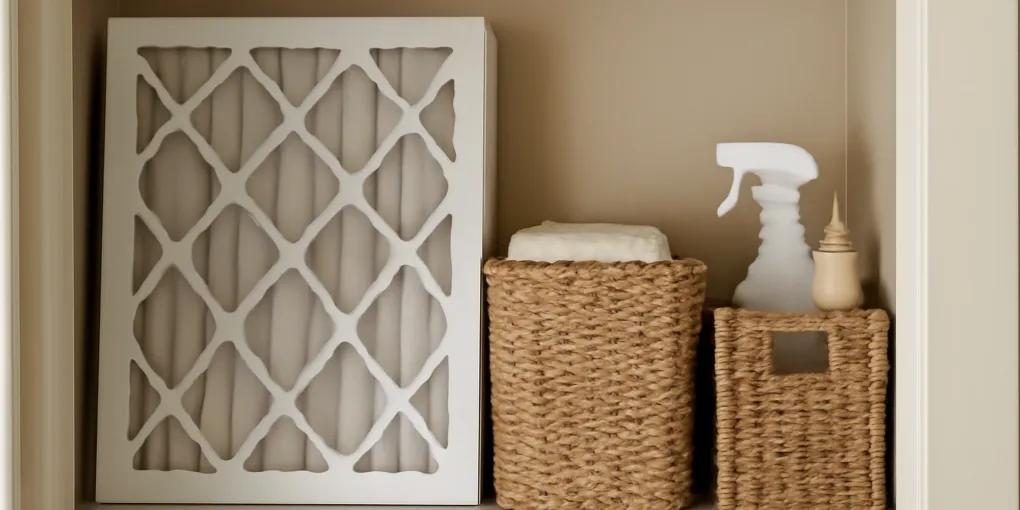
Hall Closet Filter Station Protocol: Store HVAC Filters Without Losing Sizes
ProtocolQuick picks
Upright Magazine File or Shelf Divider
★ Top pick Best for loose filter packets- Best For: Vacuum filters, range hood filters, and small replacement packs
- Look For: Width that does not bend filter media
Clear Label Pockets
Best reminder layer- Best For: Recording HVAC size, appliance model, last change date, and reorder link
- Look For: Easy card replacement and adhesive that fits the shelf edge
Shallow Utility Bin
Best for mixed small filters- Best For: Sealed small filters that would otherwise slide behind towels
- Look For: Straight sides, front label, and no lid for active replacements
A hall closet filter station prevents two common problems: the correct HVAC filter disappears behind towels, and the wrong size gets bought because nobody remembers what the return grille needs. The station is just one shelf zone with labels, dates, and upright storage that protects the filter media.
If your utility closet is already overloaded, pair this with our utility closet organization guide before adding more bins.
Quick picks and setup
- Best full-size filter support: Search Amazon for wide magazine files or shelf dividers when HVAC filters need an upright slot.
- Best reminder layer: Search Amazon for clear label pockets for size, location, and last-change cards.
- Best mixed-filter bin: Search Amazon for shallow utility bins for vacuum, range-hood, and purifier filter packs.
- Store HVAC filters upright or flat in their original packaging, and reorder from the exact size rather than memory.
Step 1: collect every filter in the house
Pull together HVAC filters, air purifier filters, vacuum filters, range hood filters, refrigerator filters, humidifier pads, and any mystery replacement packs. Put them on the floor and sort by appliance. Do not keep loose unmarked filters unless you can match the size and device.
HVAC filters deserve special treatment because bending the cardboard frame or crushing pleats can make installation sloppy. Store them where they stay dry, flat, and visible.
Step 2: create one card per equipment type
Each card should answer four questions: What size is it? Where does it go? When was it last changed? Where do we buy the correct replacement?
For HVAC, write the exact printed size from the installed filter and the location, such as upstairs return or basement furnace. For a purifier, write the brand and model. For a vacuum, write the bag or filter part number if the packaging gives one.
The EPA notes that portable air cleaners and HVAC filters can reduce some indoor airborne particles when selected and maintained properly. The maintenance part matters: a filter that cannot be found does not get changed.
Step 3: choose storage by shape
Full-size HVAC filters usually need a vertical slot or flat shelf. Do not cram them into a narrow bin that bows the frame. A shelf divider works when the closet has depth and the filters can stand without falling.
Small replacement packs belong in a shallow bin with no lid. A lid makes sense for deep storage, but active replacement parts need quick access. Keep the label on the front, not on the top.
If filters share space with cleaning products, place filters above liquids. A leaking cleaner can ruin cardboard frames and filter media.
Step 4: set the reorder trigger
Pick a simple rule: when one HVAC filter remains, reorder. For small appliance filters, reorder when the bin has only the currently installed filter plus one spare left.
Do not buy a bulk pack before you have confirmed the size in the actual grille or appliance. Rental homes, renovations, and replaced equipment can make old notes wrong.
Add the reorder source to the card only after a correct filter has been installed once. A shelf label that says 16x25x1 is helpful, but a label that says upstairs return, 16x25x1, MERV range from manual, bought from this exact listing or local store shelf is harder to misread. If two returns use different sizes, give each size its own slot and card instead of stacking them together.
For families or roommates, make the card writable. A dry-erase label pocket or replaceable index card lets the person who changes the filter update the date immediately. Without that visible handoff, the station becomes storage but not a maintenance system.
Filter station scorecard
| Factor | Weight | Score | Rationale |
|---|---|---|---|
| Research | 30% | 24/30 | The station supports a known maintenance behavior: correct filters must be available and identifiable. |
| Evidence Quality | 25% | 19/25 | EPA guidance supports filter maintenance, while storage details depend on household equipment. |
| Value | 20% | 18/20 | Labels and simple dividers are cheap compared with repeated wrong-size purchases. |
| User Signals | 15% | 12/15 | Visible dates and sizes make replacement easier for anyone in the home. |
| Transparency | 10% | 9/10 | The station organizes replacements; it does not choose the right filter rating for every HVAC system. |
What not to store here
Do not store wet mop heads, paint, pesticides, or strong-smelling chemicals in the same bin as filters. Do not stack heavy objects on HVAC filters. Do not remove filters from protective packaging until installation.
Avoid turning the station into a general hardware shelf. Batteries, light bulbs, tape, and appliance manuals may live nearby, but they should not bury the filter card.
Monthly reset
Once a month, check the card, count spares, and confirm the oldest package is used first. If a device leaves the house, remove its filters. If a new purifier or vacuum arrives, add its model number before the first replacement is needed.
This two-minute habit prevents the messy version of filter maintenance: opening three closets, finding two wrong sizes, and buying another pack just in case.
Hall closet filter station FAQ
Does this replace HVAC professional advice?
No. Use your equipment manual or HVAC professional for filter rating, thickness, and change interval. The station only keeps the chosen replacement accessible and correctly labeled.
What source supports filter maintenance?
EPA indoor air guidance explains that filters and portable air cleaners can help reduce particles when properly selected and maintained: https://www.epa.gov/indoor-air-quality-iaq/guide-air-cleaners-home.
Where should the reminder live?
Put the reminder where the replacement happens: on the closet shelf edge, inside the utility closet door, or on the filter bin. A phone reminder helps, but the physical card prevents wrong-size reorders.
Frequently Asked Questions
- Store them upright or flat in the original packaging without bending the frame or crushing the media. Keep them dry and away from cleaning liquids.
- Record filter size, equipment location, model number when useful, last change date, and where replacements are bought.
- Only if the garage is dry, clean, and easy to access. A hall closet often works better because replacement reminders are visible during normal chores.