Medicine Lock Box vs Bathroom Cabinet: Which Storage Choice Reduces Risk?
Evidence ExplainerQuick picks
| Product | Key Specs |
|---|---|
| See price on Amazon |
|
| See price on Amazon |
|
| See price on Amazon |
|
Product availability, certifications, and retailer details can change; check the current Amazon page before buying.
The medicine-storage question is not whether a bathroom cabinet looks tidy. It is whether the storage choice matches the risk of the contents and the people who can access the room. A clear bin can organize bandages. It cannot make strong medicine safe in a guest-access drawer.
This explainer compares three common upgrades: a small locking medicine box, a high cabinet bin, and a weekly pill organizer. Each solves a different problem. Mixing them up is how a neat cabinet still leaves risky items within reach.
For a full date-and-disposal reset, use medicine cabinet expiration reset protocol. If the larger issue is cleaning supply access under sinks, see under sink storage safety protocol.
Quick answer
- Choose a lock box for prescriptions, sleep aids, strong pain relievers, iron-containing products, and medicines accessible to children or visitors.
- Choose a high clear bin for lower-risk adult basics when the home does not have child or visitor access concerns.
- Choose a weekly pill organizer for routine adherence, not as a security device.
- Shopping starting point: Search Amazon for locking medicine boxes.
The best setup often uses both: locked storage for riskier items and a simple high bin for first-aid supplies.
What the safety guidance changes
HealthyChildren’s childproofing guidance emphasizes keeping hazards out of reach and out of sight. Safe Kids Worldwide also stresses storing medicine up and away after every use. That changes how to evaluate organizers. The product is not successful because it groups bottles neatly; it is successful when it reduces access by the wrong person.
A bathroom cabinet is convenient, but bathrooms are shared spaces. Guests use them. Children visit them. Humidity can also make some products less ideal there, depending on label directions. A lock box placed high in a bedroom closet or linen cabinet may be less convenient but safer for higher-risk items.
Lock box: best for access control
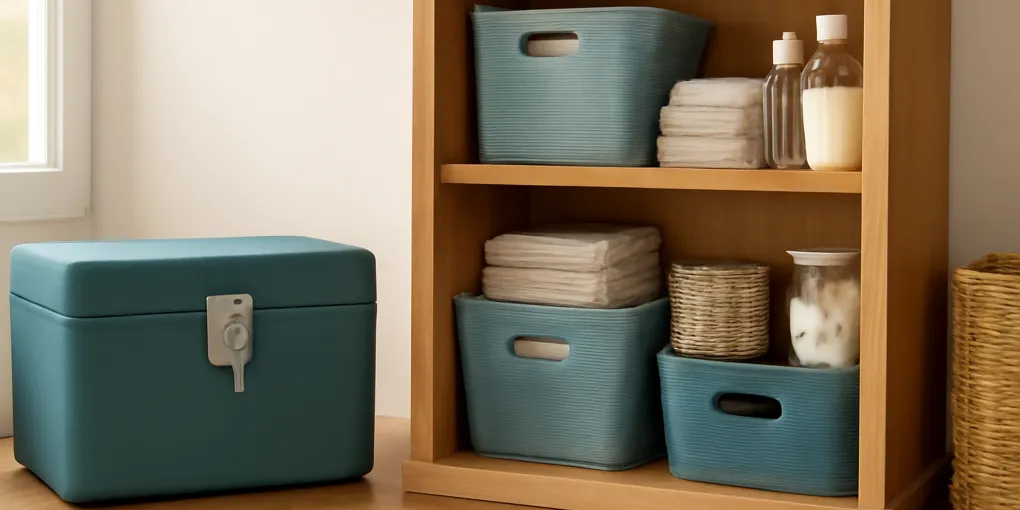
A small locking medicine box is the strongest option when the medicine itself is risky or when the room is not fully controlled. It is useful for prescriptions, controlled substances, sleep aids, certain pain relievers, iron supplements, and any medicine that should not be casually visible.
The lock is not the only feature. Size matters. A box that is too large becomes a bin for everything and gets left on the floor. A box that is too small causes overflow. Look for a size that fits the high shelf where it will actually live.
Do not store the key beside the box. Do not rely on a decorative latch. Do not assume child-resistant packaging is child-proof. The box should add a layer of access control, not replace adult attention.
High cabinet bin: best for simple adult basics
A clear high-shelf bin works for bandages, a thermometer, saline spray, sunscreen, and low-risk adult basics when the home context is simple. It helps because the whole category can be lifted down and reviewed, reducing expired clutter and duplicate buying.
The bin should live high enough that children cannot reach it and far enough from sink splashes that products stay dry. If the cabinet is in a guest bathroom, treat it as semi-public. Anything sensitive or risky belongs elsewhere.
A clear bin also makes expiration reviews easier. You can pull the bin once a month, check dates, and remove items without emptying the cabinet shelf by shelf.
Weekly pill organizer: useful but often misunderstood
A weekly pill organizer is an adherence tool. It can help an adult see whether Monday’s dose was taken. It is not secure storage. Many pill organizers are designed to open easily, which is exactly what some users need and exactly what makes them unsuitable around children or curious visitors.
If a pill organizer is necessary, fill it from safely stored medicine and keep the organizer in an adult-controlled location. If the user needs countertop visibility, the household must still account for who else can access that counter.
For shared bathrooms, choose a refill time when children are not nearby and return original bottles immediately after filling the organizer. Loose tablets, dropped lids, and half-closed organizers are exactly the kind of small, high-risk clutter this system is meant to prevent.
Search option: Search Amazon for weekly pill organizers.
Decision matrix
Use a lock box when the medicine would be dangerous in the wrong hands, when children live in or visit the home, when roommates or guests use the bathroom, or when the household has a history of bottles being left out.
Use a high clear bin when the items are low-risk, the home is adult-only, and the bin’s main job is inventory control. Choose a bin that can be lifted down with one hand and cleaned if something leaks.
Use a weekly organizer when the user needs routine support. Pair it with locked or high storage for the original bottles.
Medicine storage FAQ
Should medicine stay in the bathroom?
Not always. Follow label instructions and consider humidity, heat, and access. Many households are better served by a high closet shelf or locked bedroom storage.
What about guests’ medicine?
If guests visit with bags or medicine, keep guest bags out of children’s reach. Visitor medicine is a common blind spot because it bypasses the household’s normal storage system.
Are clear bins safe for medicine?
Clear bins are good for visibility, but they do not control access. Use them for low-risk categories or inside a high/locked zone.
What is the first cleanup step?
Remove expired, unlabeled, loose, or duplicate medicine before buying anything. Storage products should hold the safe edited set.
Sources
- Safe Kids Worldwide, Medication Safety: https://www.safekids.org/safetytips/field_risks/medication-safety
- American Academy of Pediatrics, Childproofing Your Home: https://www.healthychildren.org/English/safety-prevention/at-home/Pages/Childproofing-Your-Home.aspx
Frequently Asked Questions
- A lock box is better for higher-risk medicines, shared homes, visitors, and homes with children. A high cabinet may be enough only for low-risk items in adult-only homes.
- A pill organizer can support an adult routine, but it is not secure storage for homes where children, guests, or pets could access it.
- Store it high, out of sight, and away from humidity or heat. Do not leave the key or code where children or visitors can access it.
- Expired medicine, loose pills, unlabeled bottles, duplicate cold medicine, and any medication that would be dangerous if taken by the wrong person.