Why Cleaning Supplies Under the Sink Get Chaotic: The Clutter Science of Hazard Mixing
Evidence ExplainerQuick picks
Two Clear Handled Cleaning Bins
★ Top pick Best reset structure- Best For: Separating daily cleaners from sealed refills without hiding bottle labels
- Caveat: Not a substitute for child-resistant or locked storage
Cabinet Door Child Safety Latch
Best household-safety add-on- Best For: Homes where children or visiting children can access the cabinet
- Caveat: Hazardous products may still need a higher locked location
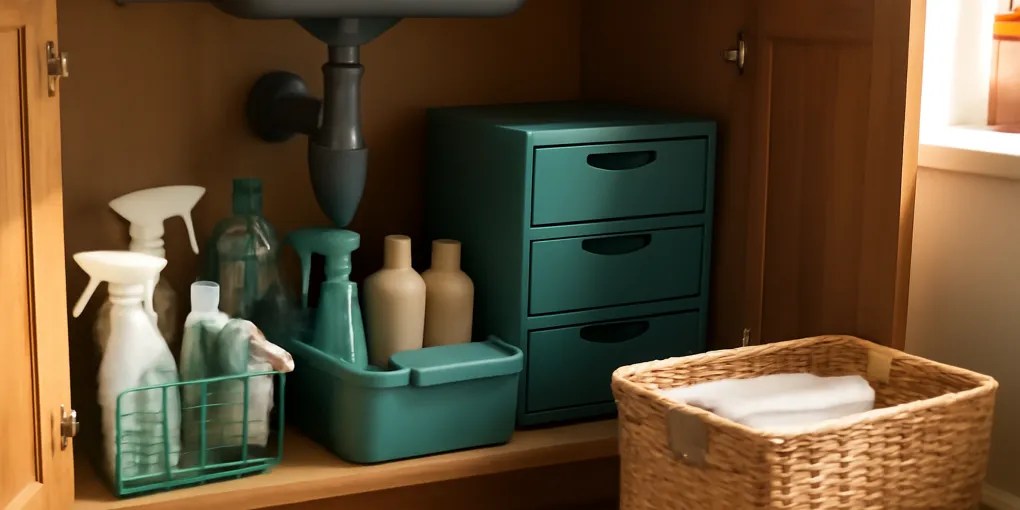
Cleaning supplies under the sink get chaotic because the cabinet combines three hard problems: hidden plumbing, similar-looking bottles, and products that should not be casually mixed. The result is not just visual clutter. It is duplicate buying, forgotten leaks, and a storage zone where everyday sponges may sit beside chemicals that deserve more control.
For a related small-zone reset, see our nightly kitchen counter reset. This explainer focuses on why under-sink cleaning mess returns and how to reset the system without turning safety into an afterthought.
Quick picks
- Structure: Search Amazon for clear handled cleaning bins so daily cleaners and sealed refills do not merge.
- Safety layer: Search Amazon for under-sink cabinet safety latches if children or visiting children can reach the cabinet.
A bin makes categories visible. A latch or locked location handles access. Do not ask one plastic organizer to solve both jobs.
The mechanism: hazard mixing plus low visibility
Under-sink cabinets are usually dark and interrupted by pipes. That makes it easy to push one more spray bottle behind the drain line and forget it. When a bottle is forgotten, the next shopping trip creates a duplicate. When duplicates accumulate, the cabinet becomes harder to inspect, so leaks and expired products stay longer.
The second mechanism is hazard mixing. Dish soap, dishwasher pods, drain products, glass cleaner, disinfectant, sponges, trash bags, pet products, and refills all feel like “cleaning stuff,” but they do not all deserve the same access level. A cluttered cabinet treats them as interchangeable.
Safer reset checks
The useful purchase is a divider that makes hazards visible and hard to mix accidentally. Check:
- Two-bin separation: keep daily bathroom supplies separate from strong cleaners or products that should not be combined.
- Leak access: bins should slide out without blocking shutoff valves or hiding damp cabinet floors.
- Child and guest control: if children can reach the cabinet, a latch or different storage location matters more than clear plastic.
The safer two-bin reset
Make one daily bin and one refill bin. The daily bin holds the few products used every week: an all-purpose cleaner, dish soap backup, sponge pack, microfiber cloths, or trash bags. The refill bin holds sealed backups and less frequent items.
Everything else must earn its location. Drain openers, strong chemicals, pesticides, medicines, and products with child warnings should not stay under the sink just because there is space. Move them to a higher or locked location when household access makes the lower cabinet risky.
The two-bin system works because it limits ambiguity. If a bottle is not daily and not a sealed refill, it needs a deliberate decision.
Why labels beat memory
People often assume clear bottles solve the problem. They help, but labels facing forward solve more. A clear bin full of backward labels is still a guessing game.
Turn every product label outward. If the front label is damaged, write the category on tape before returning it. Never decant cleaning products into unlabeled decorative bottles for under-sink storage. A pretty bottle with unknown contents is not an organizing upgrade.
Pipe and leak checks
Before reloading, inspect the cabinet floor, P-trap, supply lines, and shutoff valves. Leave enough open space to see a drip. If every inch is filled with products, the first sign of a plumbing problem may be swollen cabinet material or a smell.
Put absorbent paper goods somewhere else unless they are inside a lidded bin. A small leak can ruin paper towels, cardboard sponges, and trash bag boxes before anyone notices.
Access rules for children and guests
HealthyChildren childproofing guidance recommends keeping hazardous household items secured and out of reach. Under-sink cabinets are low, familiar, and often opened in front of children during daily routines. That makes them a poor default for hazardous products in many homes.
A child safety latch can reduce casual access, but it is not a reason to keep every chemical in a low cabinet. If a product would cause serious harm if opened, treat locked or high storage as the stronger answer.
Maintenance schedule
Do a monthly thirty-second check. Pull both bins forward, wipe the cabinet floor, face labels outward, and remove duplicates. If a cleaner has not been used in three months and is not a specific seasonal product, decide whether it belongs elsewhere or should be disposed of according to its label and local rules.
After any plumbing repair, empty and reload the cabinet. Contractors, leaks, and rushed cleanups often leave bottles in the wrong zone.
FAQ
Why do I keep buying duplicate cleaning sprays?
Because the bottle you own is hidden behind plumbing, backward labels, or unrelated products. A daily bin with labels facing forward makes the current supply visible before the next shopping trip.
Are clear bins enough if children can reach the cabinet?
No. Clear bins organize categories; they do not provide secure access control. Use a latch, higher storage, or a locked location depending on the product and household.
Should sponges and chemicals share one bin?
Prefer separate zones. Sponges, cloths, and trash bags are daily supplies. Strong cleaners, drain products, and refills need more deliberate storage and easier label inspection.
Source notes
For label-first household product safety, see EPA guidance: https://www.epa.gov/pesticide-labels/keep-safe-read-label-first. For childproofing and household hazards, see HealthyChildren: https://www.healthychildren.org/English/safety-prevention/at-home/Pages/Childproofing-Your-Home.aspx.