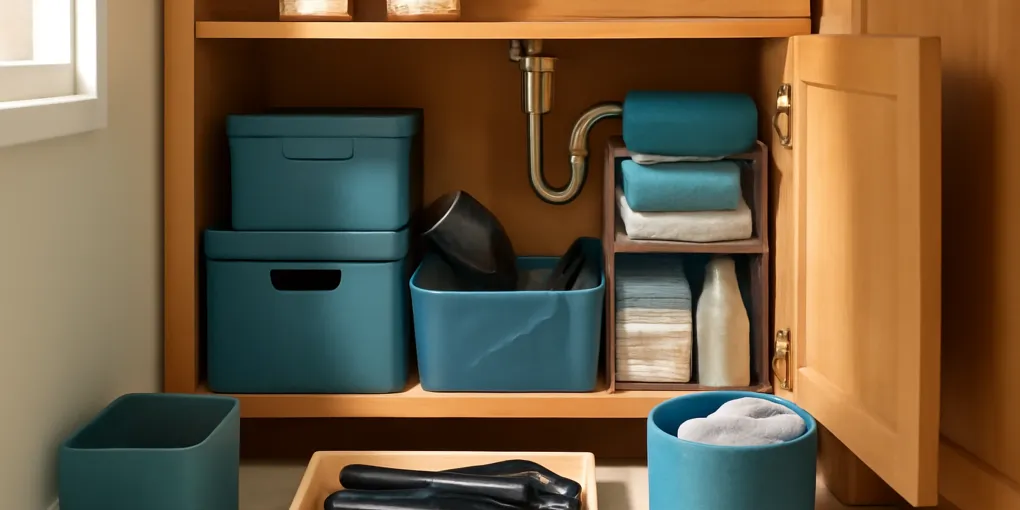
Bathroom Under-Sink Hair Tool Reset Protocol: Stop the Cord, Heat, and Product Tangle
ProtocolQuick picks
| Product | Key Specs |
|---|---|
| See price on Amazon |
|
| See price on Amazon |
|
| See price on Amazon |
|
Product availability, certifications, and retailer details can change; check the current Amazon page before buying.
A bathroom under-sink cabinet is a tempting home for hair dryers, curling irons, flat irons, brushes, sprays, backup shampoo, and every bottle that lost its shower assignment. The problem is that hair tools add three risks ordinary toiletries do not: cords, heat, and electricity near water.
This reset gives hair tools one cool-down rule, cords one return path, and products one visible lane around plumbing. It is not a cosmetic decanting project. It is a safety and retrieval protocol for the cabinet you open on rushed mornings.
If the cabinet also stores cleaning products or leak-prone plumbing supplies, pair this with the broader under-sink storage safety protocol. Hair tools deserve their own zone because heat and cords change the storage rules.
Quick product fixes for the first reset
Buy nothing until you empty the cabinet and measure the real space. If the reset reveals a specific failure point, these three product categories are most likely to help.
- Heat control: Search Amazon for heat-resistant hair tool holders. Use one when a hot curling iron, flat iron, or dryer currently lands on a towel, counter edge, plastic bin, or cabinet floor.
- Cord control: Search Amazon for adhesive cord clips. Use clips only for unplugged, cooled tools on a dry surface; they are cord guides, not electrical-safety devices.
- Product separation: Search Amazon for under-sink pull-out bins. Choose a bin if bottles and brushes bury tools or if you need a removable tray that leaves plumbing visible.
A pretty organizer that blocks the drain trap, hides a leak, or invites hot tools into a closed plastic bin is not an upgrade.
Fit checks that matter
This under-sink hair tool reset is worth considering when it solves a common daily-use problem with inexpensive, reversible changes while keeping heat, moisture, and cord strain visible.
| Fit check | What to verify |
|---|---|
| Fit and safety | Separates hot tools from wet products, preserves access to plumbing, and uses GFCI/electrical-safety guidance as a boundary. |
| Verifiable details | Follows practical controls: unplug, cool, dry, avoid cord damage, and keep leak checks visible. |
| Value and capacity | Can work with no purchase; optional tools are low-cost and targeted to heat, cord, or access failures. |
| Daily friction | Addresses tangled cords, duplicate products, missing brushes, and rushed hot-tool storage. |
| Listing clarity | States limits clearly; damaged outlets, moisture intrusion, or electrical concerns need repair, not storage hacks. |
This approach is weaker when bathroom layouts vary too much. A pedestal sink, tiny vanity, leaky drain, or outlet far from the mirror may require a different storage location.
The 30-minute bathroom hair tool reset
Minute 0-3: Make a safe staging area
Unplug every hair tool before sorting. Move tools to a dry towel on the counter or another dry surface. If anything was used recently, let it cool in open air on a heat-safe surface before handling cords or placing it near products.
Open the cabinet and check for active moisture: a damp floor, swollen particleboard, rusty containers, musty smell, or staining around the drain trap. If you see a leak, stop. Remove vulnerable items, dry the area, and address the plumbing issue before building a storage system.
Minute 3-8: Empty only the hair-tool zone
Pull out hair dryers, flat irons, curling irons, hot brushes, diffusers, concentrator nozzles, rollers, brushes, combs, clips, sprays, and heat protectants. Sort them into daily tools, occasional tools, products used with tools, and wrong-location items.
Wrong-location items include expired products, old travel minis, leaky bottles, wet towels, paper packaging, and anything that should not share space with electrical tools.
Minute 8-13: Choose the cool-down rule
The rule is simple: no hot tool goes into the cabinet until it is cool, unplugged, and dry. Under-sink storage should be the return home, not the live cool-down station, unless the holder is designed for hot tools and sits in a ventilated, dry, accessible spot.
If your current habit is to shove the flat iron into a bin while leaving the house, create a visible landing zone outside the cabinet: a heat-resistant mat, countertop holder, or wall-mounted metal holder away from the sink basin. After the tool cools, it can return under the sink.
Minute 13-18: Give every cord a loose path
Cord organization should reduce strain, not create tight decorative wraps. Check each cord for cracked insulation, exposed wire, bent prongs, loose plugs, or heat damage. If a cord looks damaged, retire the tool or follow the manufacturer’s repair guidance; do not solve electrical damage with tape or clips.
For tools you keep, make one loose loop and secure it with the built-in strap, a soft tie, or a clip that does not pinch the cord. Do not wrap cords tightly around hot barrels. Adhesive cord clips can guide unplugged cords along the inside wall of a dry cabinet, but they should not suspend heavy tools by the cord.
Minute 18-24: Rebuild the cabinet around plumbing
Put plumbing visibility ahead of storage capacity. The drain trap, supply lines, and shutoff valves should remain inspectable without unloading the entire cabinet. Leave the cabinet floor under pipe joints open or use a removable tray that can slide out quickly.
A practical layout uses three zones: one heat-tool holder or bin for cooled tools, one narrow product bin for sprays and styling products, and one brush/clip cup or shallow tray. If you use a pull-out bin, test the full slide path before loading it.
Minute 24-30: Set the morning reset
Use the same closing sequence every time: turn off the tool, unplug it, place it on the heat-safe landing zone, let it cool completely, loosely loop the cord, return the tool to its holder or bin, and put sprays, clips, and brushes back into their assigned lane.
If you cannot wait for cool-down before leaving, the under-sink cabinet should not be the immediate destination. Use a heat-safe counter or wall holder first, then return the tool later.
Safety notes: heat, electrical, GFCI, and moisture
Hair tools belong in a bathroom only when the electrical setup is safe for bathroom use. Use outlets with GFCI protection where required, keep tools away from tubs and sinks, and unplug tools after use. A storage protocol cannot compensate for a damaged outlet, tripping breaker, loose receptacle, or tool that behaves unpredictably.
Moisture changes the risk profile. Do not store tools on a damp cabinet floor, beneath an active leak, or in a bin that traps wet brushes and bottles against cords. Water-damaged cabinets also hide mold and swelling, so treat dampness as a maintenance issue before it becomes an organizing problem.
Heat is the second boundary. Flat irons, curling irons, hot brushes, and dryer attachments can remain hot after use. Keep them off towels, paper, plastic bags, loose packaging, and product labels until cool. If a manufacturer’s instructions specify a storage method, follow that instruction over general organizing advice.
Bathroom under-sink reset questions
Can I store a flat iron under the sink right after using it?
No. Let it cool completely on a heat-safe, dry surface first. Under-sink cabinets often contain plastic bins, paper packaging, towels, bottles, and plumbing moisture. Those are poor neighbors for a hot tool.
Are adhesive cord clips safe in a bathroom cabinet?
They can be useful for unplugged cords on a clean, dry surface, but they do not make an unsafe electrical setup safe. Keep clips away from wet areas, avoid sharp bends, and never use a clip to hold a heavy tool by its cord.
Should hair dryers stay plugged in under the sink?
No. Store hair dryers and styling tools unplugged. If a tool needs to remain plugged in to be convenient, the storage location is probably wrong for the routine.
What if my under-sink cabinet is damp?
Do not store hair tools there until the moisture problem is fixed. Move electrical tools to a dry drawer, shelf, or caddy and address leaks, condensation, or water-damaged cabinet materials first.
Sources
- Electrical Safety Foundation International. Extension cord safety tips for temporary cord use and overload avoidance: https://www.esfi.org/extension-cord-safety-tips/.
- HealthLink BC. Electrical safety in the home, including GFCI protection near water: https://www.healthlinkbc.ca/healthlinkbc-files/electrical-safety-home.
- Electrical Safety Foundation International. Home electrical safety guidance for outlets, cords, and wet areas: https://www.esfi.org/home-safety/electrical-safety/.
Frequently Asked Questions
- Yes, if they are completely cool, dry, unplugged, and separated from leaks, plumbing, and wet products. Do not put a hot iron or dryer directly into a closed cabinet.
- Let tools cool first, unplug them, loosely loop each cord, and use clips or ties only to prevent tangles. Do not wrap cords tightly around hot barrels.
- You need one if hot tools currently land on towels, plastic bins, counters, or cabinet floors. The holder creates a cool-down lane before storage.
- Avoid flammable aerosols, soaked towels, loose paper, overloaded power strips, and anything that blocks leak checks or shutoff valves.