Best Entryway Shoe Rack for Narrow Hallways: Fit, Safety, and Daily Use
Buyer's GuideSONGMICS 2-Tier Metal Shoe Rack
Best for rentersBest for: Everyday shoes in apartments and rental hallways
Quick picks
| Product | Key Specs | Pros / Cons |
|---|---|---|
| See price on Amazon |
|
|
| See price on Amazon |
|
|
| See price on Amazon |
|
|
Product availability, certifications, and retailer details can change; check the current Amazon page before buying.
Quick product shortlist
Use this shortlist to choose a product style before you measure. The links are named product or brand searches so you can compare current dimensions, finishes, prices, and return terms before buying.
- Best for renters: SONGMICS 2-Tier Metal Shoe Rack (Search Amazon for SONGMICS 2 tier metal shoe rack narrow entryway) for everyday shoes in apartments and rental hallways. Watch-out: must leave a clear walking path.
- Best slim closed storage: IKEA BISSA Shoe Cabinet (Search Amazon for IKEA BISSA shoe cabinet) for visible entries where open shoes look messy. Watch-out: tip restraint and wall clearance matter.
- Best wet-weather add-on: Stalwart Boot Tray With Mat (Search Amazon for Stalwart boot tray shoe rack entryway) for rain, snow, muddy shoes, and kids footwear. Watch-out: tray edges can become a trip point.
A narrow hallway does not need a large shoe system. It needs a landing zone that keeps daily shoes out of the walking path. The best entryway shoe rack is shallow, stable, easy to use with one hand, and strict about how many pairs are allowed to live near the door.
For most renters, start with a slim two-tier shoe rack (Check current slim shoe rack options). For visible front entries, a tilt-out slim shoe cabinet (Search Amazon for compare slim cabinets on Amazon) can look calmer. For rain, snow, or kids’ shoes, use a boot tray plus low rack (Search Amazon for browse current options on Amazon).
Quick Picks by Entryway Problem
- Best for apartments: slim two-tier rack, because it is inexpensive, movable, and does not require wall mounting.
- Best for visual clutter: tilt-out slim cabinet, because it hides shoe shapes when the front door opens into a living room.
- Best for wet shoes: boot tray plus low rack, because moisture needs containment before shoes move to shelves.
- Best for families: low rack with assigned lanes, because kids can use it without opening a cabinet.
- Skip if: the rack forces people to step sideways, trip over tray edges, or leave shoes in the door swing.
If your entry is already dominated by bags and jackets, solve the shoe path together with the gear path. Our guide to why entryway shoe piles grow explains why front-door clutter expands when the first landing zone is too far from the real drop point.
Measure the Path, Not Just the Wall
The most common mistake is measuring the empty wall and ignoring movement. Measure the hallway width, the door swing, the closet door, stroller or grocery traffic, and where people naturally stop to remove shoes.
A rack that technically fits can still be wrong if it narrows the path. CDC falls-prevention guidance emphasizes keeping walkways clear of trip hazards. In a hallway, that means shoes and rack edges must stay out of the route people use when carrying laundry, bags, children, or groceries.
Use painter’s tape on the floor before buying. Mark the rack depth and walk through the entry for a day. If people step over the tape, the rack is too deep.
Also test the path with the front door open and a pair of shoes half-pulled out. Many racks look fine when every pair is pushed in perfectly, then fail the moment someone leaves sneakers angled outward. A narrow hallway system has to survive real exits, not just staged photos, including guests who do not know the household rule and children who kick shoes toward the nearest wall.
Slim Two-Tier Shoe Racks
A slim two-tier rack is the default choice for narrow entries because it is easy to see and easy to use. Search for slim two tier shoe rack narrow entryway (check current listings on Amazon) and compare depth, shelf spacing, and whether the rack can hold adult sneakers without protruding.
Choose metal if wet shoes are common and you want easy wiping. Choose bamboo if the rack sits in a visible living area and the entry stays dry. Avoid lightweight racks that wobble when one pair is removed.
The downside is visual noise. Open racks show every shoe. Limit the rack to daily footwear and move dress shoes, backups, and off-season pairs elsewhere.
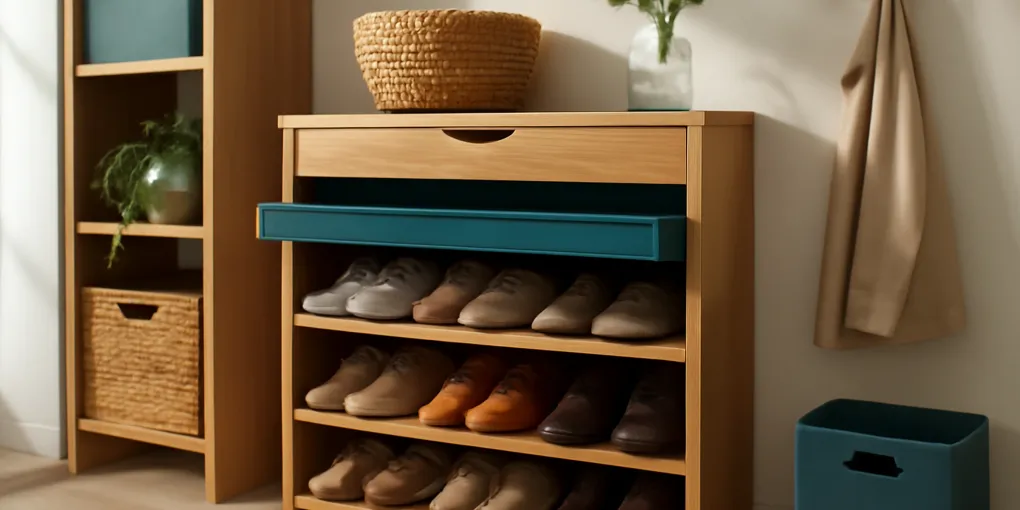
Tilt-Out Slim Shoe Cabinets
A tilt-out cabinet can make a narrow hallway look calmer because shoes disappear behind a front panel. Search for tilt out slim shoe cabinet (compare current options on Amazon) and check depth, shoe-size limits, assembly reviews, and wall-anchor instructions.
The safety detail is tip control. Any narrow cabinet with moving compartments can tip if pulled forward or climbed on. Use the included restraint hardware where appropriate and follow the manufacturer instructions. If children use the entry, assume the cabinet will be tugged; pediatric fall-prevention guidance treats climbable furniture as a real home hazard, not just a neatness problem.
Closed cabinets also need dry shoes. Wet sneakers in a closed tilt-out compartment can create odor and grime. Pair the cabinet with a boot tray for rain days.
Boot Tray Plus Low Rack
A boot tray is not enough by itself if it becomes a heap. It works best under a low rack or beside a rack as the wet-shoe quarantine zone. Search for boot tray and shoe rack entryway (Search Amazon for browse current options on Amazon). Look for a tray that fits your largest boots but does not create a raised edge in the walking path.
Use this setup for households with rain, snow, gardening shoes, sports cleats, or kids who come in muddy. The tray catches moisture. The rack keeps dry daily shoes from mixing with wet gear.
The One-Pair Rule
Narrow entries need a quantity rule. Start with one daily pair per person by the door. Add one weather exception only when the season requires it: boots in winter, sandals in summer, or rain shoes in wet climates.
Everything else moves to a closet, bedroom, or under-bed storage. If the hallway rack holds every shoe someone owns, it will fail. The entry is a transition zone, not a shoe archive.
Product Fit Matrix
| Household | Best choice | Main caveat |
|---|---|---|
| Solo apartment | Slim two-tier rack | Keep it under the coat hooks, not in the path |
| Family with kids | Low rack with assigned lanes | Avoid cabinets young children will climb or tug |
| Rainy climate | Boot tray plus rack | Empty and wipe the tray weekly |
| Front door opens to living room | Tilt-out cabinet | Anchor and check bulky shoe fit |
| Very tight hallway | Wall-mounted shelf or closet move | Floor racks may be the wrong category |
Installation Details That Matter
For open racks, stability matters more than shelf count. A narrow rack with four tiers can look efficient but tip, wobble, or encourage stacks that spill into the path. In a tight hallway, two low tiers often outperform a tall tower because people can remove shoes without bumping coats or bags.
For cabinets, check the anti-tip hardware before assembly. A tilt-out shoe cabinet is shallow, which is exactly why it fits narrow entries, but shallow furniture has less depth resisting a forward pull. Follow the maker’s wall-restraint instructions and avoid placing heavy items on the open door.
For boot trays, look at the edge height. A deeper lip contains water but can catch toes if the tray sits where people walk. Place the tray under a bench, inside the closet threshold, or tight to the wall rather than in the center of the landing zone.
How to Handle Different Shoe Types
Sneakers usually need more depth than product photos suggest because the heel and toe overhang narrow shelves. Boots need either a tray, a taller lower shelf, or a separate boot rack. Kids’ shoes need low access and a visual lane. Dress shoes should not live by the front door unless they are worn daily.
If the household has sports cleats, muddy garden shoes, or rain boots, do not mix them with daily indoor shoes. Use the tray as a quarantine area until they dry, then move them to a garage, mudroom, or utility bin. A narrow hallway rack should not become sports-equipment storage.
The Weekly Entry Reset
Once a week, remove every pair from the rack and ask three questions. Was this pair worn in the last seven days? Does it belong to the current weather? Is it blocking the easiest walking route? Shoes that fail those questions leave the entry.
Wipe the tray, shake dirt from the mat, and check whether the rack has migrated into the path. Entry systems drift because people nudge racks while bringing in bags or vacuuming. Reset the footprint before the drift becomes normal.
FAQ
Should a shoe rack go inside or outside the closet?
Put daily shoes where people actually remove them. If the closet is within one step and easy to open, inside works. If the closet is around a corner, the hallway will keep collecting shoes unless you add a small landing zone.
How do I stop a shoe rack from becoming clutter?
Give each person a lane or pair limit, then move overflow during the weekly reset. A rack without a quantity rule becomes an archive.
Are boot trays a tripping hazard?
They can be if the tray edge sits in the walking path. Place the tray against a wall, under a bench, or beside the door swing rather than in the route people use to enter.
Sources
- CDC, Falls Prevention — supports keeping walking paths clear of trip hazards, especially in high-traffic home routes.
- KidsHealth, Preventing Falls, Climbing, and Grabbing Injuries — supports treating climbable furniture and household landing zones as fall hazards, especially when children can pull, climb, or tug.
Bottom Line
For a narrow hallway, buy the shallowest shoe system that your household will actually use. Open racks are best for daily compliance, slim cabinets are best for visual calm, and boot trays are best for wet weather. The winning setup keeps shoes out of the path and limits the entry to today’s footwear, not every pair in the house.