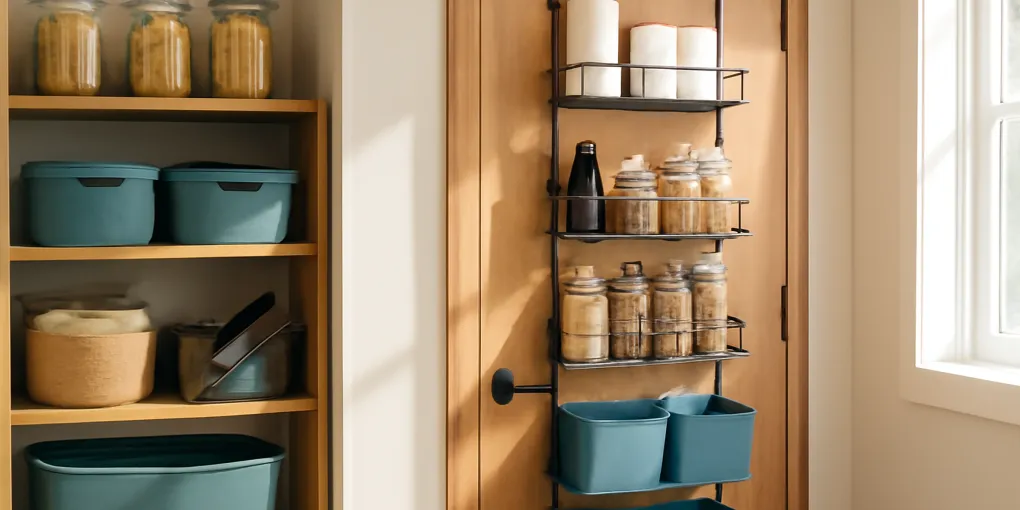
Best Over-Door Pantry Racks for Renters: Extra Storage Without Drilling
Buyer's GuideAdjustable over-door pantry rack
Best first choiceBest for: Rental kitchens with standard hinged pantry or utility doors
Quick picks
| Product | Key Specs | Pros / Cons |
|---|---|---|
| See price on Amazon |
|
|
| See price on Amazon |
|
|
| See price on Amazon |
|
|
Product availability, certifications, and retailer details can change; check the current Amazon page before buying.
A good over-door pantry rack gives a rental kitchen one more wall of storage without turning the door into a swinging junk shelf. The best choice is not the rack with the most baskets. It is the rack that clears the frame, holds the right weight, and keeps small pantry items visible without stressing the hinges.
If your real problem is cookware stacks rather than pantry overflow, start with our vertical pan organizer guide. Door racks work best for light, repeat-use pantry items: spices, tea, foil, wraps, small snack boxes, seasoning packets, and a few modest cans.
Quick picks
Use this best over door pantry racks for renters product comparison as the shopping shortlist, then check the measurements, mounting limits, cleaning friction, and return terms against the room or cabinet described below.
- Best first choice: Search Amazon for adjustable over-door pantry racks when you need flexible baskets for mixed pantry items.
- Best for spices and packets: Search Amazon for narrow over-door spice racks when cabinet shelves are full but the door gap is tight.
- Best stable option if allowed: Search Amazon for mounted pantry door rack kits when your lease or ownership situation allows screws.
Measure before buying: door thickness, top clearance, side clearance at the frame, shelf depth, and the distance from the rack to any interior pantry shelves when the door closes.
What an over-door pantry rack actually fixes
Over-door racks fix small-item burial. In a narrow pantry, spices, packets, snack bars, sauce pouches, and wrap boxes disappear behind taller goods. The door is useful because those items are light, shallow, and needed often.
A door rack does not fix bulk storage. Five-pound flour bags, glass jars, rows of cans, and heavy drink bottles belong on fixed shelves or in low bins. Loading them onto a moving door can make the rack bounce, loosen hooks, or make the door harder to close.
The best renter setup uses the door for small repeat-use items and leaves the pantry shelf for heavier goods. That split keeps the organizer from becoming a second overloaded pantry.
Pantry-rack buying checks
For renters, the best rack is the one that fits the door, closes cleanly, and can be removed without damage. Check:
- Door clearance: measure top clearance, hinge side, and whether the door still latches with brackets installed.
- Load plan: spices, packets, and lightweight cans belong higher; heavy bottles can swing and strain the door.
- Lease risk: avoid screw-mounted kits unless the lease or landlord allows holes.
Fit checks for rental doors
Start with the top hook. Many racks assume a standard interior door thickness, but older apartments, bifold pantry doors, and doors with tight weather stripping can behave differently. If the hook is too thick, the door may scrape the frame or refuse to close.
Next, check the swing path. Open the pantry door fully and watch what it nearly hits: refrigerator handles, counter edges, hallway walls, or shelving inside the pantry. A rack that fits when the door is open can still collide with an interior shelf when the door closes.
Finally, decide whether you can use adhesive bumpers or small stabilizing clips. Renters who cannot drill should still look for racks with foam pads, anti-scratch hooks, and optional lower stabilizers. A rack that bangs every time the door moves will train the household to stop using the door carefully.
Best items to store on the rack
Use the top baskets for light packets and infrequent items, not heavy jars. The middle zone is best for spices, tea, coffee filters, sandwich bags, and wraps. The lower zone can hold kid snack bins only if the baskets have enough front height to stop items from falling when the door swings.
Avoid putting glass bottles at face height. If the rack moves quickly, a tall bottle can tip over the front rail. For oils, vinegars, and heavy condiments, fixed shelves or a lazy Susan are safer.
Setup plan
Empty the pantry door area first. Install the rack unloaded, close the door slowly, and listen for scraping. Add only the items you actually use weekly. If you discover expired seasoning packets or duplicate spices, remove them instead of buying a deeper rack.
Load the heaviest approved items near the bottom and near the hinge side when possible. Keep labels facing out. If packets sag between basket wires, add a small clear bin inside the basket so the rack functions like a drawer rather than a loose cage.
After one week, remove anything nobody touched. Door racks work because they make decisions visible. If the door becomes a storage museum for rare ingredients, it will refill the pantry shelves with daily clutter.
Which rack style fits your pantry problem
Choose an adjustable full-height rack when the pantry shelves are deep enough but the small items vanish. This is the right pattern for cereal boxes hiding spice jars, snack cartons burying tea, or wrap boxes sliding behind pasta. The full-height rack should hold light categories that benefit from eye-level scanning.
Choose a narrow spice-and-packet rack when the pantry door has limited clearance or the household cooks from many small containers. A shallow rack makes it easier to keep cumin, cinnamon, taco seasoning, yeast packets, and tea bags from becoming a duplicate pile. It is also less likely to overload hinges because the stored goods are lighter.
Choose a mounted kit only when stability matters more than reversibility. If the door is solid, the lease allows hardware, and the rack will carry heavier bottles, lower wall clips or screws can reduce bounce. If those conditions are not true, a freestanding over-door model with padded hooks is the safer renter choice.
Capacity math for a small pantry
Ignore the advertised number of shelves until you know basket depth. A rack with six shallow rails may hold fewer useful items than a four-basket rack with enough front height to contain boxes. Count the categories you want at the door: spices, wraps, packets, tea, snacks, and small baking supplies. Then assign each category a basket before buying.
Leave one basket partly open. A completely full door rack fails the first time groceries come home. The open space can catch one new sauce packet, a temporary snack box, or the spice that needs to move after dinner. Without that buffer, the overflow goes back onto the counter or into a random shelf gap.
Do not use the door to store every duplicate. One backup vanilla bottle or one extra box of bags is manageable. Four backups turn a visibility tool into a mini warehouse. Put true bulk storage on fixed shelves where the weight is supported and the door is not working like a cart.
Red flags when comparing listings
Be cautious when product photos show only empty baskets or lightweight props. You need to know whether normal pantry packages lean, rattle, or fall through. Look for photos that show standard spice jars, wrap boxes, snack bags, and the actual hook profile over a door.
Check whether the dimensions include the hook or only the basket frame. A rack that is technically the right width can still fail if the top hook lifts the door into the frame. If reviews mention the door no longer closing, treat that as a fit warning rather than a minor inconvenience.
Safety and lease notes
HealthyChildren childproofing guidance emphasizes keeping household hazards out of children’s reach and secured. That matters for pantry doors because a low rack can put small packages, glass jars, or cleaning-adjacent items at child height. Store choking hazards, medicines, cleaning products, and heavy glass containers elsewhere.
Food safety also matters. FDA kitchen guidance recommends safe food storage and clean prep areas; door racks should hold sealed, dry pantry items, not leaky packages that can drip into baskets or attract pests. Wipe baskets before reloading if a flour packet or sugar bag opens, and treat sticky residue as a sign the rack is carrying the wrong package type.
FAQ
Will an over-door pantry rack damage a rental door?
It can if the hooks are too thick, the rack is overloaded, or the lower frame bangs against the door. Use padded hooks, stay below the product weight guidance, and avoid mounted kits unless your lease allows screws.
Can I store canned food on a pantry door rack?
A few light cans in a sturdy lower basket may be fine, but rows of cans are a poor fit for a moving door. Put cans on fixed shelves or in low pantry bins where weight is supported from below.
What if the door will not close after installation?
Remove the rack and check hook thickness, top clearance, and interior shelf collision. Do not force the door closed; forcing it can bend hooks, damage trim, or loosen hinges.
Source notes
For childproofing and household hazard placement, see HealthyChildren: https://www.healthychildren.org/English/safety-prevention/at-home/Pages/Childproofing-Your-Home.aspx. For kitchen food-storage basics, see FDA food safety guidance: https://www.fda.gov/food/buy-store-serve-safe-food/food-safety-your-kitchen.