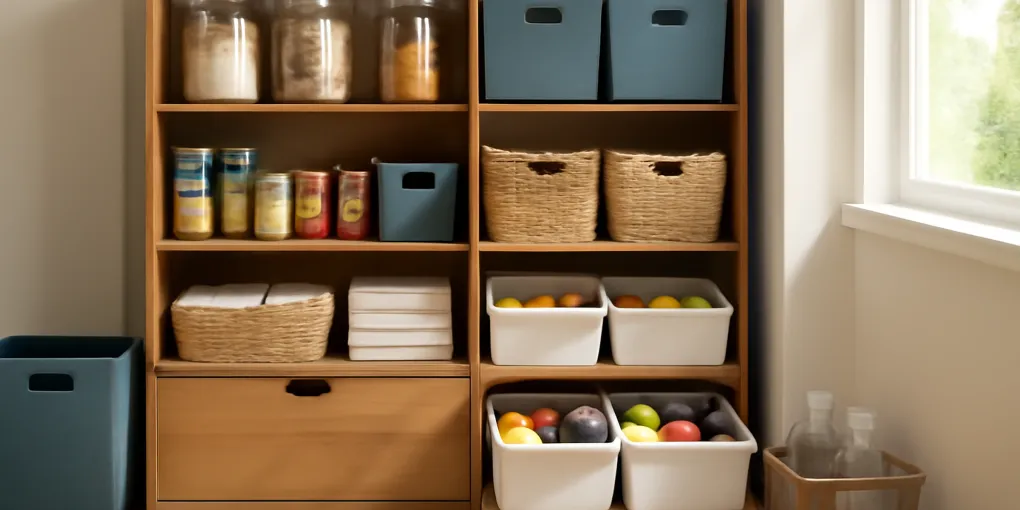
Pantry Backstock Rotation Protocol: Stop Buying Duplicates You Already Own
ProtocolQuick picks
Clear pantry backstock bins
★ Top pick Best first container- Why consider it: Use one bin per category so backup pasta, cans, snacks, and baking supplies are visible before the next grocery trip.
Removable date labels or freezer tape
Best rotation cue- Why consider it: Adds a visible first-opened or use-first cue without rewriting the whole pantry system.
Can rack or first-in-first-out dispenser
Best for canned staples- Why consider it: Useful only for households that keep enough duplicate cans to justify a dedicated lane.
Pantry backstock is useful until it turns invisible. One extra jar of pasta sauce is preparedness. Four hidden jars behind cereal boxes are clutter, tied-up grocery money, and a future expiration-date chore. The fix is not a perfect pantry inventory app. It is a simple rotation protocol that separates open food from backup food and makes the oldest item easiest to grab.
Use this protocol for cans, pasta, rice, baking supplies, shelf-stable snacks, coffee, tea, and bulk goods. The basic kit is clear pantry backstock bins (search current options on Amazon), removable date labels (browse labels on Amazon), and, if your household keeps many duplicate cans, a first-in-first-out can rack (compare can racks on Amazon).
If you are starting from a deep pantry where items vanish by depth rather than duplicates, pair this with how to organize a deep pantry. Deep shelves need visibility first; backstock rotation works after categories have boundaries.
Quick picks for pantry backstock rotation
- Best category boundary: Search Amazon for clear pantry backstock bins sized to one repeat grocery category, not the whole pantry.
- Best use-first cue: Search Amazon for removable food-storage date labels for opened packages, decanted staples, and near-date items.
- Best for duplicate cans: Search Amazon for first-in-first-out pantry can racks only when you keep enough matching cans to fill a lane.
Pantry setup checklist
- Put open food at eye level or in the daily-use zone.
- Put unopened backups in one clearly labeled backstock zone.
- Pull older duplicates to the front before adding new purchases.
- Add a use-first label to anything with a near date, damaged box, or opened inner bag.
- Keep the grocery restock list near the pantry, not in your memory.
Step 1: Separate open food from backups
Empty one shelf or cabinet zone at a time. Do not pull the whole pantry unless you have time to finish. Sort each item into three groups: open and in use, unopened backup, and questionable.
Open food belongs where it is easiest to cook with or pack. Backup food belongs behind, above, below, or in a separate bin. Mixing them creates the classic pantry mistake: someone opens a second bag of rice because the first open bag is hidden behind sealed boxes.
Questionable items get a decision immediately. If packaging is damaged, food looks or smells wrong, pests are present, or the date raises concern, do not organize it back onto the shelf. USDA and FDA food-safety guidance is clear that storage systems should preserve safety, not make questionable food look tidy.
Step 2: Build one backstock zone per category
Create a backstock zone for categories you actually rebuy. Common zones include pasta and grains, canned tomatoes and beans, baking staples, snacks, breakfast items, and paper goods. Use clear bins when shelves are deep because you can pull the whole category forward.
A clear pantry backstock bin (search current options on Amazon) should match the category size. Pasta boxes need a longer bin than spice packets. Snack overflow needs a wide, low bin so kids or guests do not crush bags searching for one flavor.
Do not label a bin “miscellaneous.” That is how the junk shelf comes back. If a product does not fit a category, decide whether it is a one-off special item, a meal-plan ingredient, or something that should leave the pantry.
Step 3: Use first-in-first-out without making it complicated
First-in-first-out means older items get used before newer ones. In a home pantry, the practical version is simple: new items go behind or below older items, and the oldest duplicate gets the visible front position.
For cans, a first-in-first-out can rack (search current can racks on Amazon) can help if you keep several of the same item. It is unnecessary for a pantry with one can of each thing. Racks consume shelf height, so use them only where the lane stays full.
For boxes, stand duplicates like files when possible. Put the oldest cereal, pasta, or cracker box at the front edge. If the box is open, move it out of backstock and into daily use.
Step 4: Add date labels only where they change behavior
Date labels are useful when they prevent a real mistake. They are not useful when every item gets labeled and nobody reads the labels. Use removable date labels or freezer tape (browse current options on Amazon) for three cases:
- Opened packages decanted into containers.
- Near-date products that should be used first.
- Bulk purchases split into smaller bins.
Put the label where the hand naturally reaches: cap, front corner, or bin handle. A label on the back of a container is decoration, not a cue. Use month and year for shelf-stable goods unless the food requires a tighter date.
Step 5: Make the grocery list prove itself
A rotation system fails if the shopping list ignores it. Before a grocery order, check the backstock zone first. If you already have two unopened jars, do not buy a third because the daily shelf looked empty.
Keep a small restock pad, whiteboard, or phone note that tracks only categories you actually use. The list should answer one question: what will run out before the next normal shop? It should not become a full pantry database.
For households that already use labels heavily, the best pantry inventory label systems guide can help choose between shelf labels, bin labels, and date labels without turning every grocery trip into data entry.
Product fit matrix
| Pantry problem | Best product | Why |
|---|---|---|
| Deep shelf hides backups | Clear backstock bin | Pulls one category forward at once |
| Duplicate cans pile up | First-in-first-out can rack | Keeps older cans in the grab position |
| Open bags lose dates | Removable date labels | Gives decanted or clipped packages a visible use cue |
| Kids open duplicate snacks | Low snack backstock bin | Separates open snacks from unopened boxes |
| Bulk staples arrive monthly | Lidded clear bin | Protects unopened overflow from spills and shelf dust |
Safety and source notes
USDA food-storage guidance supports rotating shelf-stable foods and paying attention to package condition, while FDA consumer guidance emphasizes safe storage and checking labels. This protocol applies those basics to the clutter problem: the oldest safe item should be easiest to use, and damaged or questionable food should not be hidden inside a nicer bin.
Remember that best-by dates are not a complete safety system. For baby food, opened products, home-packed goods, pest exposure, or damaged packaging, follow the product label and food-safety guidance rather than a pantry rule of thumb.
FAQ
Should unopened backups stay behind open food?
Usually yes. Open food should be easiest to use. Backups can sit behind or in a separate bin as long as they are still visible before shopping.
What should I do with bulk bags of rice or flour?
Keep the active amount in a food-safe container and store the unopened or sealed backup in a labeled backstock bin. If you split a bulk bag, date the smaller containers and protect them from moisture and pests.
Is a can rack worth the space?
Only if you keep several duplicates of the same canned staple. If every can is different, a clear bin or simple shelf lane usually wastes less space.
Sources
- FDA, Tips to Reduce Food Waste — supports interpreting food dates and avoiding automatic waste from date confusion.
- FDA, Safe Food Handling — supports clean, safe storage habits and label-aware food handling.
Bottom line
A good backstock system makes the oldest safe item easiest to use and the next grocery decision harder to fake. Separate open food from backups, rotate duplicates forward, and label only the items where the date changes what you will do next.