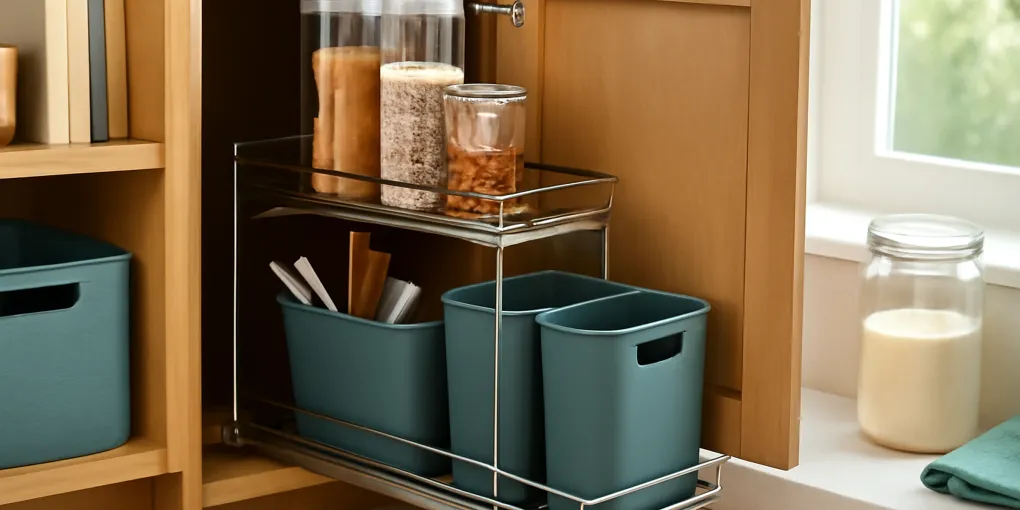
Simplehuman Pull-Out Cabinet Organizer Review: Is It Worth It Under the Sink?
Reviewsimplehuman Pull-Out Cabinet Organizer
Best premium pull-outBest for: Under-sink cabinets where sturdy slide-out access matters
Quick picks
| Product | Key Specs | Pros / Cons |
|---|---|---|
| See price on Amazon |
|
|
| See price on Amazon |
|
|
| See price on Amazon |
|
|
Product availability, certifications, and retailer details can change; check the current Amazon page before buying.
Quick product shortlist
Use this shortlist to choose a product style before you measure. The links are named product or brand searches so you can compare current dimensions, finishes, prices, and return terms before buying.
- Best premium pull-out: simplehuman Pull-Out Cabinet Organizer (Search Amazon for simplehuman pull out cabinet organizer) for under-sink cabinets where sturdy slide-out access matters. Watch-out: measure plumbing, door opening, and track clearance.
- Best sturdy alternative: Lynk Professional Slide Out Organizer (Search Amazon for Lynk Professional slide out cabinet organizer) for heavy bottles or cleaning supplies in a base cabinet. Watch-out: basket dimensions must clear hinges and pipes.
- Best budget alternative: SimpleHouseware Stackable Under Sink Basket (Search Amazon for SimpleHouseware under sink sliding basket organizer) for budget under-sink access for lighter products. Watch-out: may not slide as smoothly under load.
The Simplehuman pull-out cabinet organizer is worth considering under the sink if your main problem is reach: bottles disappearing in the back, duplicate cleaners because you cannot see inventory, or awkward kneeling every time you need a sponge refill. It is less compelling if your cabinet is narrow, crowded by a garbage disposal, already damp, or full of tall products that need a two-tier layout. The strongest buying signal is not the brand name by itself; it is whether the tray gives your specific cabinet one clear sliding lane without blocking plumbing, valves, or leak checks.
Short version: the Simplehuman design makes the most sense as a premium single-tier slide-out tray for people who value smooth access and a cleaner-looking cabinet more than maximum cubic capacity. Under a kitchen sink, that is often a good trade. Plumbing, hoses, shutoff valves, disposal bodies, and moisture risk matter more than raw shelf space. A pull-out tray that lets you inspect the cabinet floor quickly can be more useful than a taller rack that hides leaks and traps mystery bottles.
If you are trying to fix more basic setup mistakes, start with our guide to under-sink organizer mistakes before buying any pull-out system. Measuring the drain path and deciding what should not live under the sink will prevent most regret.
Top pick module
- Best premium single-tier pick: Search Amazon for Simplehuman pull-out organizers. Choose it if you have a standard base cabinet, a clear path beside the drain line or disposal, and a collection of medium-height cleaning bottles you use weekly.
- Best capacity alternative: Search Amazon for two-tier sliding baskets. Choose this if your cabinet has generous vertical clearance and you want more separation between small supplies and tall bottles.
- Best low-commitment alternative: Search Amazon for stackable under-sink bins. Choose bins if you rent, dislike mounting hardware, or want storage that can be removed instantly after a drip.
Our verdict
The Simplehuman pull-out cabinet organizer earns a strong recommendation for the right cabinet, not a universal one. It is a good under-sink upgrade when the cabinet floor is dry, the plumbing leaves a clear lane, and your supplies fit a single low tray. It is not the most space-maximizing choice, and it is not the cheapest way to corral cleaners. Its advantage is that it reduces friction: fewer bottles lost in the dark, easier cleaning under products, and faster visual inventory.
For a kitchen sink base, treat it as an access product first and a storage product second. That framing matters. Many under-sink organizers promise to double storage, but the real failure mode under sinks is not always lack of space. It is inaccessible space. If you have to remove five items to reach the dishwasher cleaner, the cabinet becomes a clutter reservoir. A sliding tray solves that specific behavior problem.
Fit checks that matter
The Simplehuman pull-out organizer is strongest for the right cabinet, with important fit caveats.
| Fit check | What to verify |
|---|---|
| Fit and safety | The product matches a common under-sink problem: poor access to the cabinet rear. |
| Verifiable details | The recommendation is based on product category specs, cabinet ergonomics, and household storage safety guidance, not a controlled durability test. |
| Value and capacity | The premium is easier to justify when smoother slide action prevents abandoned storage and duplicate purchases. |
| Daily friction | Pull-out organizers have strong demand because under-sink cabinets are a universal pain point; fit surprise is the main risk. |
| Listing clarity | Measurement, plumbing, moisture, and mounting caveats are clear before purchase. |
The score is deliberately not a blanket endorsement. It says the Simplehuman organizer is a high-fit choice for a specific under-sink use case: one clean sliding lane for everyday supplies.
What the Simplehuman pull-out organizer does well
The main benefit is simple: it brings the back of the cabinet to you. That sounds obvious until you compare it with a fixed bin. A bin still requires lifting, tilting, or dragging if it is full. A mounted pull-out tray keeps the contents together and moves in a predictable path. For people who store dish soap refills, dishwasher pods, counter spray, microfiber cloths, spare sponges, and trash bags under the sink, that can change the cabinet from a pile into a working drawer.
A single-tier pull-out also preserves overhead clearance. Under sinks, vertical space is broken up by drain pipes, supply lines, and sometimes a garbage disposal. Two-tier units can be efficient, but they assume the upper basket has somewhere to go. A lower single tray is more likely to fit below the P-trap and beside the disposal, especially if the cabinet has one unobstructed side.
The Simplehuman positioning also fits people who prefer durable, minimal-looking tools. The category alternative is full of lightweight wire baskets and plastic slides. Those can work, but they often feel temporary. If an organizer feels flimsy, users stop pulling it out carefully, bottles tip, and the system degrades. Paying more for a smoother mechanism can be rational if the cabinet is used every day.
Under-sink fit: measure before you buy
The make-or-break issue is cabinet geometry. Before buying, measure usable cabinet width at the floor, usable depth from the closed door to the back wall, height at the planned slide path, and door-swing clearance. Do not measure only the empty cabinet rectangle. Hinges, face frames, center stiles, water lines, outlets, and cabinet doors can all reduce the path a sliding tray needs.
The better method is to tape out the organizer footprint on the cabinet floor, then slide your tallest bottle along that path by hand. If the bottle hits a pipe, hose, or disposal flange, the organizer will not solve the problem. For double-door sink bases, the best lane is often one side of the cabinet, not the center. The drain line typically occupies the middle. A pull-out tray tucked to the left or right can avoid the plumbing and keep shutoff valves visible.
A pull-out organizer must never block access to shutoff valves, leak-prone joints, GFCI outlets, or disposal reset buttons. That is not just convenience; it is maintenance readiness. If you need to clear a jam, turn off water, or inspect a drip, the storage system should move out of the way immediately.
Plumbing and disposal caveats
Be cautious if your sink has a large garbage disposal, a reverse-osmosis tank, filter cartridges, a pull-down faucet weight and hose, a dishwasher drain loop, diagonal plumbing, or an outlet serving disposal equipment. In those layouts, a narrow tray may still work, but a flexible bin system can be safer. The organizer should adapt to the plumbing, not force the plumbing area into a storage fantasy.
The Simplehuman-style single tray is helpful because it can keep items consolidated. Instead of removing ten bottles one at a time, you can slide out one tray and inspect the cabinet floor. But that advantage only exists if the unit is not installed in front of critical access points.
Moisture, leaks, and cleaning chemicals
Under-sink cabinets are attractive storage zones because they are close to cleaning tasks, but they are also higher-risk than a pantry shelf. Plumbing connections, condensation, damp sponges, and slow leaks can introduce moisture. EPA mold guidance emphasizes moisture control because mold grows where water problems persist. That makes visibility and cleanability important design criteria, not just aesthetics.
A pull-out organizer can help because it exposes the cabinet floor more easily. You are more likely to notice a ring under a bottle, a swollen cabinet base, or a small drip if the contents slide out in one motion. However, the organizer itself should not become a wet trap. If you store damp brushes, wet gloves, or leaking spray bottles on any tray, clean and dry it routinely.
Household chemical storage also deserves attention. Poison Control and CPSC poison-prevention resources emphasize keeping cleaners and chemicals in original containers, away from children and pets, and not mixing products. Under the sink is often reachable by children unless the cabinet is latched. A pull-out tray can make products easier for adults to reach, which also means it can make them easier for a curious child to pull out if the door is unsecured.
Keep cleaners in original labeled containers. Do not store food, pet treats, or refillable water bottles next to chemical cleaners. Use a child-resistant cabinet lock if children visit or live in the home. Keep incompatible products separated, especially bleach and ammonia-based cleaners. Remove any bottle that leaks, bulges, has a corroded cap, or lacks a readable label.
Accessibility and everyday use
From an accessibility perspective, a pull-out tray can be a meaningful improvement. Under-sink storage often requires crouching, reaching around pipes, and feeling for a bottle by touch. A slide-out tray reduces deep reaching and makes the contents visible from the front of the cabinet. That can help shorter users, older adults, and anyone who finds low cabinets physically annoying.
The limitation is that the tray still lives near the floor. It does not eliminate bending. If mobility is a major concern, the best solution may be moving daily-use cleaners to a waist-height utility caddy and reserving the under-sink organizer for backups. For many households, the right setup is a hybrid: one spray bottle and cloth near the task zone, refills and less-used supplies on the pull-out tray.
Also consider weight. A tray loaded with large detergent jugs, bulk vinegar, dishwasher gel, and spray bottles will feel different from one holding light supplies. Pull-out hardware can only feel smooth when the load is reasonable and evenly distributed.
Simplehuman pull-out cabinet organizer
The Simplehuman pull-out cabinet organizer is best for a clean, durable, single-tier under-sink slide-out system. It addresses the most common cabinet behavior problem: hidden supplies in the back. The single-tier format is less likely to fight sink plumbing than a tall rack, and a smooth pull-out mechanism can make weekly cleaning supplies easier to retrieve.
The best cabinet fit is a dry sink base with one clear side lane, enough depth for full extension, and no shutoff valve or hose that would be blocked by the tray. It may cost more than basic wire baskets, and it will not magically create vertical capacity. If you have many small items, use smaller bins inside the tray so packets, scrub pads, and spare nozzles do not slide around.
Buy if you want a premium-feeling under-sink drawer and have already confirmed the plumbing path. Skip if your cabinet has active moisture issues, a crowded disposal or filter setup, or a rental constraint that makes mounting hardware undesirable.
Shopping option: Search Amazon for Simplehuman pull-out organizers.
Two-tier sliding basket
A two-tier sliding basket is best for maximizing usable height when plumbing leaves vertical clearance. The upper level can hold dishwasher tabs, sponge packs, trash bags, microfiber cloths, and cleaning tablets, while the lower level handles sprays or refill bottles.
The best cabinet fit is a wide base cabinet without a large disposal on the same side, with enough height for the upper basket to slide under the sink basin and around the drain line. Two-tier organizers fail when the upper basket hits the P-trap, drainpipe, sink bowl, or faucet hose. They can also make leak inspection harder if the lower shelf hides the cabinet floor.
Shopping option: Search Amazon for two-tier sliding under-sink baskets.
Stackable under-sink bins
Stackable under-sink bins are best for renters, leak-prone cabinets, flexible sorting, and nonstandard plumbing. Bins are not as satisfying as a slide-out drawer, but they are forgiving. You can rotate them, remove one for cleaning, assign categories, and replace a damaged bin cheaply. Clear or open-front bins also make inventory easier without committing to rails.
The best cabinet fit is an awkward sink base with offset pipes, removable shelf liners, or a need for quick access to valves and drip checks. Stacked bins can block visibility if they are opaque or too tall, and they may encourage overbuying because small products disappear into layers.
Shopping option: Search Amazon for stackable under-sink storage bins.
Who should buy the Simplehuman organizer?
Buy it if your under-sink cabinet is structurally dry, your everyday cleaning supplies are mostly medium-size bottles, and you are tired of unloading the cabinet to reach items in the back. It is especially well matched to households that already keep a pared-down supply set: dish soap refill, dishwasher detergent, surface spray, scrub brush, microfiber cloths, trash bags, and a few specialty cleaners.
It is also a good candidate if you care about visual order. Under-sink cabinets are often hidden, but hidden clutter still creates friction. When products have a defined home, you are less likely to buy a third bottle of glass cleaner because the first two were buried.
The buyer who will be disappointed is the one expecting a capacity miracle. A pull-out tray can make storage more usable, but it consumes some space for structure and slide clearance. If your cabinet is already packed to the edge, the first step is editing, not organizing. Remove expired, duplicated, unlabeled, or rarely used products before measuring for any hardware.
Setup checklist
Before ordering, empty the cabinet and clean the floor. Look for water staining, soft spots, musty odor, rust marks, mineral deposits, or peeling shelf liner. If you see signs of moisture, solve that first.
Then mark the drain pipe and disposal footprint, identify shutoff valves that must remain reachable, pull the faucet sprayer in and out to see where its hose and weight travel, measure the door opening, and decide which products are daily-use, backup, or should be moved elsewhere. After installation or placement, leave the cabinet lightly loaded for the first week. Use the tray normally and listen for scraping, hose interference, or tipping.
FAQ
Is the Simplehuman pull-out cabinet organizer good for under a kitchen sink?
Yes, if one side of the cabinet has a clear slide path and the cabinet is dry. It is strongest for medium-height cleaning bottles and supplies you use often. It is not ideal if a garbage disposal, filter tank, or drain line blocks the side where the tray would extend.
Do I need a two-tier organizer instead?
Only if you have measured enough vertical clearance. Two-tier organizers can store more categories, but under-sink plumbing often interrupts the upper tier. If you want fewer fit surprises, a single-tier pull-out is usually easier to place.
Can I store all cleaning products under the sink?
No. Keep products in original labeled containers, avoid mixing chemicals, separate incompatible cleaners, and secure the cabinet if children or pets can access it. Move anything leaking, unlabeled, or rarely used.
Will a pull-out organizer hide leaks?
It can either help or hurt depending on the setup. A single tray that slides out easily can make the cabinet floor easier to inspect. An overloaded organizer, stacked bins, or a tall rack can hide moisture. Schedule a quick monthly check regardless of organizer type.
Is the Simplehuman organizer worth the higher price?
It is worth the premium when smooth access and durability matter more than maximum capacity. If you need a reversible setup, have awkward plumbing, or are still deciding what belongs under the sink, start with stackable bins or a simpler sliding basket.
Final recommendation
The Simplehuman pull-out cabinet organizer is a smart under-sink buy for a measured, dry cabinet with a clear side lane. Its value is not that it stores the most items; it makes the items you should keep under the sink easier to see, reach, and audit. That is exactly the kind of small friction reduction that keeps a storage system alive after the first cleanup weekend.
If your cabinet is damp, crowded by plumbing, or full of products that should be edited first, wait. Fix the cabinet, reduce the inventory, and measure the real slide path. Then decide whether a premium single-tier pull-out, a two-tier basket, or stackable bins matches the space you actually have.
Sources
- U.S. EPA, A Brief Guide to Mold, Moisture and Your Home: https://www.epa.gov/mold/brief-guide-mold-moisture-and-your-home
- MedlinePlus, Household chemical safety: https://medlineplus.gov/ency/patientinstructions/000760.htm
- American Association of Poison Control Centers, Household hazards: https://www.aapcc.org/prevention/household-hazards