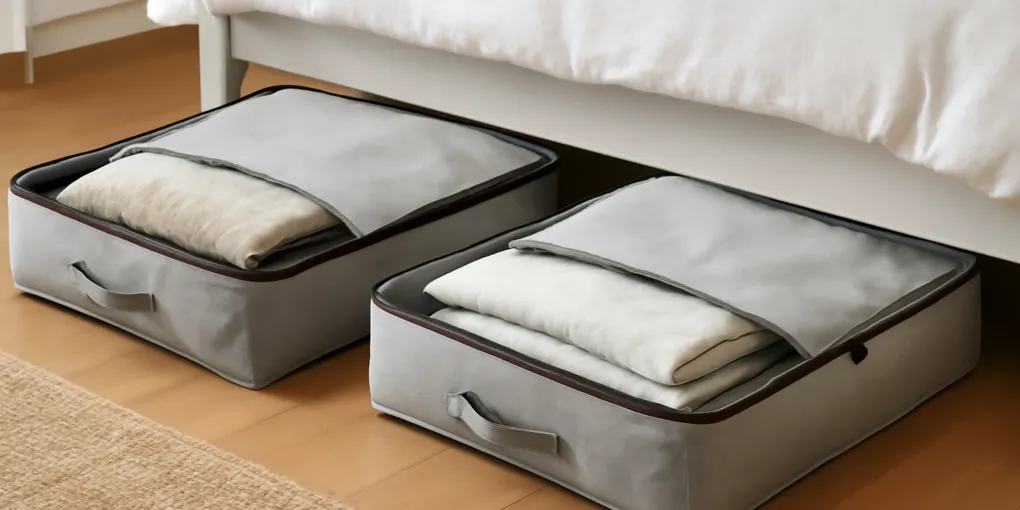
Under-Bed Storage Bags for Seasonal Clothes: Review and Fit Guide
ReviewLow-profile zippered under-bed fabric bags
Best for soft seasonal clothesBest For: Sweaters, off-season pajamas, scarves, and soft closet overflow
$18-35
Quick picks
| Product | Key Specs |
|---|---|
| See price on Amazon |
|
| See price on Amazon |
|
| See price on Amazon |
|
Product availability, certifications, and retailer details can change; check the current Amazon page before buying.
Under-bed storage bags are useful when they solve a specific overflow problem: clean seasonal clothes that need a dry, low, out-of-the-way home. They are disappointing when they become a horizontal junk drawer under the mattress.
This review treats the common zippered fabric bag as the baseline, then compares it with rigid rolling bins and vacuum bags. If the real problem is daily clothing landing on a chair, read why the laundry chair happens first; under-bed storage will not fix active laundry.
Quick picks
- Low-profile fabric clothing bags: Search Amazon for under bed storage bags clothes
- Rolling rigid bins: Search Amazon for under bed storage bin wheels
- Vacuum storage bags: Search Amazon for vacuum storage bags seasonal clothes
- Cedar blocks or breathable sachets: Search Amazon for cedar blocks clothing storage
Overall rating: 4.1 out of 5 for dry bedrooms with true seasonal overflow; lower for damp floors, weekly-access items, or delicate garments.
What under-bed bags do well
They turn unused low space into a seasonal shelf. Sweaters, scarves, ski base layers, beach coverups, off-season pajamas, and guest pillowcases are good candidates. The bag keeps groups together and makes a small closet less crowded.
Fabric bags are flexible, so they can fit around bed-frame legs and odd clearances better than rigid bins. They are also light when empty and inexpensive enough to dedicate one bag per category.
What they do poorly
They do not protect clothes from a damp floor, a dusty room, or pests by magic. They also do not make overstuffed clothing easier to find. If you cram the bag until the zipper strains, it becomes hard to pull out and easy to ignore.
EPA mold guidance emphasizes moisture control. Clothes should be clean and fully dry before storage, and the under-bed zone should not smell musty. If the floor is concrete, basement-adjacent, or regularly humid, use a closet shelf or sealed rigid bin instead.
Fabric bag vs rolling bin vs vacuum bag
| Option | Best use | Main tradeoff |
|---|---|---|
| Fabric zip bag | Soft seasonal clothes | Can sag and drag when overfilled |
| Rolling rigid bin | Monthly access or kids’ rooms | Needs more height and costs more |
| Vacuum bag | Bulky bedding or coats | Creases garments and needs resealing |
| Closet shelf bin | Damp or pest-prone rooms | Uses visible closet space |
For most seasonal clothes, a low fabric bag or rigid bin beats vacuum compression. Clothes stored flat and loosely are easier to inspect. Vacuum bags are best for bulky guest bedding, not structured jackets or anything with trim that can crease.
Fit checks before buying
Measure from floor to bed frame, not floor to mattress edge. Then subtract at least one inch so the full bag can slide after clothing adds height. Measure the under-bed depth from the side you will actually use. A long bag is useless if a nightstand blocks the pull path.
Check handle placement. End handles help when pulling from the foot of the bed. Side handles help when the bed sits against a wall. Clear top panels are useful only if they stay clear; frosted plastic that cracks is worse than a simple labeled fabric top.
Best and worst clothing categories
Best candidates are soft items that tolerate folding: sweaters, fleece, scarves, knit hats, off-season pajamas, and spare linens. These items can sit flat, and you usually need the whole group at the same seasonal moment. That makes a single labeled bag useful.
Poor candidates are structured blazers, leather, damp sports gear, shoes with grit, formalwear, and anything you use weekly. Those items either need air, shape, faster access, or a different cleaning step before storage. Under-bed bags should reduce closet crowding, not hide chores.
Clothing rules
Store only clean, fully dry clothing. Do not store shoes with clothes unless they are clean and bagged separately. Do not store damp towels, half-worn gym clothes, or dry-clean-only garments that need hanging structure.
Fold by category, not by owner if the bag is seasonal. One winter-sweater bag is easier to open than four family-member bags with mixed contents. Place the bulkiest items at the hinge side and leave the zipper path clear.
Maintenance test
After the first month, pull the bag out and check three things: whether the handle survived, whether the clothes still smell clean, and whether you remembered what was inside. If any answer is no, change the storage method before buying more bags. A rigid bin, closet shelf, or donation pass may be the better fix.
Do not fill the entire bed footprint immediately. Leave one side accessible for vacuuming and one clear lane so the bag can come out without scraping the floor or catching on the bed frame.
Under-bed storage FAQ
Do under-bed bags attract dust?
They sit in a dusty zone, so the outside will collect dust even when the contents stay clean. Vacuum under the bed before storing and wipe the bag before opening it on clean bedding.
Should under-bed clothing storage be airtight?
Not always. Airtight storage helps in dusty areas, but trapped moisture is a bigger problem for clothing. Clean, dry garments and a dry room matter more than maximum sealing.
How many bags fit under a queen bed?
Usually two to four, depending on frame height, center supports, and nightstand clearance. Buy one first and test the pull path before filling the whole space.
Sources
- EPA: Mold cleanup in your home
- CDC: About mold
- EPA: Integrated Pest Management basics
Frequently Asked Questions
- They are good for clean, fully dry seasonal clothes when the floor area is dry and easy to access. They are poor for damp rooms, delicate garments, or items you need every week.
- Rigid bins are better for frequent access and dusty floors. Fabric bags are cheaper and flexible, but they sag and can be harder to slide when overfilled.
- Use vacuum bags sparingly for bulky textiles. Compression can crease garments and is annoying if you need to reopen the bag often.