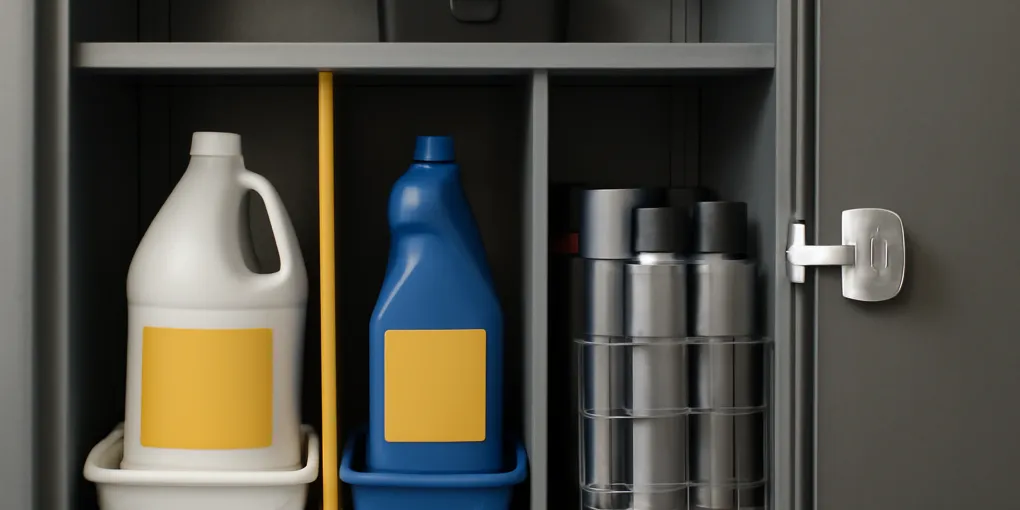
Utility Closet Chemical Separation Protocol for Safer Home Storage
ProtocolQuick picks
| Product | Key Specs | Pros / Cons |
|---|---|---|
| See price on Amazon | — |
|
| See price on Amazon | — |
|
| See price on Amazon | — |
|
Product availability, certifications, and retailer details can change; check the current Amazon page before buying.
A utility closet can look organized while still being unsafe. Matching bins hide warning labels. A deep caddy can mix bleach, ammonia cleaners, acids, aerosols, batteries, and rags. Laundry products can sit at child height because the shelf looks tidy. The right reset separates risk before it separates aesthetics.
This protocol is for the closet that holds cleaning supplies, laundry extras, batteries, light bulbs, small tools, paper goods, pet cleanup products, and mystery bottles. The goal is a closet where anyone can find the right product without digging through incompatible hazards. If the highest-risk mess is under a sink instead of in a closet, start with our under-sink storage safety protocol.
Starter storage pieces
Use three physical products only where they solve a specific risk:
- A locked or latchable bin for cleaners that children should not access: Search Amazon for latchable cleaning supply bin
- A dedicated battery case, not a loose junk bowl: Search Amazon for household battery storage case
- Open-front shelf bins for low-risk refills and cloths: Search Amazon for open front utility closet shelf bins
Step 1: Pull products by hazard, not by room
Empty one shelf at a time and sort products into these groups: bleach/disinfecting products, ammonia/glass cleaners, acids/descalers, aerosols, pesticides, laundry products, batteries, absorbent rags, paper goods, and low-risk refills. Do not start with pretty categories like bathroom, kitchen, and miscellaneous. Chemical compatibility matters more than where the bottle is used.
The American Association of Poison Control Centers emphasizes keeping household products in original containers and out of children’s reach because labels and packaging carry critical safety information. Source: Poison Help household safety. The EPA’s safer-use guidance also stresses reading product labels and following storage directions. Source: EPA safer choice and product label guidance.
Step 2: Remove the unlabeled and expired unknowns
Any bottle without a readable label should not return to the closet. Matching spray bottles are especially risky when the contents are not obvious. If you use a refill system, keep the concentrate label, dilution directions, and product name attached to the bottle. If you cannot identify it, follow local household hazardous-waste disposal guidance instead of guessing.
Do the same for rusted aerosol cans, leaking containers, hardened adhesives, and old pesticides. A utility closet is not a long-term archive for products nobody is willing to use.
Step 3: Separate batteries from everything wet or metal
Loose batteries deserve their own case because their terminals can contact metal objects or other batteries. The National Fire Protection Association advises storing batteries safely and keeping terminals from contacting metal objects. Source: NFPA lithium-ion battery safety.
Do not put batteries in a cleaner caddy, tool tin, or foil-lined drawer. Put the battery case on a dry shelf away from liquids, then set a small dead-battery return bag nearby only if your local recycling program accepts them.
Step 4: Put child-risk products high, locked, or out of the closet
Laundry pods, disinfectants, pesticides, drain products, and concentrated cleaners should not sit in open bins at child height. If children visit, treat the closet as accessible unless it has a reliable lock. A latchable bin is not magic, but it is better than a decorative basket.
Keep low-risk supplies at easier heights: microfiber cloths, trash bags, vacuum filters, replacement mop pads, paper towels, and spare sponges.
Step 5: Give aerosols and heat-sensitive products air and distance
Aerosols should stay upright and away from heat, direct sun, outlets, chargers, and standing flames. Use a shallow bin or wall shelf that makes rust, missing caps, and duplicates visible. Do not pack aerosols in a deep plastic tote with extension cords and batteries.
If aerosol volume is high, use a dedicated upright rack or shallow visible shelf rather than turning the utility closet into a hidden garage shelf.
Step 6: Rebuild the closet with access rules
Put each returned category where the person using it can see the label before touching the product. Use labels such as “bleach products,” “laundry pods - locked,” “batteries,” “aerosols,” “cloths,” and “paper refills.” Avoid vague labels like “misc cleaners” or “household.” Vague labels invite incompatible products back into the same bin.
Keep the floor clear if the closet has plumbing, a water heater, or a utility sink. A floor packed with paper goods can hide leaks and block shutoff access.
Maintenance schedule
Do a two-minute monthly check for leaks, rusted cans, loose batteries, and unlabeled spray bottles. Do a deeper seasonal edit before buying more cleaners. If a product has not been used in a year and nobody knows why it is there, disposal may be safer than storage.
Compatibility map for common closet items
| Item type | Store with | Keep away from |
|---|---|---|
| Bleach products | Other clearly labeled bleach/disinfecting products | Ammonia cleaners, acids, mystery spray bottles, children’s supplies |
| Glass or ammonia cleaners | Same product family with readable labels | Bleach products and unlabeled refills |
| Drain openers/descalers | Locked high-risk chemical zone | Everyday cloths, gloves used for food areas, children’s access |
| Aerosols | Upright cool shelf or dedicated rack | Heat, direct sun, chargers, batteries, and standing flames |
| Batteries | Battery case or original packaging | Liquids, metal tools, foil, steel-wool pads, loose junk bins |
| Microfiber cloths and sponges | Open low-risk bin | Leaking bottles and pesticide shelves |
Reader test: can someone else reset it?
After rebuilding the closet, ask whether another adult could put away groceries, laundry supplies, or cleaning refills without asking where anything goes. If the labels require your private memory, they are not labels. “Top shelf” and “extra stuff” are not useful. “Laundry pods - locked,” “cloths,” “batteries,” and “aerosols” are specific enough to guide the next reset.
The same test catches overpacked bins. If a person has to remove six bottles to return one spray cleaner, the bin is too deep or too mixed. Use smaller bins by product family rather than one large bin by room.
Frequently Asked Questions
Can I use matching amber bottles for cleaners?
Only when the cleaner’s label and refill system support it and the bottle is clearly marked with product name and dilution. For most households, original containers are safer because warnings, ingredients, and emergency information stay with the product.
Should bleach and vinegar be stored together if they are both cleaners?
No. Store incompatible product families separately and keep labels visible. The organizing category “cleaners” is too broad for chemical storage.
What belongs in open bins?
Use open bins for low-risk supplies: cloths, sponges, trash bags, gloves, replacement filters, and paper refills. Put hazardous cleaners, laundry pods, batteries, aerosols, and pesticides in controlled zones.
Bottom line
A safer utility closet starts by separating risk, not by buying matching containers. Keep household chemicals in labeled original packaging, isolate batteries, control child access, and reserve open bins for ordinary refills. The closet should make the wrong combination harder to create.