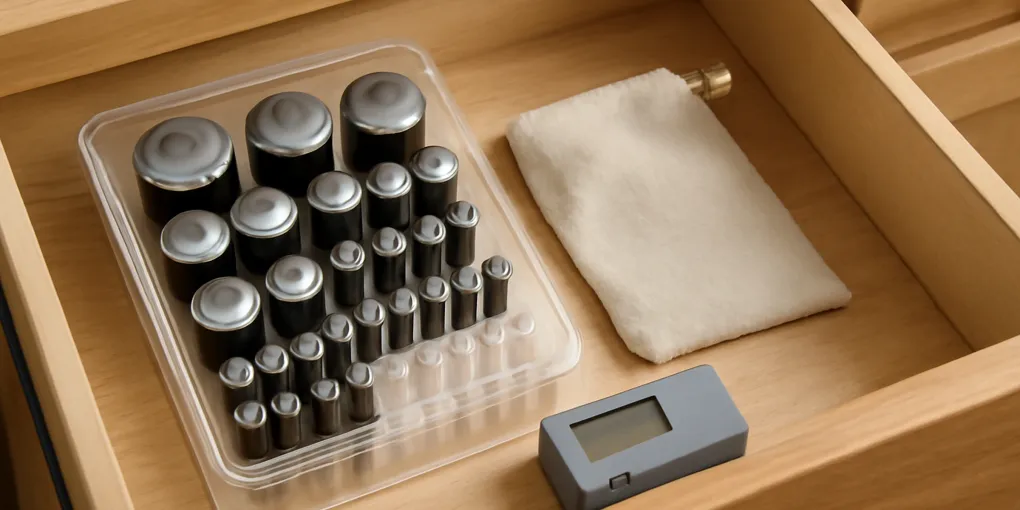
Utility Drawer Battery Storage Protocol: Stop Loose Batteries, Testers, and Small Hazards
ProtocolQuick picks
| Product | Key Specs |
|---|---|
| See price on Amazon |
|
| See price on Amazon |
|
| See price on Amazon |
|
Product availability, certifications, and retailer details can change; check the current Amazon page before buying.
A utility drawer full of loose batteries is not just messy. It hides dead cells, lets used and new batteries mix, and can put coin batteries or small parts within reach of children. The goal is a simple battery station: sorted new batteries, a tester for mystery cells, a place for used batteries awaiting recycling, and controlled storage for tiny batteries.
This protocol pairs well with our utility closet chemical separation protocol because both systems have the same rule: household supplies that look harmless can create risk when they are mixed into a grab-anything drawer.
Product starting point
- Main sorter: Search Amazon for household battery organizer case tester
- Tester: Search Amazon for small household battery tester
- Coin battery control: Search Amazon for locking small parts box coin batteries
Use the organizer only after the drawer is sorted. A new case will not fix a mix of dead AA cells, spare screws, loose keys, holiday-light fuses, and button batteries rolling together.
Step 1: Empty and sort by status
Clear the drawer completely. Make four piles: new batteries in packaging, loose batteries that may be usable, obviously dead or leaking batteries, and tiny batteries such as button or coin cells. Do not test or store any battery that is swollen, leaking, corroded, or hot. Set damaged batteries aside according to local disposal guidance.
The EPA’s household battery guidance is useful because disposal rules vary by chemistry and location. Alkaline household batteries may be handled differently from lithium, rechargeable, and button cells. Your drawer protocol should include a small labeled recycling pouch or container so used batteries leave the drawer instead of cycling back into it.
Step 2: Control the small-cell hazard
Button and coin batteries deserve special treatment. Safe Kids Worldwide warns that button batteries can be dangerous if swallowed. They should not sit loose in a drawer that children, guests, or pets can reach. Keep them in original packaging when possible, then place them in a high, latched, or locked small-parts box.
Do not store coin batteries beside loose magnets, screws, keys, or craft parts. The practical rule is simple: if a battery is small enough to vanish under a paperclip, it does not belong in an open junk drawer. Put it in controlled storage or remove it from the house if it is dead.
Step 3: Choose the drawer layout
A good battery station has three zones. The front zone holds common new AA and AAA batteries because those are grabbed most often. The middle zone holds less-used sizes such as C, D, 9V, or specialty cells. The back or side zone holds the tester and recycling container. Tiny coin batteries do not go in the daily grab zone unless that zone is locked and adult-controlled.
Battery organizer cases are helpful when they keep cells from rolling and make stock visible. Choose one that fits the drawer height before loading it. Some wall-mount battery boards are too tall for a shallow drawer. If the organizer must be lifted out every time, keep the tester with it so unknown cells can be checked before returning them.
Step 4: Test the mystery pile
A battery tester is not glamorous, but it prevents the most common drawer failure: keeping unknown batteries forever. Test the loose pile one by one. Keep batteries that test good and match your household devices. Move weak, dead, or unclear batteries to the recycle container. Do not put tested-good cells back loose; place them in the correct size lane.
For rechargeable batteries, keep a separate lane for charged cells and a separate container or charger location for cells that need charging. Mixing charged and depleted rechargeable batteries recreates the same problem in a more expensive form.
Step 5: Remove non-battery clutter
Utility drawers often mix batteries with scissors, tape, fuses, furniture pads, picture hooks, flashlights, and random screws. Keep only battery-related tools in this station: the tester, a small flashlight if it uses the stored batteries, and maybe a tiny screwdriver for battery compartments. Move hardware to a hardware bin and cords to a cord organizer.
This separation matters because metal objects and small parts make battery storage harder to inspect. It also makes the drawer slower. When batteries have to share space with everything, nobody knows which cells are new, dead, or missing.
Fit checks before buying
| Drawer condition | Best fix | Avoid |
|---|---|---|
| Many loose AA and AAA batteries | Battery organizer case with size lanes | Open bowl or zip bag |
| Mystery dead-or-alive pile | Add a small tester | Keeping untested cells in the new lane |
| Children can reach the drawer | High or locking storage for small cells | Loose coin batteries in a front drawer |
| Rechargeables mix with alkalines | Separate charged and needs-charge lanes | One mixed battery compartment |
| Used batteries wait for disposal | Labeled recycling pouch or box | Returning them to the organizer |
Maintenance rhythm
Check the drawer twice a year, ideally when smoke alarm batteries or seasonal decorations are handled. Test loose cells, move used batteries to the recycle container, and restock common sizes before the drawer is empty. If you use many AA or AAA batteries, keep one unopened pack behind the active organizer rather than filling every slot.
After holidays, do a special pass for button batteries from candles, remotes, ornaments, and small lights. Those are the cells most likely to escape packaging and end up loose. If the household includes children, this pass is not optional.
What not to store here
Do not store batteries in a hot garage drawer, a damp utility sink cabinet, or a drawer with loose metal hardware. Do not store leaking batteries at all. Do not store coin batteries in a candy tin, pill cup, or any container that makes them look harmless.
Avoid huge battery boards if your actual use is modest. A board with a slot for every size can tempt you to overbuy. A compact case plus a tester is enough for many homes. The point is reliable access, not a battery museum.
Battery drawer FAQ
Should batteries stay in original packaging?
Original packaging is useful for new batteries because it protects terminals and shows the size. Once opened, place remaining batteries in a divided organizer instead of letting them roll loose.
Where should used batteries go before recycling?
Use a small labeled container that is separate from new batteries. Follow local rules for battery type, and do not keep damaged or leaking batteries in a household drawer.
Is a battery organizer case worth it?
It is worth it when loose batteries are hard to find or dead cells keep mixing with new ones. If you only keep one unopened pack, a high cabinet shelf may be enough.
Sources
Frequently Asked Questions
- Sort them by size in a case or divided bin, keep terminals from rubbing against metal objects, and separate used or unknown batteries for testing or recycling.
- They should not sit loose in an accessible drawer. Store button and coin batteries high, latched, or locked, especially around children.
- Yes, because they let you remove dead or unknown cells instead of keeping every battery just in case.