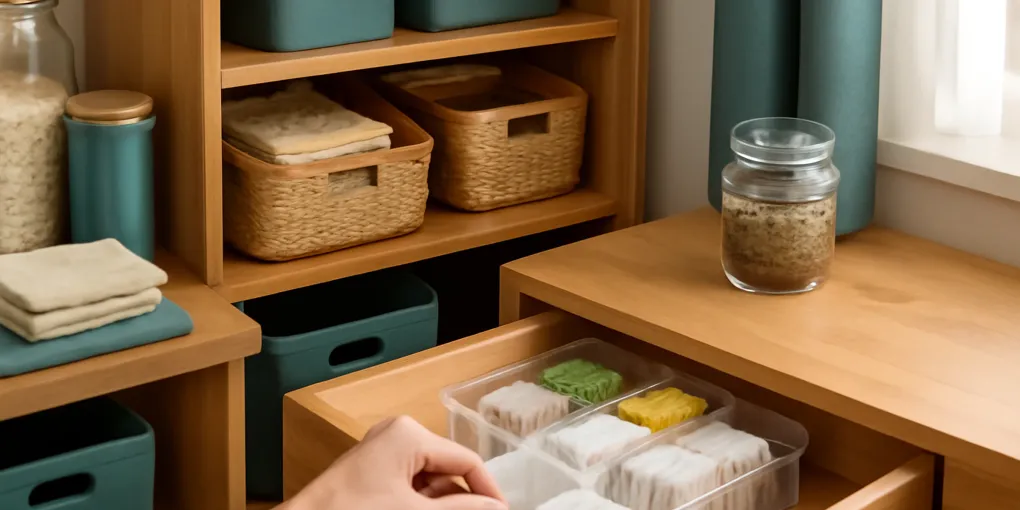
Tea Bag Drawer Reset Protocol: A 15-Minute System for Boxes, Sachets, and Loose Tea
ProtocolQuick picks
| Product | Key Specs |
|---|---|
| See price on Amazon |
|
| See price on Amazon |
|
| See price on Amazon |
|
Product availability, certifications, and retailer details can change; check the current Amazon page before buying.
A tea drawer seems harmless until it becomes a museum of half-empty boxes, mystery sachets, honey sticks, and loose tea tins with no dates. The goal of a tea bag drawer reset is not to display every flavor. It is to make the next cup easy while keeping freshness, labels, and caffeine information visible.
This protocol works for one shallow drawer, a cabinet bin, or a small beverage shelf. If the broader shelf is the problem, use best spice rack organizers for small-container ideas and do clear pantry bins reduce food waste? for grab-and-go packet zones.
Quick picks
- Best visible tea-bag setup: Search Amazon for bamboo tea drawer organizers.
- Best flexible mixed drawer: Search Amazon for divided tea drawer bins.
- Best loose-tea storage: Search Amazon for airtight tea tins.
Buy the organizer after the edit, not before. Tea clutter is usually too many forgotten flavors, not a lack of tiny compartments.
The 15-minute reset
Minutes 0-3: Empty the drawer
Pull out every tea box, loose packet, sweetener, infuser, stir stick, and mug accessory. Wipe the drawer before sorting. Tea dust, torn paper, and sugar granules make a clean organizer feel dirty within a week.
Minutes 3-7: Sort by drinking behavior
Use broad categories:
- Daily caffeinated.
- Caffeine-free or herbal.
- Green or white tea.
- Specialty flavors.
- Loose tea.
- Sweeteners and drink add-ins.
Do not sort by brand unless the household actually chooses tea by brand. Most people choose by caffeine, flavor, or time of day.
Minutes 7-10: Check dates and labels
Tea does not usually become unsafe in the same way perishable food does, but quality drops with age, air, light, and moisture. Keep best-by dates visible. Remove stale flavors nobody drinks, mystery bags with no label, and anything that smells flat, dusty, or contaminated by pantry odors.
The USDA FoodKeeper and food-storage guidance are useful reminders that storage conditions matter. Tea should stay dry, closed, and away from strong odors.
Minutes 10-13: Load the daily lane
Put the most-used tea in the front-left or easiest lane. Keep one row per category rather than one row per flavor. If you own ten herbal flavors, do not create ten tiny slots. Use one herbal lane and put the current favorites in front.
Loose tea belongs in airtight tins or its original resealable packaging, not loose in an open drawer. Add a date label when the package does not make the age obvious.
Minutes 13-15: Create a refill rule
The drawer should not hold every unopened box. Keep one active supply in the drawer and put sealed backstock somewhere else. Refill the drawer when a row is half-empty, not when a sale tempts you to add four new boxes.
What to keep out of the tea drawer
Do not store leaky honey packets, sticky syrup bottles, damp infusers, or opened loose tea in paper bags. Moisture and sugar residue turn a beverage drawer into an ant and odor problem. Let infusers dry before they return to the drawer.
Do not keep medications or supplements in the tea drawer. It is too easy to blur beverage routines with dosing routines. If you need medicine storage, use a separate high, dry, child-resistant location and review medicine cabinet expiration reset protocol.
Organizer fit matrix
| Setup | Best for | Watch out for |
|---|---|---|
| Bamboo tea organizer | Wrapped bags in a shallow drawer | Fixed slots may not fit bulky sachets |
| Clear divided bin | Mixed packets and sweeteners | Deep bins can hide older bags |
| Airtight tins | Loose tea and delicate blends | Clear containers should not sit in bright light |
| Original boxes | Tea with useful directions or dates | Half-empty boxes waste drawer space |
The right answer may be a hybrid: packets in a shallow divided bin, loose tea in tins, and unopened boxes in backstock.
How this protocol is scored
The score favors freshness cues and repeatable use over display value.
| Factor | Weight | Practical standard |
|---|---|---|
| Research | 30% | Categories match caffeine, flavor, and time-of-day decisions. |
| Evidence Quality | 25% | Storage protects tea from moisture, odors, light, and lost labels. |
| Value | 20% | The setup prevents duplicate buying before recommending a full tea chest. |
| User Signals | 15% | A tired person can return a packet to the right lane. |
| Transparency | 10% | The protocol separates beverage storage from medicine and supplement storage. |
A small-drawer variation
If the drawer is narrow, keep only the current week of tea bags in the organizer and store sealed boxes upright in a pantry bin. The visible drawer should answer one question quickly: what can I drink now? Backstock can answer the slower restocking question.
FAQ
Can I mix coffee pods and tea bags in the same drawer?
Yes, if the drawer is wide enough for separate lanes and neither category hides the other. If coffee pods dominate the space, move tea to a smaller bin near mugs.
Are tea organizers worth it for a small household?
They are worth it only if you have several open boxes or lose track of what you own. If you drink one tea daily, the original box may be the best organizer.
What should I do with tea nobody drinks?
Offer unopened boxes to someone who wants them if they are still in good condition. Discard stale, unlabeled, contaminated, or very old packets rather than letting them occupy the daily drawer.
Sources
- FDA food labeling and nutrition information: https://www.fda.gov/food/food-labeling-nutrition
- CDC food safety prevention guidance: https://www.cdc.gov/food-safety/prevention/index.html
- U.S. EPA food waste reduction at home: https://www.epa.gov/recycle/reducing-wasted-food-home