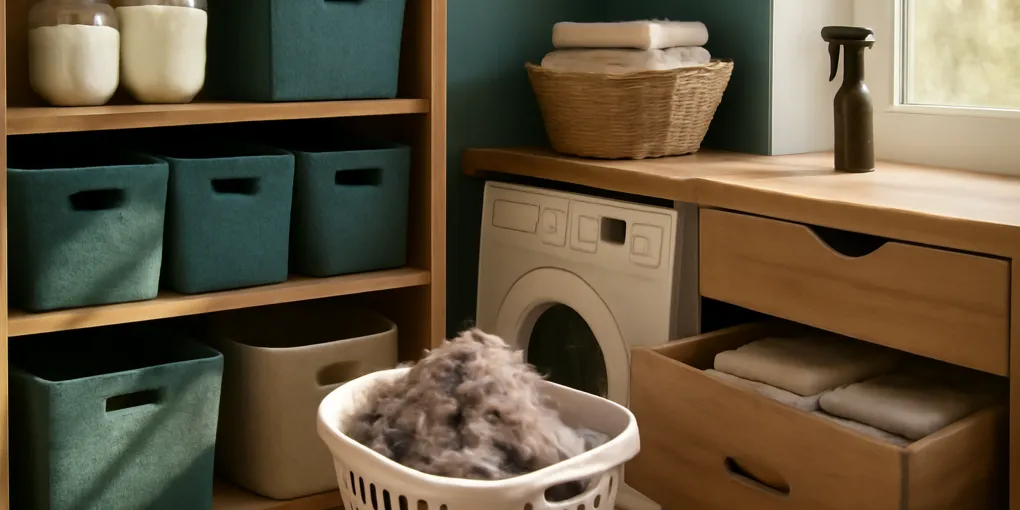
Why Laundry Room Lint Clutter Becomes a Fire-Risk Pile
Evidence ExplainerQuick picks
Wall-mounted dryer lint bin
★ Top pick Best for daily disposal- Why consider it: Gives lint a dedicated destination beside the dryer so it does not collect on the machine top or floor.
Dryer vent cleaning brush kit
Best for maintenance- Why consider it: Keeps deeper vent cleaning tools grouped and visible for scheduled maintenance, not mixed with detergent clutter.
Slim laundry trash can
Best for mixed scraps- Why consider it: Catches dryer sheets, packaging, tags, and pocket trash without using the dryer top as a dumping surface.
Dryer lint looks harmless because each handful is small. The clutter pattern is the problem: lint on top of the dryer, dryer sheets behind bottles, vent brushes shoved into a cabinet, and pocket trash waiting for someone else to throw it away.
A laundry room lint system needs two pieces: a daily disposal point and a maintenance-tool home. Search for a wall-mounted dryer lint bin (check current options on Amazon), dryer vent cleaning brush kit (compare kits on Amazon), or slim laundry room trash can (browse slim cans on Amazon) if your laundry area currently uses the dryer top as a trash zone.
Quick Picks for Lint and Laundry-Room Scraps
- Best daily disposal: wall-mounted dryer lint bin, placed close enough to use without stepping away from the dryer.
- Best maintenance add-on: dryer vent cleaning brush kit, stored separately from detergent so it is visible for scheduled cleaning.
- Best mixed-trash fix: slim laundry room trash can for dryer sheets, tags, tissues, and packaging scraps that otherwise land on the dryer top.
- Skip if: the container is decorative but hard to empty, blocks the dryer door, or makes lint look like a display item.
The Lint Loop
The lint loop has four steps:
- Pull lint from the trap.
- Put it somewhere temporary.
- Forget the temporary spot.
- Let the next load add another handful.
The loop grows because the action happens while the person is already holding laundry. If the trash can is across the room, the dryer top becomes the path of least resistance. The fix is not a bigger reminder. It is a closer destination.
This is the same friction pattern behind the weekend laundry reset system: laundry tasks fail when each small step requires a separate walk, decision, or search.
Why Lint Deserves Its Own Rule
Lint is not just visual clutter. The U.S. Consumer Product Safety Commission warns that overheated clothes dryers can cause fires when lint builds up in the dryer or exhaust duct. The main concern is lint buildup in the lint screen, dryer, duct, and vent path. A fluffy pile on the dryer top is not the same as a blocked vent, but it is a visible signal that lint is not leaving the room reliably.
That distinction matters. Do not treat a cute lint bin as fire prevention by itself. The bin solves the daily disposal step. Vent inspection and cleaning solve the maintenance step.
The Daily Disposal Point
A wall-mounted lint bin works when the dryer area has no floor space. Search for wall mounted dryer lint bin (view current listings on Amazon) and choose one with a wide opening, easy emptying, and mounting that will not damage your wall or appliance.
A slim laundry trash can works better when the room also collects dryer sheets, clothing tags, tissues, and packaging. Search for slim laundry room trash can (compare current options on Amazon). Choose a can that fits without blocking the washer door, dryer door, or walking path.
Avoid open baskets that look like decor but are hard to empty. Lint should leave the room, not become a display category.
The Maintenance Tool Home
Vent brushes and vacuum attachments should not live under detergent leaks or behind bulk paper towels. Search for dryer vent cleaning brush kit (check current options on Amazon) if you need tools for lint-trap cavities and vent maintenance.
Store the kit in a labeled maintenance bin, not in the daily detergent tray. Daily supplies should be reachable every load. Maintenance tools should be visible enough to remind you they exist, but not so mixed in that they snag clothing.
If the vent run is long, hard to access, or overdue, follow the dryer and duct manufacturer’s guidance or hire a qualified service. A brush kit is not a substitute for safe installation or professional help when needed.
Product Fit Matrix
| Laundry-room problem | Better tool | Why |
|---|---|---|
| Lint lands on dryer top | Wall-mounted lint bin | Closest possible disposal point |
| Dryer sheets and tags pile up | Slim trash can | Handles mixed laundry trash, not just lint |
| Vent brush is always missing | Labeled maintenance bin | Separates occasional tools from daily detergent |
| Tiny closet laundry | Magnetic or wall bin if compatible | Uses vertical space without blocking doors |
| Shared household | Bin plus printed lint-trap cue | Makes the expected action visible to everyone |
What Not to Buy
Do not buy a large decorative hamper for lint. It will hold too much and invite neglect. Do not buy a sealed container that is annoying to open with one hand. Do not buy a magnetic bin without checking whether your washer or dryer surface is compatible and whether the magnet will stay put during vibration.
Also avoid storing lint near hot surfaces, exposed plugs, or product spills. The goal is fast disposal, not a new pile in a prettier container.
The Five-Minute Reset
Use this reset once a week:
- Empty the lint bin or laundry trash can.
- Wipe the dryer top.
- Confirm the lint screen is clean.
- Return vent brushes to the maintenance spot.
- Remove detergent bottles that are empty or leaking.
- Check that nothing blocks the dryer vent area.
If the bin is overflowing weekly, it is too small, too hidden, or not being emptied with household trash.
FAQ
Can I compost dryer lint?
Only some lint is potentially compostable, and many loads include synthetic fibers, finishes, pet hair, or residue. For most households, the simpler and safer default is trash disposal unless you know the fiber content and local compost guidance.
How close should the lint bin be to the dryer?
Close enough that you can empty the lint screen without taking a step. If the bin is across the room, the dryer top will keep winning.
Does a lint bin replace cleaning the dryer vent?
No. A lint bin handles what you remove by hand from the screen. Dryer vents, ducts, and internal cavities still need inspection and cleaning according to manufacturer and fire-safety guidance.
Sources
- U.S. Consumer Product Safety Commission, Overheated Clothes Dryers Can Cause Fires — supports the dryer-lint fire-risk, lint-screen cleaning, vent cleaning, and clutter-free dryer-area guidance in this article.
- NFPA, Electrical Safety in the Home — supports treating appliance areas and cords as inspection zones rather than hidden clutter zones.
Bottom Line
Lint clutter is a maintenance-loop failure. Put a small disposal point beside the dryer, store vent tools separately from daily detergent, and empty the bin before it becomes a second lint trap. The best lint organizer is the one that makes the safe action easier than dropping lint on the dryer top.