Best Fireproof Document Bags for Home Paperwork: What to Buy Before the Papers Pile Up
Buyer's GuideENGPOW Fireproof Document Bag with Lock
Best structured bagBest For: Households storing passports, deeds, insurance folders, and tax envelopes together
$25-45
Quick picks
| Product | Key Specs |
|---|---|
| See price on Amazon |
|
| See price on Amazon |
|
| See price on Amazon |
|
Product availability, certifications, and retailer details can change; check the current Amazon page before buying.
A fireproof document bag is not a magic shield for every emergency. It is a practical home paperwork tool: one place for the records you would want quickly if you had to evacuate, make an insurance claim, renew identity documents, or prove ownership after a household disruption.
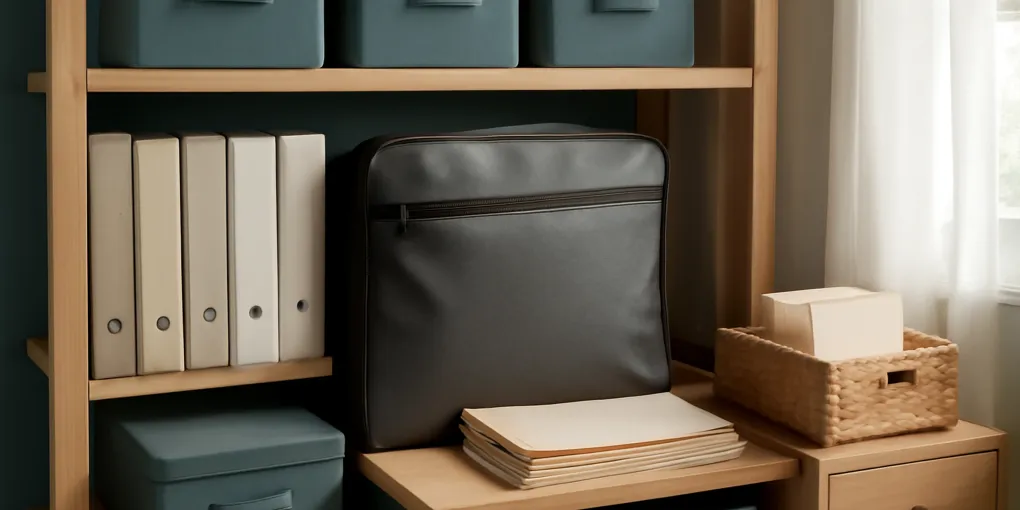
The best fireproof document bag for most homes is a structured letter-size or legal-size file bag with a handle, a reliable zipper, and enough internal room for labeled folders. A soft pouch that barely fits passports will not solve a paperwork problem. A huge bag with no folder structure can turn into a portable junk drawer.
For daily incoming mail, start with a separate paper inbox protocol. The document bag should hold final records, not every envelope that enters the house.
Quick picks for important-paper storage
- Structured file bag: Search Amazon for ENGPOW fireproof document bag. Choose this if you want one grab-and-go bag with folder room and a handle.
- Expandable file format: Search Amazon for DocSafe fireproof file bag. Choose this if the paper categories matter more than rigid structure.
- Hard-sided option: Search Amazon for SentrySafe fire document file. Choose this if the records should stay put and you can tolerate the extra weight.
What a document bag should actually do
A useful document bag solves three problems at once. It keeps vital records together, makes them portable, and limits casual paper sprawl. Fire resistance is the attention-grabbing feature, but the day-to-day value is retrieval: passports, insurance pages, vehicle titles, pet records, and household contacts should not require a drawer-by-drawer search.
Look for a bag that fits standard folders flat. Folding a birth certificate or deed to make it fit a small pouch is a sign that the product is too small for the job. A letter-size bag is enough for most households; legal-size capacity is helpful for real estate, estate, or business records.
The Consumer Financial Protection Bureau’s disaster checklist emphasizes gathering financial, identification, insurance, and account records before an emergency. For a home organizer, that means the bag needs a visible storage home, not a vague location such as “somewhere in the office.”
Best structured option: ENGPOW-style locking file bag
A boxy fireproof document bag with a handle and combination lock is the easiest format for most families to use. It can sit on a closet shelf, pull out like a small file box, and accept labeled folders for identity, property, money, medical, and emergency-contact records.
The strength of this format is that it resists the paper pile. You can add four or five file folders and immediately see whether a document belongs. The weak point is overconfidence. A consumer fireproof bag is not the same as a rated commercial safe, and many listings use broad marketing language. Treat the fire and water claims as risk reduction, not proof that every paper will survive every event.
Shopping option: Search Amazon for ENGPOW fireproof document bag with lock. Check current dimensions, zipper reviews, and whether letter folders fit without curling.
Best expandable file format: DocSafe-style accordion bag
An expandable fireproof file bag is better when sorting matters more than rigid protection. The tabbed sections can hold taxes, health documents, housing records, school records, and warranty papers without needing a separate file box inside.
This format is useful for households that already have paperwork categories but lack one protected home for the final documents. It is less ideal for passports, small cards, and loose keys unless the bag includes interior pockets. Soft-sided accordion bags can slump when overfilled, so the test is simple: can you remove one folder without dragging three categories with it?
Shopping option: Search Amazon for DocSafe fireproof file bag. Prioritize file-tab readability over the highest claimed capacity.
Best fixed-location alternative: a SentrySafe fire file or chest
A hard-sided fire chest or file is the better choice when the records should not travel around the house. It is more awkward to grab in a hurry, but the rigid shell can protect papers from crushing and keeps the storage boundary clear.
The key shopping detail is interior size. Outside dimensions include wall thickness, hinges, and rounded corners. Check whether a standard folder lies flat inside. If the interior is too small, the safe becomes a passport box and the rest of the paperwork returns to the desk drawer.
Shopping option: Search Amazon for SentrySafe fire document file. Choose a model only after checking current fire-rating claims and interior dimensions.
The four-folder setup
Do not start by buying the largest bag. Start by choosing the four folders that make the bag useful:
- Identity: passports, birth certificates, Social Security cards, naturalization records, and marriage or divorce records.
- Property and insurance: home or lease records, vehicle titles, insurance declarations, and photos or inventory summaries.
- Money and legal: tax summaries, estate contacts, account list without passwords, and copies of powers of attorney if applicable.
- Health and household: medical summaries, pet records, emergency contacts, and school or caregiver documents.
Each folder should contain final records, not active paperwork. A bill waiting to be paid belongs in the mail system. A paid insurance declaration or new vehicle title belongs in the document bag.
What not to store in the bag
Avoid storing cash, passwords, spare keys, or irreplaceable originals without thinking through theft and access. A portable bag is easy to carry, which is useful in an emergency and risky if it becomes a target. Use a password manager or secure offline method for credentials instead of putting a handwritten password sheet in a bag beside identity records.
Avoid keeping every warranty manual. Most appliance manuals are available online, and bulky manuals can crowd out documents that are genuinely hard to replace. Keep purchase receipts or model numbers only when they support a warranty, insurance claim, or resale need.
Size and material checks before ordering
The first measurement is folder fit. A surprising number of small fire-resistant pouches look useful in product photos but require documents to bend. For household records, the bag should fit letter-size folders flat. Legal-size capacity is worth considering if you store property documents, estate paperwork, or older records that do not fit standard folders cleanly.
The second check is opening style. A wide zipper that opens across the top is easier to use than a narrow side opening. If the bag is annoying to open, people will slide papers beside it instead of filing them. The handle also matters. A grab-and-go bag should be comfortable enough to carry with one hand while holding a phone, pet carrier, or child with the other.
The third check is inner sorting. Some bags include accordion dividers, mesh pockets, or passport sleeves. Those features are useful only if they match your records. If your household uses file folders already, buy a bag that accepts those folders. If you mostly store passports, cards, and small certificates, pockets may matter more than folder depth.
Fire and water claims: read them conservatively
Fireproof-document-bag listings often use dramatic claims. Treat those claims carefully. Look for specific temperature, time, and test language, then remember that real fires vary by location, fuel, duration, and water exposure. A document bag can reduce risk, but it should not be the only copy of a vital record.
Water claims deserve the same caution. A zipper that resists spray is not the same as submersion protection. If your home has basement flooding, hurricane risk, or plumbing problems, put the most important papers inside inner waterproof sleeves and keep digital backups outside the home.
The practical buying rule is this: choose a bag because it improves grouping, retrieval, and partial protection. Do not choose it because the listing sounds indestructible. If two bags look similar, buy the one with clearer inside dimensions, a better zipper opening, and enough room for the folders you already use.
Fireproof document bag FAQ
Are fireproof document bags waterproof?
Many are marketed as water-resistant, but zipper seams and prolonged submersion are different from brief spray. If flood risk is the main concern, use sealed inner document sleeves and store digital copies off-site.
How often should I update a document bag?
Review it twice a year and after major events: moving, marriage, divorce, a new child, a new vehicle, insurance changes, or estate-plan updates. Remove expired policies and replace old ID copies.
Where should the bag live?
Choose a boring, consistent location that adults in the household know: a closet shelf near the exit path, a locked office cabinet, or a shelf above the household file system. Do not hide it so well that nobody can find it.
Do I still need digital backups?
Yes. Scan or photograph key documents and store them in a secure digital location. A physical bag supports fast retrieval; digital backups help when originals are damaged, lost, or unavailable.
Sources
- Consumer Financial Protection Bureau. Your disaster checklist: https://www.consumerfinance.gov/consumer-tools/disasters-and-emergencies/. Supports preparing financial records and account information before a household disruption.
- IRS. Preparing for a disaster: taxpayers and businesses: https://www.irs.gov/businesses/small-businesses-self-employed/preparing-for-a-disaster-taxpayers-and-businesses. Supports keeping tax and financial records backed up and recoverable after an emergency.
Frequently Asked Questions
- It is a useful layer for grouped paperwork, but not a guarantee against every fire or flood. Keep irreplaceable records backed up digitally and consider an off-site or bank safe deposit option for originals you cannot replace.
- Passports, birth certificates, insurance declarations, property records, vehicle titles, emergency contacts, and a recent household inventory list are common candidates.
- Buy a bag when grab-and-go access and folder sorting matter. Buy a hard safe or chest when weight, fixed location, and theft resistance matter more than portability.
- Use four labeled folders, review the contents twice a year, and keep daily mail out of the bag unless it becomes a final record.