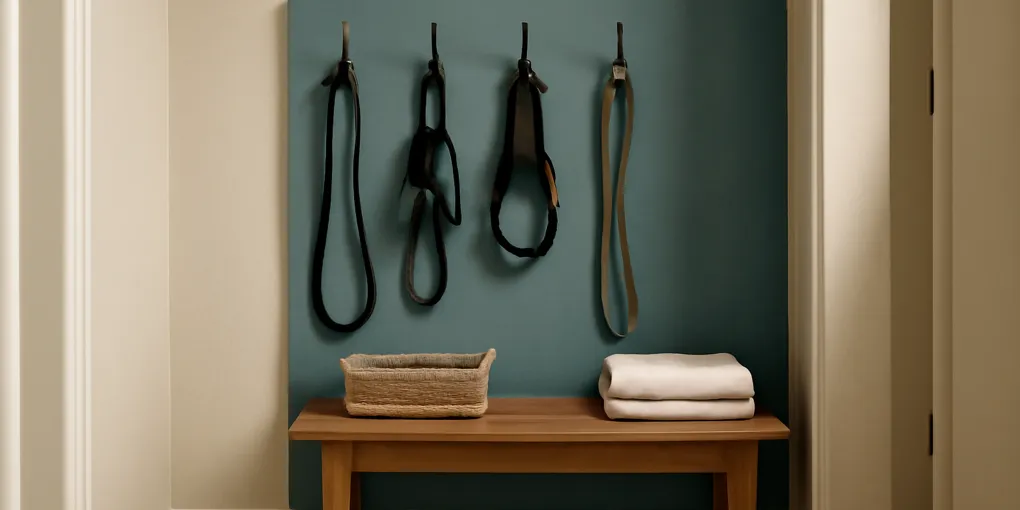
Best Pet Leash Wall Stations for Small Entryways
Buyer's GuideWall-mounted leash hook rail
Best for narrow entriesBest For: Daily leashes, harnesses, keys, and a compact towel
$12-30
Quick picks
| Product | Key Specs |
|---|---|
| See price on Amazon |
|
| See price on Amazon |
|
| See price on Amazon |
|
Product availability, certifications, and retailer details can change; check the current Amazon page before buying.
A good pet leash wall station solves a specific entryway problem: the leash, harness, poop bags, towel, and keys all need to be reachable at the exact moment someone is leaving. If those items live in a basket on the floor, the basket becomes a trip hazard. If they live in a closet, the door swing and shoe pile make every walk slower.
For the behavior side of the problem, see our explainer on why pet leashes tangle by the door. This guide focuses on the wall-mounted products and layout choices that work in tight entries.
Quick picks
- Smallest footprint: Search Amazon for leash hook rails when you have one narrow wall strip near the door.
- Best shared drop zone: Search Amazon for leash stations with shelves if keys and outgoing mail already land there.
- Renter-friendly: Search Amazon for over-door pet organizers when drilling is not allowed.
What a leash station must hold
Start with the active walk kit, not every pet item you own. Most small homes need one hook for the daily leash, one hook for the harness, one spot for waste bags, and one washable towel. If two dogs use different gear, give each dog a separate hook or labeled pocket.
The station should keep the floor clear. CDC fall-prevention guidance emphasizes removing trip hazards from walkways, and entryway pet gear is exactly the kind of soft clutter people step over without thinking. A wall system should move straps, bags, and towels off the floor without creating a shoulder-height obstacle.
How to choose the mounting style
A hook rail is the best default for narrow entries. Look for rounded hooks deep enough to hold a leash loop but not so long that they snag coats. If the rail will carry several harnesses, mount it into studs or use hardware rated for the expected load. Adhesive hooks are fine for one lightweight leash, but they are not the right choice for wet gear, retractable leashes, or a heavy harness.
A shelf station works when it replaces an existing messy landing spot. The shelf should be shallow, roughly the depth of a paperback book, so it does not become a dumping ledge. Add a small tray for keys or bags and leave the rest empty.
An over-door organizer belongs on a closet, pantry, or mudroom door that does not slam open. Use it for lightweight backup gear, not for a wet leash that needs air. If the door rubs or the organizer swings into the wall, the station will annoy people and the leashes will return to the floor.
Wet gear and odor control
Do not put wet leashes, muddy harnesses, or damp towels into a closed bin. Hang them separately until dry, then return backup items to storage. A small washable mat under the hook rail can catch drips without blocking the path. For a step-by-step rain-walk routine that keeps a wet dog on the mat while paws and belly are checked, use the dog drying-station protocol. If odor builds up, the problem is usually damp textile storage, not the hook itself.
For homes with kids, keep treats, medications, flea products, and sharp grooming tools out of the open leash station. The door zone should hold walk gear, not every pet supply. Put consumables in a higher cabinet or labeled pet supply box.
Fit checklist before buying
Measure the wall width, door swing, and shoulder path before ordering. A hook rail that looks compact online can feel large in a hallway if it projects too far. Check whether the leash clip will hit the wall, whether a harness can hang without touching shoes, and whether the waste-bag holder can be refilled without removing everything.
Choose materials based on use. Metal hooks handle wet leashes better than unfinished wood. A wood shelf can look warmer, but it needs a wipeable tray if treats or bags sit on it. Fabric pocket organizers are useful in closets but collect hair and grit near an exterior door.
Product-by-product fit notes
Choose a plain hook rail when the entryway is mostly a walking path. The strongest version has four to six hooks, a backplate wide enough to spread the load, and rounded ends that do not catch coat fabric. It should sit lower than a coat rack but high enough that the leash clips do not touch shoes. In a home with a large dog or multiple harnesses, skip decorative mini hooks and choose hardware that looks more like utility storage.
Choose a shelf station only when you can name exactly what the shelf will hold. A good shelf station holds a key tray, one roll of waste bags, and maybe a small flashlight. It should not hold mail stacks, sunglasses, receipts, treats, grooming tools, and backup collars at the same time. The more jobs the shelf takes, the faster the leash hooks disappear behind unrelated objects.
Choose an over-door organizer when the entry has a closet and the door opens smoothly. It is especially useful for apartments where the lease limits wall holes. Put daily gear in the top half so it is easy to grab, and reserve lower pockets for backup bags or a travel bowl. If the organizer blocks the door from closing, it will become annoying within a week.
Setup sequence for a small entry
First, clear the path. Remove shoes, packages, umbrellas, and tote bags from the section of wall where the station might go. Stand where you naturally unlock the door and reach for a leash. The hook rail should meet that reach, not force a detour.
Second, assign only active gear. Hang the current leash and harness, place one towel nearby if the dog comes in wet, and add one waste-bag holder. Put training lines, specialty harnesses, extra collars, and travel bowls in a labeled pet supply bin. The station should make the next walk faster, not display every pet item.
Third, test the door routine with full hands. Hold keys, a bag, or a grocery tote and try to grab the leash. If the hooks are behind the door swing, too low behind shoes, or too close to coats, move them before committing.
What to avoid
Avoid deep floor baskets for active leashes. They look casual, but straps twist together and the basket moves into the walkway. Avoid command centers with tiny hooks if your leash has a bulky handle or a retractable case. Avoid treat jars on low shelves in homes with children or pets that can reach them.
Also avoid storing wet gear in a closed decorative box. Damp nylon and towels need air. If the entry has no drying space, add a separate washable mat or hang wet items in a utility area before returning them to the station.
When a leash station should not be at the front door
Some homes need the station at a side door, garage entry, or mudroom instead. Pick the door used for actual walks, not the door that looks best in photos. If the dog comes in muddy through the back door, a front-door hook rail will not solve the towel and harness problem.
Apartment buildings add another constraint: the hallway outside the unit is not storage. Keep the full walk kit inside the door and use a narrow wall station that does not interfere with the door swing. If the door opens directly into a living room, a hook rail behind the door may be less visible than a shelf station beside the door.
For older adults or anyone with balance concerns, keep the leash station at standing reach. A low basket, bottom closet hook, or floor bin forces bending near a doorway, which is exactly where shoes, thresholds, and excited pets already add movement.
Maintenance that keeps the station small
Wash or wipe muddy leashes before they go back on the hook. Empty treat crumbs from pouches. Replace cracked waste-bag holders. Check clips for stiffness or corrosion, especially after wet walks. A station that holds damaged gear creates a false sense of readiness.
At the start of each season, remove items that changed with the weather. Winter paw towels, reflective vests, cooling bandanas, and raincoats may all be useful, but they do not all need to hang in June. Keep seasonal pet gear in a labeled bin near coats or outdoor supplies and rotate only the current set to the door.
Frequently Asked Questions
Can I combine pet gear with keys and mail?
Yes, if each category has a boundary. Use hooks for pet gear, one tray for keys, and a separate vertical slot for outgoing mail. If envelopes cover the leash hooks, the station is doing too many jobs.
What should not live at the leash station?
Do not store medication, flea treatments, extra food, training treats in bulk, sharp grooming scissors, or outgrown collars at the door. Those items invite clutter and can create child or pet access problems.
How often should I reset it?
Reset it weekly. Remove duplicate leashes, empty bag wrappers, muddy towels, and seasonal gear that is not being used. The station should look almost empty when everyone is home.
Sources and safety notes
- CDC falls prevention guidance on removing trip hazards from walking paths: https://www.cdc.gov/falls/prevention/index.html
- HealthyChildren guidance on household childproofing and keeping hazards out of reach: https://www.healthychildren.org/English/safety-prevention/at-home/Pages/Childproofing-Your-Home.aspx