Why Pet Leashes Tangle by the Door: The Entryway Gear Loop Explained
Evidence ExplainerQuick picks
Wall-mounted leash hooks with shelf
★ Top pick Best for daily walking gear- Why consider it: Use when leashes, harnesses, keys, and waste bags need separate visible lanes near the exit.
Pet walking station organizer
Best all-in-one option- Why consider it: Use when several pets or walkers share leashes, collars, towels, bag rolls, and treats.
Washable entryway towel bin
Best for wet paws- Why consider it: Use when rainy walks send towels, muddy leashes, and damp harnesses onto the floor.
Pet leashes tangle by the door because walking gear is a timed exit system, not a decorative hook problem. The dog is excited, the walker is holding keys or coffee, the waste bags are missing, and a wet towel from yesterday’s walk is still on the floor. One hook cannot solve that whole loop.
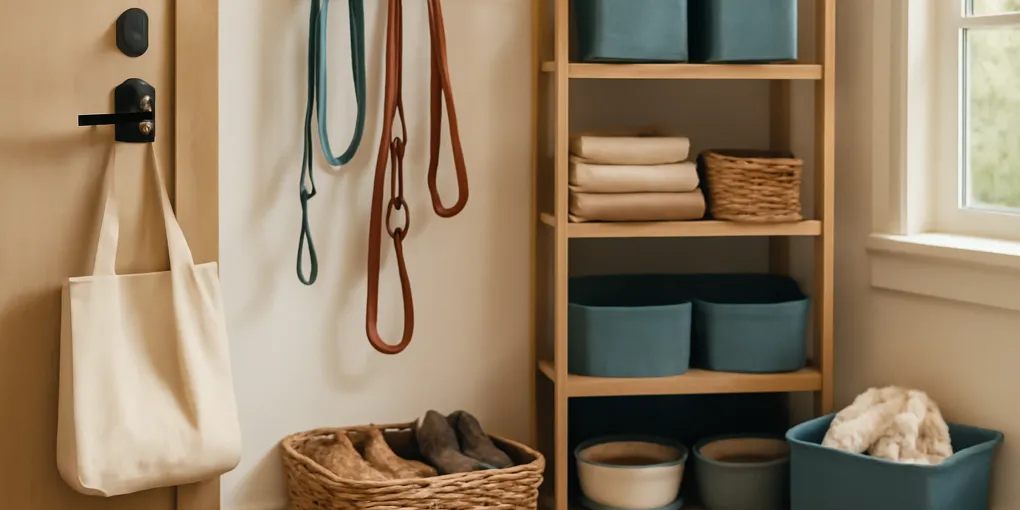
The useful fix is to separate the walking sequence into small zones: leash, harness, bags, towel, and human carry items. When each piece has a return path, the entryway stops acting like a knot factory.
Quick picks for the walking loop
- For most homes: wall-mounted leash hooks with a small shelf (Search Amazon for wall-mounted leash hooks with shelves).
- For multiple pets or walkers: pet walking station organizer (Search Amazon for pet walking station organizers).
- For rainy routes: washable entryway towel bin (Search Amazon for washable pet towel bins).
If the floor near the door is already narrow, choose wall storage before adding a basket.
The leash pile is really a sequence pile
A walk starts before the door opens. Someone needs the leash, a fitted harness or collar, waste bags, maybe treats, a towel for rain, and keys. If those items live in different rooms, the missing piece gets replaced by improvisation. If they all live in one loose basket, the leash wraps around everything.
That is why a pet walking station should be organized by action. Grab leash. Clip harness. Take bags. Wipe paws. Return wet gear. This is the same friction pattern behind our rainy-day entryway umbrella station protocol: wet outdoor gear needs a landing zone that expects moisture and urgency.
Wall hooks with a shelf: best first fix
A wall-mounted hook rail with a small shelf is the best first option for one or two pets. The hooks keep leash clips visible, while the shelf can hold a bag roll, key bowl, or small treat container.
Best use: one daily leash per pet, one harness or collar, and a small bag supply near the door.
Caveat: hook spacing matters. If hooks are too close, metal clips and retractable handles knock into each other. Put the most-used leash on the outside hook and keep backup leashes somewhere else.
Current options: Search Amazon for wall-mounted leash hooks with shelves.
Walking station organizers: best for shared routines
An all-in-one pet walking station helps when several people walk the dog or several pets use different gear. Look for separate hooks, a small shelf, and a bag-storage spot that does not require opening a drawer during a rushed exit.
Best use: households with two dogs, dog walkers, kids who help with walks, or gear that changes by weather.
Caveat: avoid stations that invite every pet item to live at the door. Grooming tools, extra collars, medications, and seasonal costumes do not belong in the daily walking lane.
Current options: Search Amazon for pet walking station organizers.
Towel bins: best for wet paws and muddy gear
A washable towel bin solves a different part of the loop. It gives wet towels and damp harnesses a contained landing spot instead of letting them spread over the floor, stair rail, or bench.
Best use: rainy climates, yards with mud, dogs who need paw wipes, and entryways without a mudroom sink.
Caveat: moisture needs turnover. Use washable, breathable storage and move wet towels to laundry promptly. A closed decorative basket can hide damp fabric until it smells.
Current options: Search Amazon for washable pet towel bins.
Walking-station buying checks
The right organizer separates the walking sequence: leash, bags, towel, treats, and keys each need a predictable position. Check:
- Hook strength: choose wall-mounted hardware for heavy leashes or multiple dogs; adhesive hooks are better for light backup gear.
- Wet-item handling: a washable towel bin prevents damp gear from turning the hook area into a floor pile.
- Shared-routine clarity: labels or separate hooks matter when more than one person walks the dog.
Where to place the station
Place the station on the hinge side or adjacent wall, not where the door will crush the leash. Keep clips high enough that pets cannot mouth them and low enough that the walker does not stretch while holding the dog.
If children help with walks, separate child-safe tasks from adult-only gear. A child can grab a towel or bag roll while the adult handles leash clipping and door control.
What to remove from the door zone
Remove duplicate leashes, broken clips, old collars, treat bags that do not seal, and seasonal gear that is not in use. The door zone should hold today’s walk, not the entire pet supply archive.
Do not store medication, grooming scissors, or loose small items where pets or children can reach them. If the station needs treats, use a small closed container and refill it from a larger pantry supply.
FAQ
Are adhesive leash hooks strong enough?
Use screw-mounted hooks for heavy leashes, retractable handles, or multiple pets whenever possible. Adhesive hooks can work for light bag rolls or towels, but falling hardware near a doorway creates more chaos.
How do I organize leashes for two dogs?
Give each dog a named hook or side of the station. Keep only the current leash and fitted harness there; put backup leashes in a separate pet bin so daily gear stays fast.
Should muddy towels stay by the door?
Only temporarily. Keep a washable bin for the first landing, then move damp towels to laundry before odor or mildew starts.
Source notes
For clear-path fall-prevention basics, see CDC fall-prevention guidance: https://www.cdc.gov/falls/prevention/index.html. For everyday dog-care routines, including walks and exercise, review ASPCA general dog care guidance: https://www.aspca.org/pet-care/dog-care/general-dog-care.