Wet Umbrella Drop Zone Protocol: Stop Entryway Puddles Without a Bigger Basket
ProtocolQuick picks
| Product | Key Specs |
|---|---|
| See price on Amazon |
|
| See price on Amazon |
|
| See price on Amazon |
|
Product availability, certifications, and retailer details can change; check the current Amazon page before buying.
Wet umbrellas are small, but they create an entryway problem that ordinary baskets do not solve. They drip onto floors, lean across the walking path, transfer moisture to mail and shoes, and stay in the doorway long after the rain stops. A wet umbrella drop zone protocol gives rain gear a short, washable lane instead of letting every storm reset the clutter pile.
This protocol is for homes where umbrellas, rain jackets, wet shoes, and dog-walk gear land near the same door. If the larger entry system is failing, start with our landing zone reset protocol and use this as the rainy-day module inside that zone.
Product path for this protocol
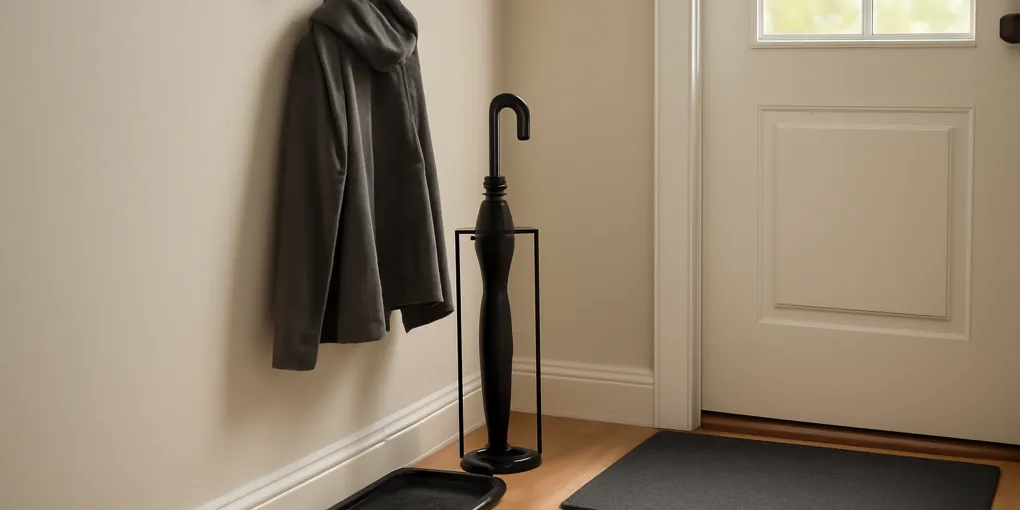
- Upright umbrella control: Search Amazon for umbrella stands with drip trays. Use this when long umbrellas lean against walls or slide behind the door.
- Floor protection: Search Amazon for low-profile boot trays. Use this when wet shoes and umbrellas need one washable landing strip.
- Jacket drying: Search Amazon for entryway rain jacket hooks. Use this when wet coats migrate to chairs, stair rails, or mail tables.
Step 1: find the actual drip path
Put a towel down during the next rainy entry and watch where water lands. Most homes do not need a large mudroom overhaul. They need to move the wet zone six inches out of the door swing, away from mail, and out of the narrowest walking path.
The drip path includes more than the umbrella tip. Long umbrellas shed water along the canopy, compact umbrellas drip from the folded fabric, rain jackets drip from cuffs, and wet shoe soles leave a short track. If those items land in three different places, the entryway feels messy even when every product has a container.
Step 2: choose a washable catch surface before choosing a stand
A boot tray, washable mat, or umbrella stand with a removable drip cup is more important than a stylish container. Water needs somewhere to collect and a simple way to be emptied or dried. A woven umbrella basket can look tidy while hiding dampness at the bottom.
Moisture control matters because persistent damp surfaces encourage mold growth. The EPA’s household mold guide emphasizes controlling moisture and drying wet materials promptly (EPA mold and moisture guide). The entryway version is simple: choose a tray you will actually wipe out after storms.
Step 3: keep the wet lane out of the walking lane
Do not place the tray where every person must step over it. A low-profile boot tray works beside the door, under a bench, or along a side wall. It fails in the center of a tight hall where the raised lip catches toes.
Falls are a home-safety issue, especially for older adults. CDC fall-prevention guidance stresses removing tripping hazards and keeping floors clear (CDC falls prevention). A rain gear system should reduce puddles without adding a new obstacle.
Step 4: separate long umbrellas from compact umbrellas
Long umbrellas do best upright in a stable stand. The stand should be heavy enough that one umbrella removed from the side does not tip it over. Compact umbrellas often work better open over a boot tray for a short drying period, then folded into a small bin once dry.
Do not force both types into the same tall cylinder if compact umbrellas disappear at the bottom. A shallow tray for compact umbrellas plus a narrow stand for long umbrellas is often cleaner than one oversized basket.
Step 5: add one drying hook for jackets, not a wall of hooks
Wet jackets need air and a place to drip. Add one or two wall hooks over the same tray or mat if the wall can be anchored securely. Keep hooks low enough for the people who use them but not so low that wet sleeves drag on the floor.
More hooks are not always better. A crowded hook rail turns into a damp pile where the inside layers never dry. If rain jackets need long drying time, move the bulk drying job to a laundry area and keep the entry hook for the first hour after coming inside.
Step 6: reset after storms, not once a season
After a rain cycle, empty the drip cup, wipe the tray, and return dry compact umbrellas to a small bin or shelf. Throw away broken umbrellas that will not close, repair the one worth keeping, and donate duplicates only after they are dry.
This is the habit that keeps the stand from becoming a permanent umbrella graveyard. The drop zone should hold current rain gear, not every promotional umbrella a household has collected.
Fit matrix
- Choose an umbrella stand with a drip tray when long umbrellas lean behind the door.
- Choose a low-profile boot tray when wet shoes and umbrellas land together.
- Choose wall hooks when rain jackets are the reason chairs and banisters stay damp.
- Skip tall woven baskets in homes where the bottom stays wet or hard to clean.
- Skip any tray that blocks the door swing, narrows the hall, or becomes a toe-catch.
Wet umbrella storage FAQ
Should umbrellas dry open or closed?
A soaked compact umbrella usually dries faster partially open over a tray. A long umbrella can drip upright in a stand if the canopy has airflow and the base catches water. Do not leave either one pressed into a damp pile.
Can I put the umbrella stand inside a closet?
Only after the umbrella is mostly dry. A closed closet can hide drips and slow drying. Use the entry tray for the wet period, then move dry umbrellas to a closet if that is where backup rain gear belongs.
What belongs in the rainy-day drop zone?
Keep active umbrellas, a boot tray, one drying hook or rail, and a small towel if needed. Spare umbrellas, off-season rain gear, and broken items should not live in the daily drip zone.
Bottom line
Wet umbrella clutter is a water-management problem before it is a storage problem. Put one washable catch surface beside the door, keep it out of the walking path, separate long and compact umbrellas, and wipe the tray after storms. A small controlled wet lane beats a bigger basket that leaks quietly onto the floor.
Frequently Asked Questions
- Use a narrow upright stand or a low boot tray placed outside the main walking lane. The goal is one obvious wet zone, not a basket that leaks onto the floor.
- Only if it has a stable base and a washable drip catch. Woven baskets and tall fabric bins can hold moisture and hide puddles.
- Limit it to active umbrellas, dry the tray after storms, and move broken or spare umbrellas to donation, repair, or trash instead of leaving them in the stand.