Do Entryway Key Hooks Actually Stop Lost Keys?
Evidence ExplainerQuick picks
| Product | Key Specs |
|---|---|
| See price on Amazon |
|
| See price on Amazon |
|
| See price on Amazon |
|
Product availability, certifications, and retailer details can change; check the current Amazon page before buying.
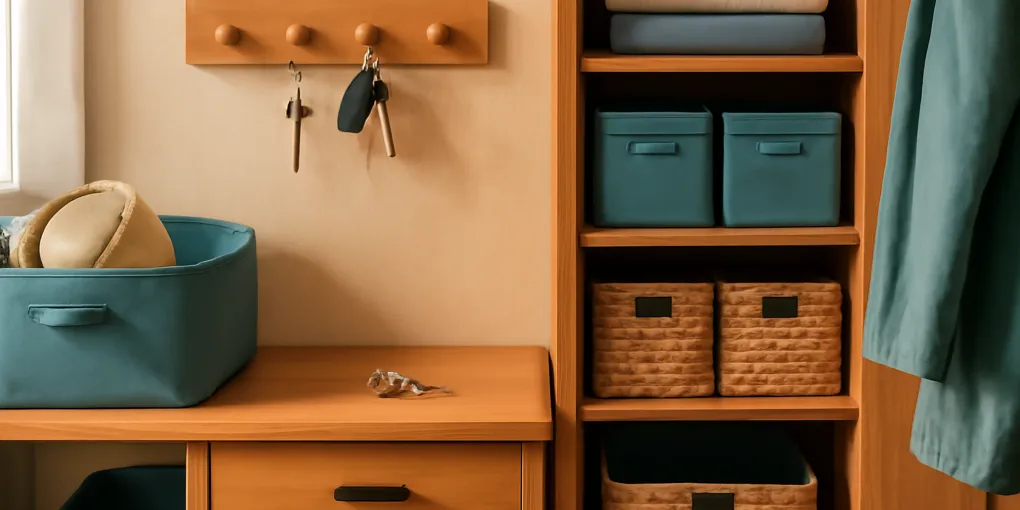
Key hooks can stop lost keys, but not because hooks are magical. They work when they turn one returning action into a visible cue at the exact point where keys leave your hand. A hook mounted in the wrong hallway is just wall decor.
The entryway system should answer one question: where do keys go in the first five seconds after the door opens? If the same area also collects mail, bags, and chargers, use our entryway mail sorter reset protocol to keep the key zone from becoming another paper pile.
Quick product path
- Wall hooks with a small shelf: Search Amazon for wall mounted key hooks with shelf
- Shallow key tray: Search Amazon for entryway catchall tray keys
- Magnetic key holder: Search Amazon for magnetic key holder entryway
- Adhesive key hooks for renters: Search Amazon for adhesive key hooks entryway
Why a key hook can work
A good key hook reduces search in two ways. First, it gives the key ring a single home. Second, it creates a cue that is visible during the return routine. Human-factors research on reminders and prospective memory consistently shows that cues work better when they are distinctive, visible, and tied to the moment of action.
For keys, the moment of action is not Sunday reset time. It is arrival: hand on bag, door closing, shoes still on. The hook has to be on that path. If keys usually ride in a coat pocket, the hook belongs near the coat drop. If they ride in a work bag, the hook or tray belongs where the bag is unpacked.
Hooks vs trays vs bowls
| Return habit | Better tool | Why |
|---|---|---|
| Keys only | Hook rail | The empty hook is a visible missing-key cue |
| Keys plus wallet | Shallow tray | Small everyday carry lands together |
| Rental apartment | Tray or adhesive hook | No drilling and easy removal |
| Metal entry door | Magnetic holder | Uses unused vertical space |
| Shared household | Named hooks or separate slots | Prevents one key ring from burying another |
Hooks make absence obvious. A tray is more forgiving for bulky fobs, wallets, transit cards, and sunglasses. A deep bowl is usually the worst option because keys sink under receipts, earbuds, and loose change.
Placement matters more than style
Mount or place the key station within one step of the real entry route. Do not put it behind coats, inside a closet, or across the room because the wall looks better there. If the key station requires turning on a light or opening a door, it will lose to the nearest counter.
Security matters too. Do not hang keys where they are visible through a window, reachable through a mail slot, or accessible in a shared hallway. In apartments, a small tray away from the door sightline may be safer than decorative hooks next to glass.
The lost-key failure modes
The first failure mode is multiple homes. Keys live in a bag on weekdays, a coat on weekends, the kitchen counter after grocery trips, and a drawer when guests visit. Pick one home for normal days and one travel exception, then remove the other landing spots.
The second failure mode is crowding. If the hook rack also holds dog leashes, masks, flashlights, umbrellas, and mail, the keys disappear visually. Key hooks should hold keys. Put leashes on a separate station like the one in our pet leash wall station guide.
The third failure mode is no exit check. A good key station should be visible when leaving. If the hook is empty, you know to check the bag before locking the door. A drawer hides that cue.
Product fit notes
For wall hooks, check the mounting method, weight rating, and key-ring spacing. Modern car fobs are bulky. Hooks that look fine with flat keys may collide when several fobs hang side by side. For adhesive hooks, follow the surface-prep and cure-time instructions, and avoid textured paint or dusty trim.
For trays, choose shallow and bounded. A tray should hold keys, wallet, and maybe sunglasses, not a week’s mail. A raised lip helps keep keys from sliding, but a deep catchall becomes another junk bowl. Magnetic holders need enough pull strength for the key ring and should not pop loose when a door closes.
A seven-day test
Before drilling, test the spot with painter’s tape, a temporary hook, or a small dish. For seven days, return keys there before doing anything else. If keys still land somewhere else, move the station to the actual behavior. Do not blame the household until the station is in the route.
At the end of the week, remove duplicate key bowls and clear the surrounding shelf. The key home should look almost empty when keys are gone. That visual emptiness is the point.
Entryway key hook FAQ
Should every person have a separate hook?
Yes, in shared homes. Separate hooks prevent one bulky fob from hiding another person’s keys and make missing keys visible before leaving.
Are adhesive key hooks reliable?
They can be reliable for light key rings on smooth, clean surfaces when installed according to the product instructions. They are a poor choice for heavy fobs, textured walls, or humid entry areas.
What if I enter through different doors?
Choose the door used most often and add a small backup tray near the second route. If both doors are used daily, two simple stations may beat one perfect station.
Sources
Frequently Asked Questions
- Hooks are better when keys need a visible return cue. Trays are better when renters cannot mount hardware or when keys travel with a wallet and sunglasses.
- Place them on the route you already use when entering, near the door but not visible or reachable from outside. The best hook is too convenient to skip.
- The hook may be too far from the entry path, hidden behind coats, crowded with other items, or competing with a pocket, bag, or counter habit.