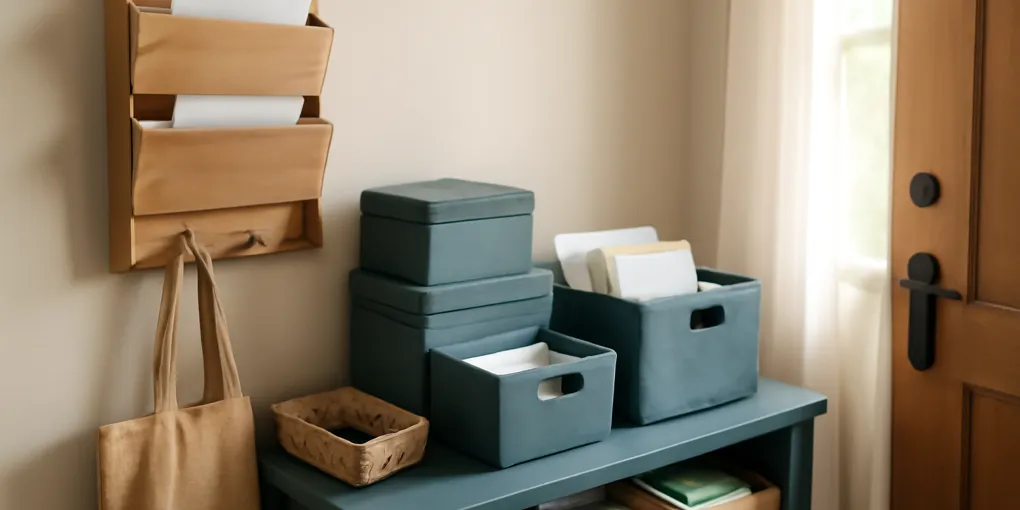
Entryway Mail Sorter Reset Protocol: Stop Paper Piles Before They Reach the Counter
ProtocolQuick picks
Wall-mounted mail sorter
★ Top pick- Why consider it: Best when the entry table already attracts bags, keys, and packages. Mount it near the door at eye level.
Desktop letter tray with two slots
- Why consider it: Best for renters and small apartments where a table or console already exists. Keep it to action and reference only.
Slim entryway recycle bin
- Why consider it: Best for removing envelopes, ads, and inserts before paper reaches the kitchen counter.
Mail piles rarely begin as a filing problem. They begin as an arrival problem. Envelopes come in with keys, bags, receipts, school papers, and packages. If the first flat surface has no decision path, the pile wins before anyone sits down.
This protocol uses a deliberately small entryway system: one sorter, one recycle path, and one weekly review. The goal is not to create a home office at the door. The goal is to stop low-value paper from migrating to the kitchen counter and to keep high-value paper visible long enough to act on it.
Quick Picks
- Wall-mounted sorter for narrow entries: Search Amazon for wall-mounted mail sorters
- Two-slot tabletop sorter for renters: Search Amazon for two-slot mail sorters
- Slim bin for envelopes and inserts: Search Amazon for slim entryway recycle bins
- Small tray for keys so mail does not share the same landing zone: Search Amazon for entryway key trays
If you buy only one item, buy the recycle bin or place one within arm’s reach. Removing junk immediately matters more than buying a beautiful sorter.
Why entryway paper gets out of control
Mail is decision-dense. A single handful can include a bill, a medical explanation of benefits, a coupon, a school notice, a privacy notice, a catalog, and an envelope that needs shredding. When that bundle lands in a kitchen or hallway with no first sort, every piece waits for a perfect filing session.
The Federal Trade Commission recommends protecting personal information and watching for identity-theft risks. That is one reason mail clutter needs a simple triage habit rather than one mixed pile: ordinary flyers can go to recycling, while papers with account or identity details need a more secure disposal path. Source: FTC identity-theft and online security guidance.
Local recycling rules vary, but most curbside programs want paper separated from plastic film, cards, and contaminated material. A small recycle spot near the door makes the easy decision immediate instead of deferred.
The two-slot rule
Use only two active mail categories at the entry:
- Action: pay, sign, call, reply, schedule, scan, or return.
- Reference: keep briefly because it supports a near-term appointment, package return, school event, or tax/insurance task.
Everything else should leave the entry on day one. Recycle obvious junk. Shred identity-risk papers. Move magazines to the actual reading spot or cancel them. File long-term records during the weekly review, not at the door.
More slots sound organized, but they often create hidden piles: bills, coupons, forms, school, insurance, receipts, warranties, and later. If nobody empties those slots weekly, the sorter becomes a vertical junk drawer.
Step-by-step reset
1. Empty the existing pile
Take every piece of mail, receipt, flyer, and school paper from the counter, entry table, fridge top, and bag pocket. Put it in one temporary box. Do not sort while walking around.
2. Create three exits
Set up recycle, shred, and action/reference. The first two should be immediate exits, not categories inside the sorter.
3. Choose the sorter location
Put the sorter where mail enters, not where you wish you processed paperwork. If the kitchen is the current drop zone, place the system between the door and kitchen if possible.
4. Label two slots
Label them Action and Reference. Use real labels, not memory. Labels reduce household negotiation because everyone can see what the slot means.
5. Add a weekly review appointment
Pick a recurring ten-minute time. During that window, pay, scan, schedule, file, or discard every action paper. If it takes longer than ten minutes, the entryway is collecting too much or the weekly slot is too infrequent.
6. Reset the surface
Leave the entry table with only the sorter, key tray, and maybe one lamp or bowl. A crowded table invites paper to blend into other clutter.
Which sorter style to buy
Wall-mounted sorters work best in narrow entries and homes with children or pets. Mount them so adults can see the action slot without bending. Avoid deep pockets that hide envelopes.
Tabletop sorters work best for renters and console-table entries. Choose two or three shallow slots, not a magazine rack. If the sorter can hold months of paper, it is too large for this job.
A lidded box is usually wrong for active mail. If paper is out of sight before it is handled, bills and forms become easier to miss.
Common failure points
The first failure is keeping coupons at the door. Coupons need a shopping decision, not entryway storage. If you do use them, keep only current store-specific coupons in the bag or car where they are used.
The second failure is mixing keys, sunglasses, and mail in one tray. Keys need a drop zone, but paper needs a decision path.
The third failure is not deciding what gets shredded. Use FTC privacy guidance as the baseline: keep papers with account numbers, Social Security numbers, medical information, and other identity-sensitive details out of an ordinary open paper pile.
Five-minute reader test
You should be able to answer these before buying anything:
- Where will junk mail go within five seconds of entering?
- Where will identity-risk mail wait for shredding?
- Which two slots will remain visible?
- When will the action slot be emptied?
If any answer is vague, fix the process before upgrading the container.
FAQ
Is a big family command center better than a mail sorter?
Only if it is actively maintained. For mail alone, a two-slot sorter plus recycle path is more reliable than a large board with many unlabeled pockets.
What if mail enters through the garage?
Put the first-sort system at the garage entry or mudroom, not the front door. The system belongs on the actual route.
Should I keep receipts in the mail sorter?
Only receipts tied to an active return or reimbursement. Daily spending receipts need a separate scan, wallet, or trash habit.
Related reading: if the entry table is also a drop zone for bags and keys, start with why flat surfaces become clutter magnets.