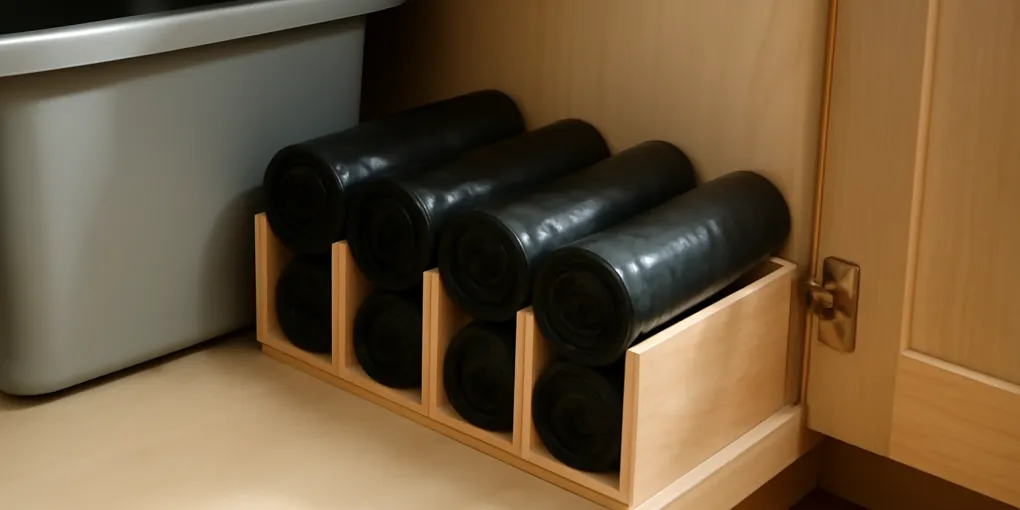
Bamboo or plastic trash bag roll box
Best overallBest For: Standard kitchen, recycling, and small liner rolls stored on a shelf
$18-45
Quick picks
| Product | Key Specs |
|---|---|
| See price on Amazon |
|
| See price on Amazon |
|
| See price on Amazon |
|
Product availability, certifications, and retailer details can change; check the current Amazon page before buying.
A trash bag organizer should solve a very specific kitchen problem: the next liner needs to be reachable when the bin is full, but the spare rolls should not roll behind the disposal line, absorb sink leaks, or disappear under cleaning bottles. A tidy row of bag rolls is useful only if it keeps the trash workflow faster and the cabinet safer.
For most kitchens, the best trash bag organizer is a rigid roll box or divided shelf bin sized for the exact rolls you use. If the trash can lives in a pull-out cabinet, an integrated rear pocket can be even better. If the under-sink area is already crowded, a wall-mounted dispenser on a cabinet side or pantry wall may beat another box on the floor.
If your cabinet also stores sprays or detergents, pair this with our under-sink storage safety protocol so bag storage does not become a reason to bury hazardous products.
Quick picks
- Main kitchen liners: Search Amazon for trash bag roll organizer cabinet. Choose this for 13-gallon rolls and mixed recycling liners on a dry shelf.
- Narrow base cabinet wall: Search Amazon for wall mounted trash bag dispenser cabinet. Choose this when the shelf is already full but one side panel is open.
- Pull-out trash cabinet: Search Amazon for pull out trash can cabinet bag storage. Choose this when the bin already rides on slides and the bag roll can live behind or beside it.
- Bulk contractor bags: Search Amazon for large trash bag storage box. Choose this for garage and outdoor liners that are too wide for a kitchen drawer.
Start with roll size, not cabinet dreams
Measure the roll you actually buy. A compact roll of 13-gallon kitchen liners may fit in a shallow bamboo box, while warehouse packs and drawstring rolls can be too fat or too long. Many organizers show neat rolls in product photos, but the interior width, slot spacing, and lid clearance determine whether the roll pulls cleanly.
The best setup usually separates three jobs: the active kitchen roll, specialty small liners, and bulk backstock. The active roll belongs near the trash can. Small bathroom or office liners can sit in a second slot. Bulk packs can stay on a pantry shelf, garage shelf, or utility closet where they do not steal prime cabinet space.
Best overall: divided roll box
A divided roll box works when you rotate two or three liner sizes. Look for removable dividers, a front slot that does not tear thin bags, and a lid that opens fully for reloading. Clear plastic is easier to inspect; bamboo looks calmer on an open shelf but hides low inventory unless you label the slots.
Avoid a box that sits directly on an under-sink cabinet floor if that cabinet has had leaks. The EPA notes that moisture and household conditions affect indoor mold and cleanup risk, so a wet cabinet floor is not a good place for paper goods, cardboard packaging, or rolled plastic that will be touched during food cleanup (EPA mold and moisture guidance). Use a raised shelf, door rack, or dry pantry position instead.
Best for tight cabinets: wall-mounted dispenser
A wall-mounted dispenser is useful when the cabinet floor is dominated by a trash can, recycling bin, or plumbing. Mount it where the roll can spin or pull without hitting the bin frame. If the product uses adhesive, check the surface: unfinished cabinet wood, dusty melamine, and textured paint can fail faster than a clean smooth side panel.
Screw-mounted dispensers are more reliable, but they are not renter-friendly. Before drilling into a cabinet side, confirm there is no drawer slide, hinge screw, or appliance panel behind the mounting spot. A dispenser that falls into the trash cabinet is worse than a loose roll.
Best integrated setup: pull-out bin plus bag pocket
Some pull-out trash systems include a rear storage pocket or enough frame space for a roll. This is the fastest workflow because a new liner sits beside the bin, not in another room. It also keeps spare bags away from the wet zone under a sink when the pull-out bin lives in a dry base cabinet.
Check cabinet depth carefully. Pull-out hardware often needs clearance behind the bin and at the door. If the bag roll makes the slide stop short, the system will feel broken every day. For shared cabinets, leave the cleaning supply side separate from the bag side so no one has to move sprays to change a liner.
Fit matrix
| Kitchen setup | Better organizer | Watch out for |
|---|---|---|
| Dry shelf beside pull-out bin | Divided roll box | Measure roll diameter before ordering |
| Trash can under the sink | Wall-mounted side dispenser | Keep clear of plumbing and leak-prone floor areas |
| Cabinet with slide-out bin | Rear pocket or frame-mounted roll holder | Confirm full slide travel with the roll loaded |
| Warehouse-size trash bags | Large lidded storage box | Do not waste prime kitchen drawer space |
| Multiple small liner sizes | Clear divided bin | Label by bin size, not room name |
What not to store with trash bags
Do not bury trash bag rolls under dish soap, drain cleaners, pesticide bottles, or loose batteries. HealthyChildren’s childproofing guidance from the American Academy of Pediatrics advises keeping household cleaners and other hazards out of children’s reach and secured (HealthyChildren childproofing guidance). A roll of bags should not require digging through risky products with wet hands.
Also avoid storing bags directly under a leaking disposal, behind a flexible drain line, or next to a compost caddy that sweats. If the active roll smells musty or feels dusty, the organizer is in the wrong place.
How to choose between bamboo, plastic, and metal
Bamboo boxes look best on an open pantry shelf or a visible utility shelf, but they are not always the safest under-sink choice. They can stain if a bottle leaks nearby, and some models use narrow slots that catch thin drawstring bags. Choose bamboo when the storage spot is dry, visible, and used by adults who will reload the rolls carefully.
Plastic boxes are more forgiving in kitchens with kids, renters, or damp cabinets. A clear plastic box shows which roll is low, wipes clean after a spill, and usually costs less. The tradeoff is rigidity: a flimsy box can bow when the roll is heavy, making the dispensing slot pinch.
Metal wall dispensers and wire holders are best when the roll needs to move off the shelf entirely. They need stable mounting and enough clearance for the roll to turn. If the dispenser is mounted too close to a bin frame, the bag will tear or the roll will pull the organizer loose. Leave room for the cabinet door hinge swing, too; a dispenser that blocks the door by half an inch will be removed after one annoying week.
A ten-minute installation check
Before committing to the final location, load the organizer and run the real refill motion. Open the cabinet door fully. Pull one bag. Lift the trash can or slide the bin out. Close everything. If any step requires two hands, bending around plumbing, or moving cleaning supplies, the location is too clever.
The best spot is usually boring: side wall within reach, upper dry shelf, or rear pocket in a pull-out trash cabinet. Label the slots by actual bag use: kitchen trash, recycling, bathroom liners, compost bags. Size labels alone are less useful because many people do not remember whether the bathroom bin takes four-gallon, six-gallon, or eight-gallon liners.
Trash Bag Organizer FAQ
Should trash bags be stored in the same cabinet as cleaning supplies?
Only if the cabinet has clear separation. Keep cleaning products upright in a bin or caddy, and keep trash bags in their own dry slot so changing the liner does not disturb chemicals.
Is a drawer better than an under-sink shelf?
A drawer is better when it stays dry, opens fully, and fits the roll without smashing it. Under-sink storage is acceptable only when plumbing is clear and the roll is raised off leak-prone areas.
How many trash bag rolls should stay in the kitchen?
Keep one active roll and maybe one backup. Store bulk cases somewhere less valuable. Kitchen cabinets work best when they hold the next action, not the whole warehouse pack.
Do I need separate organizers for recycling and trash bags?
Not always. A divided box with labeled slots is enough for most homes. Separate organizers make sense only when recycling liners, compost bags, and kitchen trash bags are different sizes and used daily.
Bottom line
Buy the organizer that matches the failure point. A divided roll box fixes mixed liner sizes on a dry shelf. A wall-mounted dispenser fixes a narrow cabinet. A pull-out system fixes the refill workflow beside the bin. The best trash bag organizer is not the prettiest box; it is the one that keeps the next liner visible, dry, and reachable without crowding plumbing or hazardous supplies.
Frequently Asked Questions
- Store the active roll within one reach of the trash can, but keep it out of wet under-sink zones and away from loose cleaning products.
- Wall-mounted dispensers are better when shelf space is tight; boxes are better when you rotate several bag sizes and need visible labels.
- They can if the area stays dry and does not crowd plumbing or hazardous supplies, but a side wall, pull-out drawer, or pantry shelf is often cleaner.