Quick picks
| Product | Key Specs |
|---|---|
| See price on Amazon |
|
| See price on Amazon |
|
| See price on Amazon |
|
Product availability, certifications, and retailer details can change; check the current Amazon page before buying.
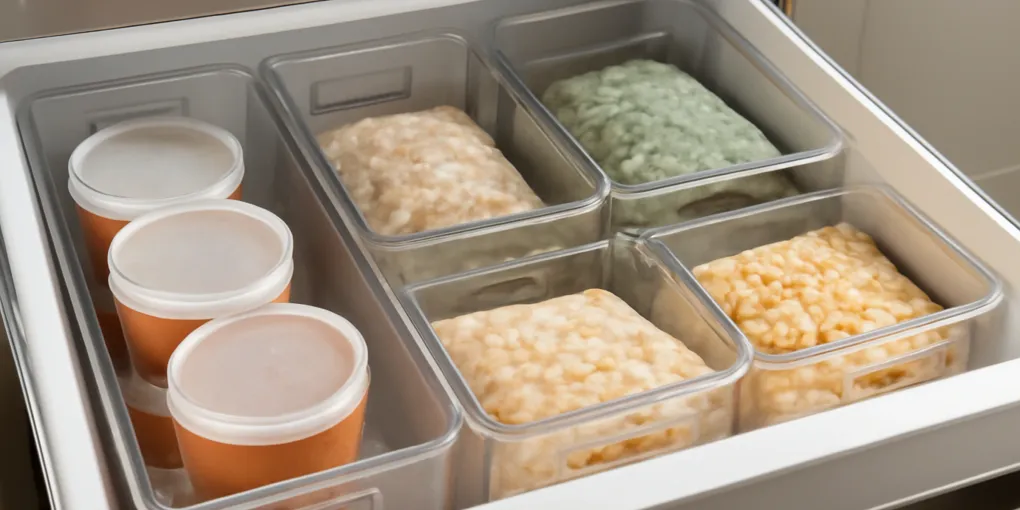
A freezer inventory bin system works when it solves two problems at once: you can reach the food, and you can identify it before it becomes a frozen mystery. Bins without labels still create archaeology. Labels without bins still require digging.
The system below is for normal household freezers, upright freezers, and chest freezers. If the bigger problem is pantry visibility, see our guide to pantry shelf risers for deep cabinets for the shelf version of the same access problem.
Quick product path
- Clear freezer-safe bins: Search Amazon for freezer safe clear bins with handles
- Chest freezer wire baskets: Search Amazon for chest freezer wire baskets
- Freezer labels and marker: Search Amazon for freezer labels marker
- Silicone freezer trays for portions: Search Amazon for silicone freezer trays soup portions
The evidence-backed part is temperature and visibility
Food-safety agencies are consistent on the temperature baseline: freezers should be kept at 0°F or below. USDA freezer guidance explains that freezing keeps food safe by slowing microorganisms, but quality still declines over time. FDA refrigerator and freezer storage guidance also points back to proper temperature control and storage time awareness.
Organization cannot rescue food that thawed, leaked, or was stored warm. It can reduce waste by making older food visible and easier to use first.
Bin categories that work
Start with broad categories, not perfect micro-sorting:
| Bin or basket | What belongs there | Why it helps |
|---|---|---|
| Proteins | Meat, fish, tofu, prepared proteins | Keeps thawing decisions in one zone |
| Vegetables and fruit | Frozen produce and smoothie packs | Stops half bags from sliding everywhere |
| Ready meals | Soups, leftovers, batch-cooked dinners | Makes busy-night food visible |
| Breakfast | Waffles, bread, muffins, breakfast burritos | Prevents small boxes from burying meals |
| Use-first | Older dated items | Creates a visible first-in-first-out lane |
If a category rarely contains more than one item, do not give it a dedicated bin. The goal is fewer decisions when the freezer door is open.
Upright freezer setup
Clear handled bins work well in upright freezers because they act like drawers. Keep them shallow enough that you can see the back. Do not block air vents, sensors, or the door seal. If the drawer needs force to close, the system is too tall.
Put the use-first bin at eye level. Put raw proteins below ready-to-eat foods when possible so leaks are less likely to contaminate other packages during thawing or a partial defrost.
Chest freezer setup
Chest freezers need lift-out baskets, not only labels. Put heavy or long-storage items lower and faster-turnover items in top baskets. Keep a simple map on the freezer lid or nearby wall: top left proteins, top right vegetables, bottom left meals, bottom right bulk bread.
Do not rely on memory. A chest freezer is a deep box with cold fog and awkward reach. The map prevents duplicate buying and reduces the temptation to leave the lid open while searching.
The use-first bin
The use-first bin is the part that turns storage into behavior. It should hold older soup containers, partial vegetable bags, single servings, and anything you keep seeing but not cooking. Put it at the easiest reach point, then check it before writing the grocery list.
Do not make the use-first bin a punishment zone full of food nobody wants. If a package is unlabeled, badly freezer-burned, or outside your quality comfort zone, discard it instead of preserving guilt. The bin should help tonight’s dinner decision, not archive mistakes.
Label rules
Every homemade package should show contents and date before freezing. Use large writing on the flat face that will be visible in the bin. For sauces, soups, and leftovers, add quantity if that affects meal planning.
Use a monthly freezer sweep. Move older but safe food into the use-first bin and plan it into the next grocery cycle. Throw away packages that are unlabeled, badly freezer-burned, leaking, or outside your household’s quality comfort zone.
Product fit notes
For upright freezer drawers, measure drawer interior width and depth before ordering bins. Handles are useful only if they do not steal too much usable space. For chest freezers, wire baskets are often better than solid bins because cold air moves around them and crumbs or frost are easier to see.
Freezer labels matter more than decorative containers. Use labels that stay attached in cold, damp conditions and write before condensation forms. If you freeze flat bags of soup or sauce, freeze them on a tray first, then file them vertically in a bin once solid. Keep raw meat packages in a contained lower zone so leaks during thawing or partial defrost are easier to control before the next inventory sweep. Keep one thermometer visible near the front.
Freezer inventory FAQ
Do I need an app?
No. A whiteboard, notes app, or paper list can work. The best inventory is the one updated when food goes in and out.
Can I use pantry bins in the freezer?
Only if the plastic tolerates freezer temperatures and does not crack. Freezer-safe bins or wire baskets are safer choices for repeated cold use.
How often should I clean out the freezer?
A monthly five-minute sweep is enough for many households. Do a deeper clean when ice buildup, leaks, odors, or mystery packages appear.
Sources
- National Center for Home Food Preservation: General information on freezing
- FDA: Refrigerator and freezer storage chart
- Michigan State University Extension: Freezing foods for storage
Frequently Asked Questions
- The best system combines broad bins, dated labels, and a short inventory list on the freezer door or phone. Bins alone help access, but labels prevent mystery packages.
- Use bins sold for freezer or refrigerator use, keep vents clear, and do not force drawers shut. Brittle non-freezer plastic can crack.
- Use lift-out baskets by category and keep a written map near the freezer. Deep freezers hide food quickly when every package is loose.