Quick picks
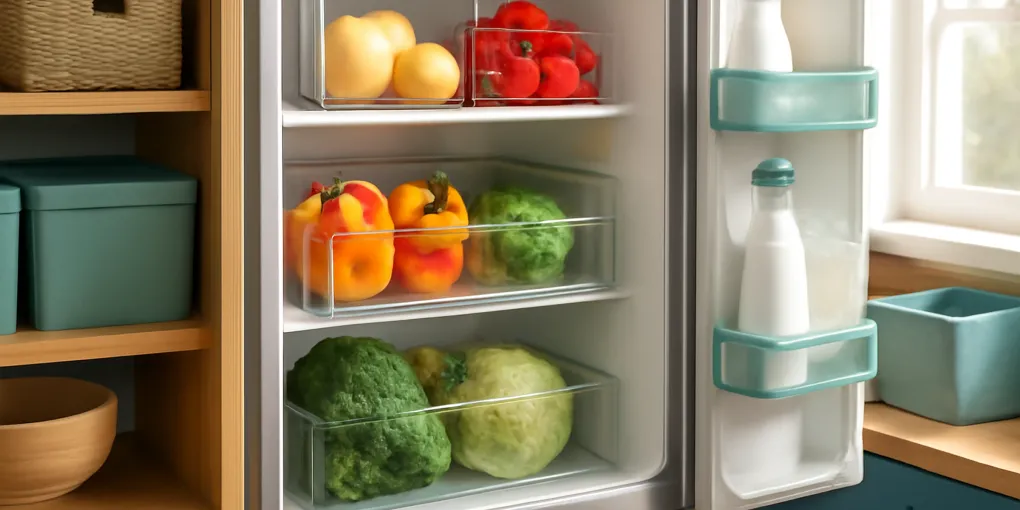
Clear fridge bins with handles
★ Top pick- Why consider it: Best for grab-and-go groups such as yogurts, snack packs, condiments, and breakfast items.
Dissolvable food date labels
- Why consider it: Best when leftovers and opened foods are the real waste source. Labels matter more than the bin.
Shallow fridge lazy Susan
- Why consider it: Best for condiments on deep shelves, not for produce that needs drawer humidity control.
Clear fridge bins look like an obvious food-waste fix: make food visible, group similar items, and stop small packages from disappearing. Sometimes they do exactly that. Other times they turn a refrigerator into a stack of plastic drawers that hide dates, crowd airflow, and make cleanup slower.
The question is not whether clear bins are neat. The question is whether they change the next food decision: what should be eaten first, what is already open, what is expiring, and what should not be bought again this week.
Quick Picks
Clear fridge bins can reduce wasted food when they are used for specific, high-turnover categories and paired with date labels. They are weak when used as a decorative full-fridge makeover.
Start with one or two bins:
- A use-first bin for leftovers and opened foods.
- A breakfast or lunch bin for repeated daily items.
- A condiment turntable only if deep shelves bury bottles.
Useful products to compare:
- Search Amazon for clear fridge bins with handles
- Search Amazon for dissolvable food date labels
- Search Amazon for shallow fridge lazy Susans
What the evidence says about food waste
Food waste is partly a visibility problem, but it is also a planning and date-understanding problem. The FDA notes that food loss and waste often happens at the consumer level, where planning, storage, and using food in time matter. Source: FDA food loss and waste guidance.
The FDA emphasizes that keeping refrigerators at safe temperatures and using leftovers within recommended timeframes are central food-safety practices. Source: FDA refrigerator and freezer storage guidance.
That means a clear bin helps only if it supports those behaviors. A bin that says “eat first” can help. A bin that hides a container with no date does not.
Where clear bins work well
They work well for small packages that fall behind larger items: yogurt cups, cheese sticks, snack vegetables, lunch components, and single-serve drinks. A handled bin lets you pull the whole category forward, see the back row, and clean spills outside the fridge.
They also work for leftovers if you add a date label. The best leftover bin is shallow enough that containers cannot stack into a mystery tower. Put newer leftovers behind older ones, and review the bin before cooking or ordering food.
They work for condiments only when the problem is depth. A shallow turntable or bin can stop duplicate mustard, sauce, and dressing bottles. It will not solve a fridge door packed with expired bottles unless you edit first.
Where bins make things worse
Produce is the biggest caution. Many fruits and vegetables need the humidity control of crisper drawers. Moving everything into open bins on shelves can shorten quality or create crowding. Keep produce storage consistent with the refrigerator manual and food-safety guidance.
Large opaque leftovers are another problem. A clear bin does not make an opaque container transparent. Label the lid or switch to clear containers if the contents are routinely forgotten.
Bins also fail when they fill every shelf edge to edge. Refrigerators need cold air circulation. If containers block vents or make shelves difficult to wipe, the system is too dense.
The three-bin maximum
Most households should start with no more than three refrigerator organizers:
- Use-first leftovers.
- Daily breakfast/lunch items.
- Condiment or sauce group.
If you need more than that, the problem may be buying volume, duplicate categories, or unclear meal planning. More containers can make the fridge look controlled while increasing the number of things to remove during cleanup.
Setup protocol
- Check the refrigerator temperature with a thermometer.
- Empty one shelf at a time.
- Discard spoiled food and expired items according to food-safety guidance.
- Choose one high-waste category to contain.
- Add date labels to leftovers and opened perishables.
- Leave open space near vents and tall items.
- Review the use-first bin before shopping.
- Wash bins weekly or whenever spills appear.
If the system does not change what you eat first, remove the bin.
How to buy clear fridge bins
Choose bins with handles and straight sides if you pull them out often. Measure shelf depth and height with the refrigerator door closed. Avoid tall bins that force you to stack containers or remove shelf flexibility.
Look for smooth interiors that can be washed easily. Skip decorative bins with grooves that trap spills. For leftovers, date labels may be a better first purchase than another container.
What matters more than a matching set
Start with the food you actually lose. A use-first leftover bin, a breakfast/lunch bin, or one condiment group can make expiration dates and opened packages easier to notice. A full set of matching containers is only useful if it keeps dated food visible instead of hiding it behind another wall of plastic.
The strongest buying signals are practical: handles that pull straight out, smooth interiors that wash clean after a spill, dimensions that leave airflow around vents, and clear manufacturer guidance for refrigerator use and cleaning. If a bin does not disclose its measurements, or if it is too tall for the shelf with the door closed, skip it.
For most households, the best first purchase is one clear bin plus labels. Add a second only after you know which food category still gets forgotten.
FAQ
Should leftovers go in a clear bin or clear containers?
Use both if leftovers are often forgotten. The bin groups eat-first food; the clear container and date label tell you what it is and when it was stored.
Do fridge bins work for kids’ snacks?
Yes, if the bin is low, labeled, and not overfilled. Keep perishables within safe temperature zones and avoid blocking vents.
Are stackable fridge drawers a good idea?
Only when they do not block airflow or hide dates. Shallow removable bins are usually easier to clean and audit.
Related reading: for the broader behavior pattern, see why fridge clutter causes food waste.