Quick picks
Amazon for Simplehuman compost caddy
Amazon for stainless countertop compost bin
Amazon for under sink compost bin
Amazon for freezer compost bin
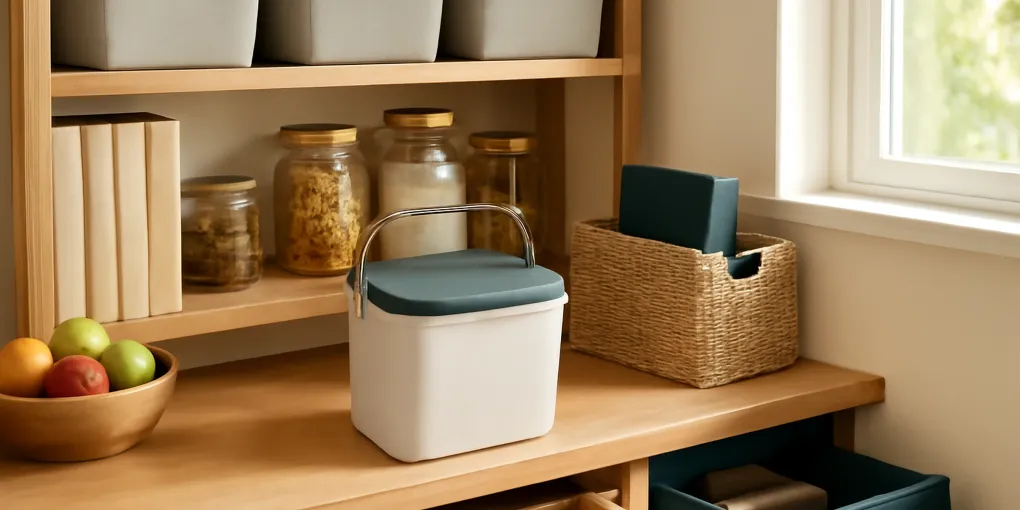
The Simplehuman compost caddy sits in a tricky category. It is not a composter. It is a short-term holding bin for food scraps before they go to municipal compost, a backyard pile, or a freezer bag. That distinction matters because a beautiful caddy cannot fix a household that has nowhere clear to empty scraps. If the adjacent problem is food you forget before using, our guide to why fridge clutter causes food waste is the better starting point.
For the right kitchen, a compact stainless-style caddy can make food-scrap separation easier. For the wrong kitchen, it becomes one more countertop container that needs washing.
Quick picks
- Simplehuman-style countertop compost caddy: Search Amazon for Simplehuman compost caddy
- stainless countertop compost bin with filter: Search Amazon for stainless countertop compost bin
- under-sink food scrap bin: Search Amazon for under sink compost bin
- freezer compost scrap container: Search Amazon for freezer compost bin
Overall rating: 4.0 out of 5 for tidy kitchens that already have a food-scrap routine, lower for households that need a full composting plan.
Best for: frequent cooks, small kitchens, municipal food-scrap collection, and people who want scraps off the cutting board quickly.
Not best for: households that forget to empty bins, kitchens with fruit-fly problems, or anyone expecting the caddy to compost food by itself.
What it solves
A countertop caddy solves the moment between chopping and disposal. Onion skins, coffee grounds, carrot peels, eggshells, and fruit scraps need a landing zone. Without one, they sit in a bowl, go into the trash, or spread across the sink.
A well-sized caddy gives the routine a physical cue: scraps go here, then the bin gets emptied. The Simplehuman-style version adds better aesthetics, a compact footprint, and often a lid or hanging option depending on the model.
What it does not solve
It does not process scraps. It does not make meat, dairy, or greasy food acceptable if your local compost program bans them. It does not eliminate odors if wet scraps sit for days. It does not replace cleaning.
EPA composting guidance emphasizes knowing what materials belong in your compost system and maintaining the right conditions. Municipal food-scrap rules vary, so the caddy should match your actual pickup or composting path.
Simplehuman caddy vs generic stainless bin
| Option | Best fit | Tradeoff |
|---|---|---|
| Simplehuman-style caddy | Design-conscious kitchen, frequent use | Usually costs more |
| Generic stainless bin with filter | Larger scrap volume, budget comparison | Can take more counter space |
| Under-sink mounted bin | Clears counter space | Easier to forget and harder to inspect |
| Freezer scrap container | Odor and fruit-fly control | Uses freezer space and adds one more transfer |
If you already own a Simplehuman trash can, the caddy may integrate neatly with your kitchen habits. If you just need a cheap scrap container, a generic stainless bin or freezer container may be enough.
Odor and cleaning reality
Odor control is mostly about time, moisture, and contents. Coffee grounds and vegetable peels are easier than fish scraps or wet leftovers. A lid helps, but a sealed warm container can still smell when opened. Charcoal filters can help some bins, but they are not a substitute for emptying and washing.
For many households, the best rule is to empty the caddy daily during heavy cooking and every two to three days at most for light scraps, sooner in warm weather. Rinse and dry the liner or bucket before putting it back. If the caddy has seams, hinges, or a mounting bracket, check those spots for residue.
Who should buy it
Buy it if the problem is a messy cutting-board-to-compost transfer. It is especially useful if you cook with vegetables daily and have a clear outdoor bin, curbside collection pail, or freezer transfer system.
Buy it if your counter can spare the footprint. A caddy that has to be moved every time you cook will not last.
Buy it if the nicer design makes the habit more likely. In a visible kitchen, an attractive container can stay out where it will be used.
Who should skip it
Skip it if you do not yet know where scraps go after the caddy. Start with your city or county compost rules, backyard compost setup, or trash policy.
Skip it if fruit flies are already a recurring issue and you will not empty scraps daily. A freezer container may be a better first step.
Skip it if your kitchen counter is already overloaded. Under-sink mounting or a small lidded bowl used only during meal prep may work better.
Setup protocol
- Check local compost or food-scrap rules.
- Decide what goes in: vegetable scraps, coffee grounds, eggshells, or only program-approved items.
- Place the caddy beside the main prep area, not across the kitchen.
- Use a liner only if your compost path accepts it.
- Empty before scraps compress into a wet layer.
- Wash and dry the bucket regularly.
- Keep a small brush or sponge assigned to the caddy so cleaning does not become a separate project.
Compost caddy FAQ
Can I put compostable bags in it?
Only if your local compost program accepts that specific bag type. Some facilities do not accept compostable plastic bags, even when the label sounds convincing.
Is a countertop caddy better than a freezer container?
A caddy is faster during prep. A freezer container is better for odor and fruit-fly control. Small households may prefer the freezer method.
Does the caddy need a charcoal filter?
A filter can help with some odors, but emptying frequency and cleaning matter more. Do not buy a larger bin just because it has a filter.
Sources
Frequently Asked Questions
- It can be worth it if you already separate food scraps, want a compact counter bin, and will empty it often. It is less useful if your main problem is outdoor compost access or inconsistent food-scrap habits.
- It can reduce visible mess and slow odors when emptied frequently, but it will not make old food scraps odor-free. Cleaning frequency and local compost rules matter more than the brand.
- Choose a size you can fill and empty before scraps smell. Smaller bins often work better for apartments and households that cook modestly.