Quick picks
Amazon for IKEA VARIERA shelf insert
Amazon for white metal cabinet shelf risers
Amazon for expandable cabinet shelf risers
Amazon for bamboo cabinet shelf risers
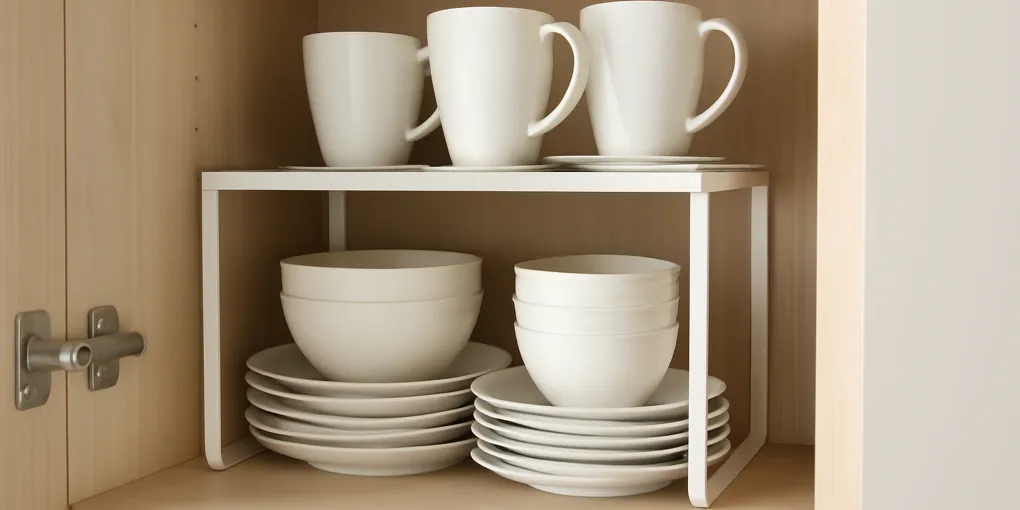
The IKEA VARIERA shelf insert is one of those small kitchen organizers that looks too ordinary to review. It is a simple white riser that adds a second level inside a cabinet. That simplicity is also why it can be useful. Many kitchen cabinets waste vertical space above mugs, bowls, small plates, and pantry cans.
The question is not whether a shelf insert creates another level. It does. The question is whether that level makes the cabinet easier to use or merely creates a wobbly stack. If your larger problem is container chaos, start with why food container lids disappear before adding risers around a broken category.
Quick picks
Verify current dimensions, load information, seller, and return terms before ordering.
- IKEA VARIERA shelf insert: Search Amazon for IKEA VARIERA shelf insert. Best for matching the known white wire look if IKEA is not convenient.
- White metal cabinet shelf riser: Search Amazon for white metal cabinet shelf risers. Good for mugs, small plates, and pantry cans.
- Expandable cabinet shelf: Search Amazon for expandable cabinet shelf risers. Better when cabinet width varies or you want fewer gaps.
- Bamboo cabinet shelf riser: Search Amazon for bamboo cabinet shelf risers. Choose for visible open shelving, not damp or spill-prone storage.
Overall rating: 4.0 out of 5 for low-cost vertical cabinet space, lower for heavy cookware or unstable dish towers.
What the VARIERA shelf insert does well
It solves one narrow cabinet problem: empty vertical air above short items. A mug shelf with eight inches of unused height can become two readable rows. A pantry shelf with small cans can gain a top level for duplicates. A bowl shelf can separate everyday bowls from smaller prep bowls.
The best use cases are light and repetitive. Think mugs under mugs, plates under small plates, or cans under packets. The insert should make the cabinet easier to scan with the door open.
IKEA’s product page identifies the VARIERA shelf insert as a cabinet insert intended to create extra storage space, with specific product dimensions and care details (IKEA VARIERA shelf insert). Those dimensions matter more than the product photo. Measure your cabinet rather than assuming the stock image matches your shelves.
Where it struggles
Shelf inserts struggle when the bottom items are too tall or the top items are too heavy. If you have to tilt every mug to get it under the riser, the setup will annoy you daily. If the top stack is heavy enough to make the riser flex or slide, choose a sturdier fixed shelf or a different cabinet.
It also struggles with mixed categories. A shelf insert for mugs works. A shelf insert holding mugs, protein tubs, vitamins, vases, lunch boxes, and spare lids becomes a small junk shelf.
Best cabinet locations
Everyday mugs
This is the strongest use. Put the most-used mugs on the lower level and occasional mugs above. If everyone reaches for the same two mugs, leave them on the front lower level.
Small plates and saucers
A riser can separate salad plates from bowls or saucers from mugs. Keep stacks short enough that removing one item does not shift the rest.
Pantry cans
Short cans and spice overflow can work on a riser if labels face forward. Avoid stacking glass jars above items you pull several times a day.
Baking supplies
Small extracts, decorating supplies, and short cans can fit. Bags of flour and sugar do not belong on a light shelf insert.
VARIERA vs expandable shelf riser
The VARIERA style is simple and inexpensive, but fixed-width. An expandable shelf can bridge a wider cabinet and reduce the number of separate risers. The tradeoff is stability. Some expandable models have seams or sliding sections that feel less solid under uneven loads.
Choose fixed risers when you have a narrow, predictable category. Choose expandable risers when the cabinet width is awkward and the items are light.
VARIERA vs bamboo shelf riser
Bamboo looks warmer on open shelves and coffee stations. White metal is easier to visually fade into many cabinets and tends to tolerate quick wipe-downs. In closed cabinets, function matters more than style. In open shelving, appearance may justify bamboo if the load is still light.
Do not choose bamboo for a cabinet where bottles leak, dishes are put away damp, or cleaning is rare.
Setup test before committing
Before buying several, test one cabinet with these steps:
- Remove everything from the shelf.
- Group items by actual use, not by hope.
- Measure the tallest lower-level item.
- Measure the tallest upper-level item.
- Check hinge and door clearance.
- Place the riser with the heaviest practical item on top.
- Open and close the cabinet five times.
- Remove one lower item and one upper item without moving the whole stack.
If the cabinet fails steps 7 or 8, the riser is not solving the right problem.
Safety and durability notes
Any cabinet shelf insert should sit flat on the shelf and stay within its listed limits. Do not use it as a step, do not overload it with appliances, and do not stack fragile items where they can slide off the edge. For homes with children, avoid placing breakable or heavy objects on an upper riser where a tug on the lower item could shift the stack.
Trip and fall prevention advice often focuses on floors and pathways, but the same practical principle applies to cabinets: storage should not require awkward reaching or unstable handling. The CDC’s falls prevention guidance emphasizes reducing hazards and making home movement safer (CDC falls prevention).
IKEA VARIERA shelf insert FAQ
Is this good for pots and pans?
Usually no. Pots and pans are heavier, wider, and more awkward than mugs or plates. Use a sturdier cookware rack or a dedicated pan organizer.
How many shelf inserts should go in one cabinet?
Start with one. If the first insert makes the shelf easier to use for two weeks, add another only for a clearly defined category.
Can it work in a pantry?
Yes, for short cans, spice overflow, packets, or small jars. It is not the best choice for heavy bulk goods or tall bottles.
Bottom line
The IKEA VARIERA shelf insert is a good low-cost fix for wasted vertical space in a cabinet with light, repeated items. Buy one, test the reach and stability, then expand only where it makes the shelf easier to scan and unload.
Frequently Asked Questions
- It is worth it for short stacks of plates, mugs, bowls, and pantry cans when cabinet height is wasted. It is less useful for heavy, tall, or frequently shifting stacks.
- It can hold light to moderate dish stacks within the product limits, but do not overload it or use it where items wobble.
- Measure cabinet width, depth, usable height, hinge clearance, and the height of the items you want above and below the insert.