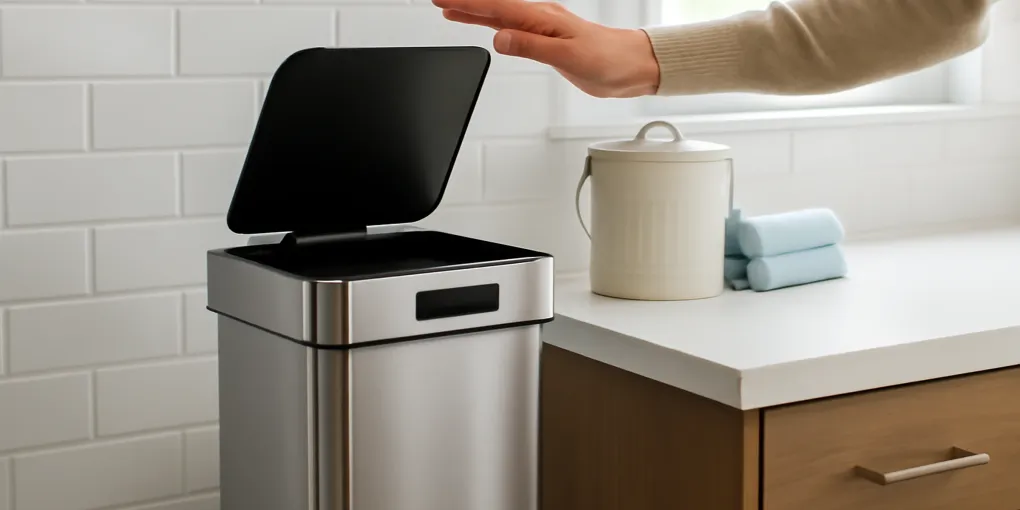
Simplehuman sensor trash can
$140-$250
Quick picks
| Product | Key Specs | Pros / Cons |
|---|---|---|
| See price on Amazon | — |
|
| See price on Amazon | — |
|
| See price on Amazon | — |
|
Product availability, certifications, and retailer details can change; check the current Amazon page before buying.
A premium trash can is not the first thing most people think of as an organizing product. In a kitchen, though, the trash zone shapes counter clutter. If the can is hard to open, too small, ugly enough to hide, or constantly shedding loose liners, scraps and packaging linger on counters longer than they should.
The Simplehuman sensor can tries to solve that with a touch-free lid, polished body, and fitted liner system. It works best when the kitchen already has a sensible trash/recycling layout and the can sits in open space. It is a poor value when the real problem is that trash, recycling, compost, and returns are all fighting for one corner.
Quick verdict
Overall rating: 4.2 out of 5 for open kitchen trash zones where touch-free opening, liner control, and appearance matter.
Best for: cooks with messy hands, households that leave trash visible, kitchens where the can sits at the end of a counter run, and people who will actually buy fitted liners.
Not best for: narrow galley walkways, cabinets where the lid has no room, people annoyed by sensor delays, or homes that need a recycling/compost redesign first.
Compare options:
- Search Amazon for Simplehuman sensor trash can
- Search Amazon for Simplehuman step trash can
- Search Amazon for Rubbermaid step-on kitchen trash can
What the sensor can gets right
The main advantage is low-friction disposal. When hands are wet or covered in food prep residue, waving over the lid is easier than touching a lid or pulling open a cabinet. That can keep wrappers, peels, paper towels, and packaging from pausing on the counter.
The second advantage is visible enough to matter: the can looks acceptable in the open. If a trash can is attractive enough to stay where trash is created, it may work better than a hidden bin that requires opening a cabinet while cooking.
The third advantage is liner control. Many Simplehuman models use fitted liners and built-in liner storage. That reduces the sloppy overhang and under-sink bag pile that can make the trash zone look messier than it is.
What still depends on your kitchen
A sensor can needs clearance. If the lid opens into an island, shelf, or counter lip, the premium feature becomes annoying. If people walk close to the sensor all day, accidental opening can become visual and mechanical clutter.
It also needs the right waste-stream plan. The EPA’s food-waste hierarchy prioritizes preventing wasted food and managing food scraps thoughtfully, not simply buying a cleaner trash can. Source: EPA wasted food scale.
If your kitchen needs recycling, compost, pet-waste, or return-bag zones, solve those flows first. A beautiful trash can can make the wrong system look intentional.
Sensor can vs step can
Choose the sensor can if the can sits in open space and you often approach it with full or messy hands. It is strongest near a prep counter where scraps and packaging are generated.
Choose the step can if reliability matters more than novelty. A foot pedal has no sensor range, no app, no voice feature, and usually less delay. For many homes, the Simplehuman step can is the better premium choice.
Choose a budget step can if the trash area is temporary, hidden in a pantry, or likely to get scratched by pets, kids, or garage use.
Hygiene and maintenance notes
The CDC’s cleaning guidance emphasizes cleaning surfaces that are touched often and handling household waste safely. A touch-free lid can reduce lid touching, but the rim, liner edge, floor around the can, and any compost pail still need cleaning. Source: CDC hygiene basics.
Wipe the lid area weekly, clean spills immediately, and do not let fitted liners substitute for taking trash out before odor builds. If you compost, keep the compost container separate and easier to empty than the main can.
Before you buy: measure five things
Measure lid height with the lid open. Measure the walkway around the can. Measure the distance to the nearest outlet if you prefer plug-in power. Measure the bag capacity you actually fill before trash day. Measure whether the can blocks drawers, oven doors, dishwasher doors, or pet bowls.
Also check liner cost. Fitted liners are convenient, but the ongoing cost is part of the product. If you will switch to loose generic bags, make sure reviewers report they fit without slipping.
When it reduces clutter
It reduces clutter when it shortens the path from food prep to disposal, keeps spare liners in one place, and makes the trash zone acceptable enough to remain visible.
It does not reduce clutter when the can is too far from prep, when recycling piles beside it, or when the sensor makes people avoid using it. Watch the counter for one week after setup. If wrappers still sit out, placement is the issue.
What matters before buying
Research: 30%. The product is judged by workflow and waste-zone behavior, not by a claim that a trash can changes household habits by itself.
Evidence quality: 25%. Manufacturer dimensions, power options, liner compatibility, and public hygiene/waste guidance carry more weight than aesthetic photos.
Value: 20%. The sensor model is expensive, so the premium must buy real workflow improvement over a step can.
User signals: 15%. Common friction points include sensor range, lid speed, battery/power choices, fingerprints, and liner cost.
Transparency: 10%. Clear dimensions and liner compatibility are essential because fit failures are the main avoidable mistake.
FAQ
Is the voice-control version necessary?
Usually no. For most kitchens, the useful feature is reliable touch-free opening, not voice control. Pay for the capacity and shape that fit your space first.
Should the trash can go inside a cabinet instead?
Only if the cabinet location is close to the work zone and easy to open while cooking. A hidden can that is inconvenient often creates more counter trash.
What size is best for a family kitchen?
Choose based on pickup schedule and actual waste stream. If recycling and compost are separate, a smaller main can may work. If everything goes into one bin, undersizing causes overflow.
Related reading: a good trash zone pairs with the broader kitchen decluttering system.