Quick picks
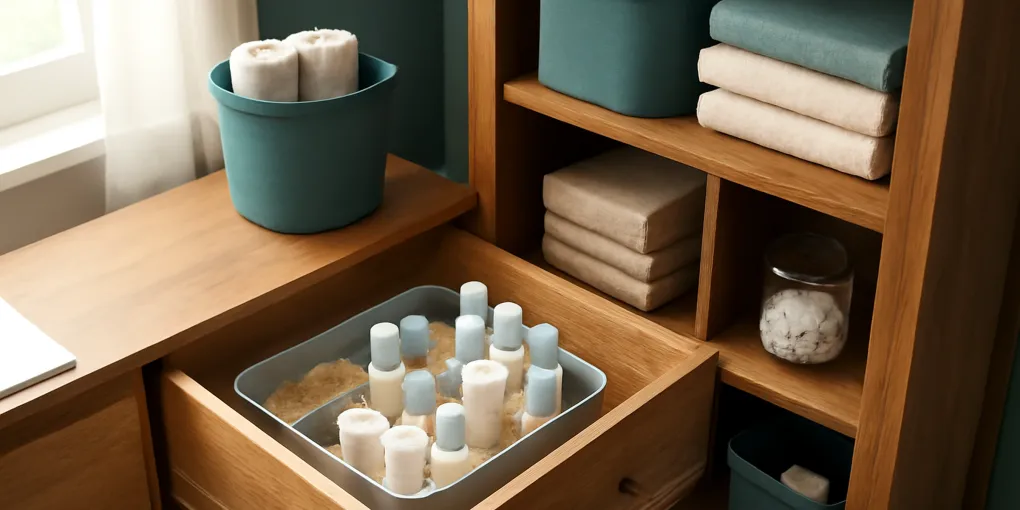
Small clear bathroom drawer bins
★ Top pick Best containment tool- Best for: Separating travel-size shampoo, dental minis, razors, and unopened sample packets
- Price cue: $8-20 per set
- Watch out for: Deep bins hide tiny packets unless categories are narrow
- Makes minis visible
- Lifts out for sorting
- Fits shallow vanity drawers
- Can become a dump bin
- Needs a capacity limit
Travel toiletry pouch
Best if you actually travel- Best for: Keeping current travel-size items packed instead of scattered through drawers
- Price cue: $8-18
- Watch out for: Do not use a large pouch as long-term expired-product storage
- Portable
- Limits the category
- Easy pre-trip check
- Leaks need cleanup
- Duplicates build if it is never emptied
Bathroom drawers collect expired mini toiletries because tiny items feel harmless. A hotel shampoo, sample moisturizer, travel toothpaste, or spare razor does not look like clutter by itself. The drawer fails when dozens of low-commitment items hide labels, leak, expire, and make the products you actually use harder to find.
If the main problem is hot tools and cords, use our bathroom hair-tool cooling station protocol instead. Mini toiletries need a different fix: category limits and condition checks.
The short answer
Mini toiletries pile up because they enter the home without a plan, feel too useful to discard, and are too small to trigger a reset. The fix is not a prettier drawer divider. It is a two-zone rule: one small bin for current extras and one travel pouch for items that will actually leave the house.
Quick picks
- Best containment tool: Search Amazon for small clear bathroom drawer bins when hotel bottles, dental samples, and razor heads need shallow washable separation.
- Best travel-only zone: Search Amazon for clear travel toiletry pouches when current trip-size items should be packed, checked, cleaned, and restocked after each trip.
Choose washable organizers and avoid fabric-lined bins for products that may leak. If both zones are full, edit the products before buying a bigger container.
Why minis survive every cleanout
Full-size clutter announces itself. A bulky shampoo bottle, broken hair dryer, or stack of towels consumes visible space. Mini toiletries evade that signal. They slip into corners, makeup bags, guest baskets, purses, and the back of vanity drawers.
They also carry a strong future-use story. You might travel. A guest might need lotion. The gym bag might need shampoo. A sample packet might be perfect for someday. Because each item is small, the decision feels bigger than the space saved.
The result is a drawer full of items with no assigned context. Some belong in a travel kit. Some belong in a guest setup. Some are expired, separated, or unlabeled. Some are duplicates of products you already own in full size.
The safety and quality issue
Not every old toiletry is equally concerning. A dried-out shampoo sample is mostly a mess and performance problem. Eye-area cosmetics, sunscreen, medicated acne products, and products that touch broken or irritated skin deserve more caution.
The FDA notes that cosmetics are not required to have expiration dates in the same way some drugs do, but products can still degrade or become contaminated. It also warns that eye cosmetics need special care because contamination can cause eye infections. For sunscreens and OTC products, labels and expiration dates matter because active ingredients and drug facts are part of the product’s safe use.
This is why a bathroom drawer reset should include condition checks, not only a visual tidy. Discard products that smell off, separate, leak, change color, dry out, grow residue, lose labels, or have questionable expiration information.
Mini-toiletry checks that matter
Sort minis by risk and real use before choosing a container. Sunscreen, medicated acne products, eye cosmetics, and anything with an OTC drug facts label need visible dates and readable labels; if that information is missing or questionable, the item should not be saved just because it is small. Shampoo samples and hotel lotions are lower-risk, but they still become drawer clutter when they leak, separate, dry out, or outnumber realistic trips and guests.
The best organizer for this category is shallow, washable, and slightly too small. It should hold the few sealed items you will actually use soon, not every bottle brought home from travel. A separate cleaned travel pouch is better than a deep bathroom bin because it forces a check after each trip and keeps leaky bottles away from daily drawer items.
The two-zone rule
Zone one is the current extras bin. This is a small clear bin inside the bathroom drawer or cabinet. It holds only minis that are unopened, readable, in good condition, and likely to be used soon: travel toothpaste, one spare deodorant, a few guest-safe shampoos, or sealed dental samples.
Zone two is the packed travel pouch. This pouch holds items that are ready for the next trip. It should be checked after every trip, cleaned if anything leaked, and restocked only with products you still trust.
Everything else needs a decision. If an item is for guests, create a tiny guest tray and keep only enough for real visits. If an item is for donation, verify that the receiving organization accepts unopened personal-care products. If the item is expired, unlabeled, used, leaking, or questionable, discard it according to local guidance.
Why bigger organizers make this worse
Large organizers create permission. A deep vanity bin can hold years of hotel bottles while still looking contained from above. That is not organization; it is hidden inventory.
Use shallow containers. The best bin is annoying when it overflows. Overflow is feedback that the category is too large, not a shopping signal for a bigger bin. If you can lift the bin and see every label within a few seconds, the size is about right.
Dividers help only after the edit. Before the edit, they create little neighborhoods for products you do not need.
A 20-minute drawer reset
Empty the entire drawer onto a towel. Wipe the drawer before sorting so sticky residue does not move back into the system.
Sort items into five piles: use this month, travel pouch, guest, donate if unopened and accepted, and discard. Do the discard pass first. Remove leaking packets, crusted caps, unmarked jars, dried wipes, old mascara, expired sunscreen, and products that no longer smell or look normal.
Load the current extras bin with the few items that genuinely earned space. Pack the travel pouch with the products you would want on a trip tomorrow. Put guest items in one small labeled zone if you host often. Leave empty space in the drawer so daily products can return without crushing the minis.
Keep or toss examples
Keep a sealed travel toothpaste if the date and label are readable and it will be used soon. Keep one unopened mini shampoo if your travel pouch is missing shampoo. Keep a sealed guest soap if you host overnight guests.
Toss a sunscreen with an expired date. Toss a mascara or eye product with unknown age or contamination risk. Toss any sample packet that has leaked, puffed up, dried out, or lost its label. Toss hotel bottles that are so old you cannot remember the trip and would not put the product on your own skin.
The standard is not whether the product might technically be usable. The standard is whether you would confidently use it today.
FAQ
Should I keep travel toiletries in the bathroom or suitcase?
Keep the active travel pouch where you will check it before trips. That may be the bathroom, a linen closet, or a suitcase pocket. Do not scatter travel items across several drawers.
What should go in a guest toiletry basket?
Only sealed, easy-to-identify basics: soap, unopened toothbrush, toothpaste, shampoo, and lotion if you know guests use it. Avoid half-used products, mystery samples, old sunscreen, and anything with unreadable labels.
How often should I reset the mini-toiletry bin?
Check it quarterly and after every trip. The category is small enough that a five-minute review should catch leaks, expired items, and duplicates.
Sources and safety notes
- FDA cosmetic shelf-life and safety information: https://www.fda.gov/cosmetics/resources-consumers-cosmetics/cosmetics-safety-qa-shelf-life
- FDA eye cosmetic safety guidance: https://www.fda.gov/cosmetics/cosmetic-products/eye-cosmetic-safety
- FDA sunscreen expiration and labeling information: https://www.fda.gov/drugs/understanding-over-counter-medicines/sunscreen-how-help-protect-your-skin-sun
- This article is about household organization and product-condition checks. Follow product labels and dispose of personal-care products according to local rules.