Why Closet Shelf Dividers Topple: The Clutter Science of Sweater Stacks
Evidence ExplainerQuick picks
Acrylic or metal closet shelf dividers
★ Top pick Best for short folded stacks- Best For: Sweaters, jeans, towels, and bags on solid shelves
- Look For: Clamp style matched to shelf thickness and smooth edges
Open-front fabric shelf bins
Best for soft overflow- Best For: Scarves, leggings, off-season knits, and categories that slump
- Look For: Front access, label area, and shelf-depth fit
Shelf label clips
Best low-cost helper- Best For: Keeping each divider lane assigned to one clothing category
- Look For: Removable labels that do not damage shelf finish
Closet shelf dividers fail in a predictable way. The first week, folded sweaters stand in neat columns. By the third week, one stack leans into the next. A sweatshirt gets pulled from the middle, a divider shifts, and the shelf becomes a soft landslide. The divider did not fail alone. The stack was too tall, too soft, or assigned too many jobs.
Shelf dividers are useful, but they are not structural walls. They are light boundaries for clothing that already wants to stay folded. This explainer shows when to use dividers, when to use bins, and how to keep closet shelves from becoming overhead clutter zones.
For broader closet planning, compare this with our Rubbermaid Configurations closet kit review and under-bed storage bags review.
Quick picks
- Best for stable sweater or denim lanes: Search Amazon for closet shelf dividers after checking shelf thickness.
- Best for soft categories: Search Amazon for open-front closet bins when stacks slump or mix.
- Best maintenance helper: Search Amazon for closet shelf label clips so each lane has one job.
Why dividers topple
A shelf divider is a boundary, not a compression system. It can keep one short folded stack from leaning sideways. It cannot make slippery athletic wear behave like folded denim, stop a wire shelf from flexing, or hold a tower of sweaters after someone pulls from the bottom.
The failure usually starts with height. The taller the stack, the more leverage it has against the divider. Bulky sweaters and hoodies are especially unstable because each item compresses differently. The divider clips to the shelf, but the clothing pushes above the clip.
The second failure is mixed categories. If sweaters, sweatshirts, purses, scarves, jeans, and spare bedding all share a divided shelf, the divider lanes lose meaning. Every retrieval becomes a small excavation.
The shelf matters more than the divider
Clamp-on dividers need a shelf they can grip. Solid wood or laminate shelves usually work better than thin wire shelves. Very thick shelves may not fit the clamp. Very thin shelves may wobble. Before buying, measure shelf thickness and depth, then check the product’s clamp range.
Also check shelf height. If the vertical space above the shelf is huge, people tend to build tall stacks. Add another shelf, a bin, or a lower capacity rule rather than asking dividers to manage a two-foot pile.
Tall storage and overhead shelves deserve the same path-clearance thinking as other home storage. The CDC’s fall-prevention advice emphasizes clear paths and reduced hazards (CDC falls prevention). In closet terms, that means heavy or unstable stacks should not be stored where they fall into the doorway or require climbing to retrieve.
When dividers are the right answer
Use dividers for categories that can form short, rectangular stacks: jeans, folded sweaters, sweatshirts, towels, handbags that stand upright, and small bedding sets. The best lane is narrow enough that the category has sides, but wide enough that one item can be removed without scraping the divider.
Dividers work especially well when the shelf is at chest or shoulder height. You can see the lane, grab the front item, and return it without tossing. On very high shelves, a bin with a handle is often safer and easier.
Choose smooth dividers for knits so fabric does not snag. Clear acrylic looks light but can crack if forced onto the wrong shelf thickness. Metal dividers may be sturdier, but check for coated edges.
When bins are better
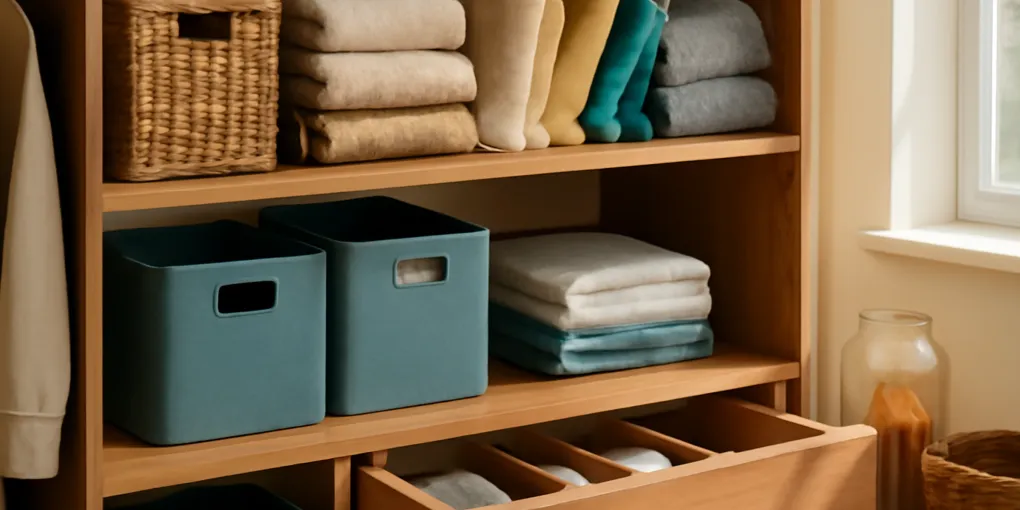
Use bins for categories that slump, tangle, or contain many small pieces: scarves, leggings, swimsuits, winter accessories, off-season knits, kids’ clothes, and backup basics. Open-front bins are easier for daily shelves because you can see and pull without removing the whole container.
Bins also beat dividers when the shelf is high. A labeled bin with a handle lets you bring the category down as one unit. That is safer than reaching over your head to pull one soft item from a leaning stack.
The risk is overfilling. A fabric bin packed tight becomes another mystery cube. Keep the category narrow and label it with plain words: winter hats, workout leggings, extra sheets, not miscellaneous.
Closet shelf divider scorecard
| Factor | Weight | Score | Rationale |
|---|---|---|---|
| Research | 30% | 22/30 | The mechanism is strong: visible category boundaries reduce stack mixing when the shelf and clothing type fit. |
| Evidence Quality | 25% | 16/25 | Home outcomes depend on user behavior, shelf construction, and retrieval height rather than the divider alone. |
| Value | 20% | 17/20 | A small divider set is inexpensive if it prevents one high-friction shelf from collapsing weekly. |
| User Signals | 15% | 11/15 | Smooth edges, correct clamp size, and low stack height determine whether the lane is used. |
| Transparency | 10% | 9/10 | The limits are clear: dividers are poor for tall, soft, slippery, or overhead mixed stacks. |
Fit matrix
| Shelf problem | Best fix | Avoid |
|---|---|---|
| Short folded sweater stacks | Shelf dividers | Deep bins that hide daily items |
| Slippery leggings or scarves | Open-front fabric bins | Tall divider lanes |
| High overhead shelf | Handled labeled bin | Loose stacks above eye level |
| Wire shelving | Bin or wire-compatible divider | Clamp divider made for thick wood |
| Mixed purse and clothing pile | Separate lanes plus labels | One wide miscellaneous zone |
A 10-minute reset before buying
Pull down one shelf, not the whole closet. Sort items into three groups: folded stacks, soft small items, and things that do not belong on that shelf. Count how many lanes you actually need.
Build a test stack without dividers. If the category cannot stand in a short stack on its own, put it in a bin. If it stands but drifts sideways, a divider can help. If the shelf is too high to maintain weekly, use a handled bin even if the stack looks neat on reset day.
Set a stack cap. For bulky sweaters, four to six per lane is often the realistic limit. For jeans, a slightly taller stack may work. If the lane overflows, the answer is not another divider squeezed into the same shelf. Move off-season items to storage or edit duplicates.
Maintenance rhythm
Once a week during the season, straighten only the active lanes. Do not refold the whole closet. The useful question is whether each lane still has one category and whether one item can be removed without dragging the stack forward.
At season change, remove items that are no longer active. Shelf dividers are best for in-season access. Off-season sweaters, ski layers, or guest bedding usually belong in labeled bins above or below the active shelf.
Closet shelf divider FAQ
Are acrylic dividers better than metal dividers?
Acrylic looks cleaner and is gentle when edges are smooth. Metal can be sturdier and thinner. Fit matters more than material: the divider must match shelf thickness and depth.
Can dividers be used for handbags?
Yes, for bags that stand upright and are not overloaded. Heavy bags may push dividers sideways or need cubbies instead.
Why do my sweater stacks lean even with dividers?
The stack is probably too tall, too soft, or being pulled from the middle. Lower the stack height, fold consistently, or move bulky sweaters into open-front bins.
Reader test
A reader can choose dividers for short folded stacks, open-front bins for soft or high shelves, and label clips for lane discipline. This article is specific to closet shelves because it covers clamp thickness, sweater compression, overhead retrieval, wire versus solid shelving, and divider lane height.
Frequently Asked Questions
- They work for short, stable stacks on solid shelves. They fail when stacks are too tall, shelves flex, clothing slumps, or too many categories share one lane.
- Bins are better for soft, slippery, or mixed items. Dividers are better for folded categories that can stand in short stacks.
- Keep stacks low enough that one item can be removed without pulling the whole column forward. For many closets, that means four to six bulky sweaters per lane.