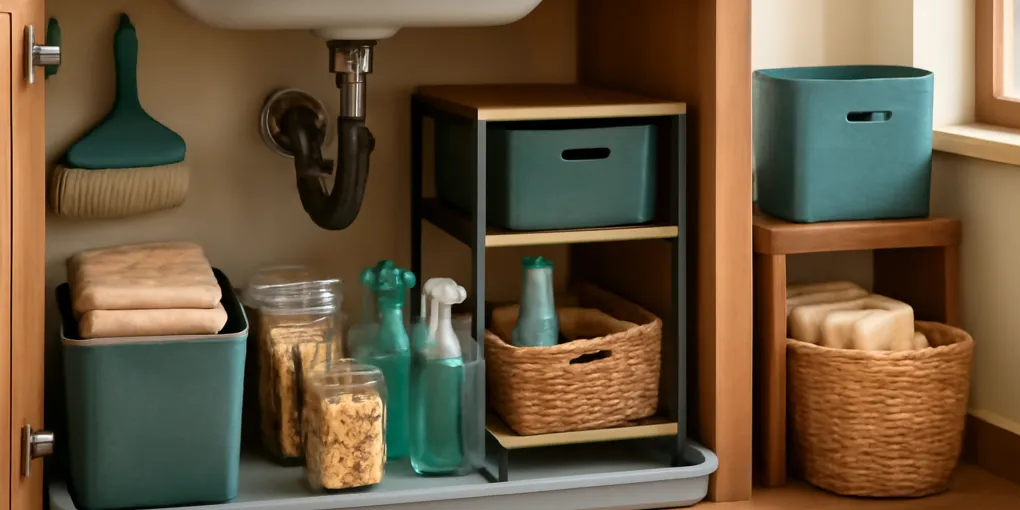
Best Under-Sink Leak Trays and Cabinet Organizers for Small Kitchens
Buyer's GuideWaterproof Under-Sink Drip Tray Mat
Best first layerBest For: Leak-prone cabinets, rental kitchens, and older sink bases
$18-45
Quick picks
| Product | Key Specs |
|---|---|
| See price on Amazon |
|
| See price on Amazon |
|
| See price on Amazon |
|
Product availability, certifications, and retailer details can change; check the current Amazon page before buying.
The best under-sink organizer is not the tallest rack or the prettiest basket. It is the one that keeps plumbing visible, catches small drips early, and lets you reach the bottle you actually use without knocking over a back row of cleaners. Under a kitchen sink, storage and leak detection have to work together.
For most homes, start with a waterproof under-sink drip tray mat (search current options on Amazon). Add a pull-out organizer only after the tray fits around the plumbing. If your cabinet is narrow or rented, a divided cleaning caddy (browse washable caddies on Amazon) may be safer than installing tracks.
This guide is different from a general under-sink declutter because the first job is water control. If your bathroom cabinet is the bigger problem, start with best under-sink bathroom organizers instead; bathroom storage has different humidity, product, and medicine constraints.
Quick picks for under-sink leak control
- Best first buy: Search Amazon for waterproof under-sink drip trays, chosen by exact cabinet floor dimensions and raised edges.
- Best access upgrade: Search Amazon for two-tier under-sink pull-outs, chosen only if it clears plumbing and shutoff valves.
- Best renter option: Search Amazon for divided under-sink caddies, chosen when you need a removable system with no drilling.
- Skip: fabric bins, solid-front boxes that hide leaks, and shelves that block access to valves.
What an under-sink tray must do
A useful leak tray has three jobs: cover the cabinet floor, contain a small spill long enough for you to notice, and remove easily for cleaning. Raised edges matter because a flat liner can still let water creep into particleboard seams. A flexible silicone tray may be easier to trim around pipes, while a rigid plastic pan can be easier to lift out without spilling.
Measure the cabinet floor at the narrowest usable width, not just the door opening. Many sink bases have a center stile, disposal cord, supply line, or old repair patch that reduces usable space. If the tray buckles at the back, water can run underneath it and defeat the point.
Look for a smooth surface. Nubby liners and deep decorative channels can trap grime, especially near dish soap and trash bags. Under-sink storage is already a low-light space. The tray should make leaks easier to see, not create more shadows.
When a pull-out organizer is worth it
A pull-out organizer is worth buying when the cabinet is deep enough that daily products disappear behind the drain trap. The sliding motion reduces the need to crouch and dig, which is why these systems feel so satisfying in product photos. But under a sink, the best sliding shelf is narrower than the cabinet. It should leave a clear lane for the P-trap, garbage disposal, water lines, outlet, and shutoff valves.
Before ordering, sketch the cabinet from above. Mark the drain pipe, disposal, valve handles, and door hinges. Compare that drawing with the organizer dimensions. A full-width two-tier drawer often fails under a disposal because the upper basket collides with plumbing. A narrow side-mounted pull-out or single lower basket may be more practical.
If you already own a pull-out cabinet organizer, compare the fit points in our Simplehuman pull-out cabinet organizer review before assuming another under-sink unit will fit the same way.
Shopping option: Search Amazon for two-tier pull-out under-sink organizers.
Best budget setup: tray plus caddy
The cheapest reliable setup is a raised-edge tray on the cabinet floor plus one or two removable caddies. Put dish soap, dishwasher pods, and daily sprays in the front caddy. Put occasional items such as stainless cleaner or extra sponges in a second bin toward the back.
The caddy should be washable and open-topped. A handle helps because you can lift the whole group out before checking for leaks or wiping the tray. Dividers help only if they fit your bottle sizes. Tall spray bottles may tip in short bins, while wide dish-soap bottles can waste space in narrow compartments.
This approach is especially good for renters because it avoids screws, adhesive tracks, and permanent liners. It also keeps the shutoff valves reachable. If a pipe drips, you can remove the caddy in seconds instead of unloading a built-in rack one bottle at a time.
Shopping option: Search Amazon for divided cleaning caddy bins.
Fit checks before you buy
Use this cabinet-specific checklist before choosing the product:
| Fit check | What to verify |
|---|---|
| Floor coverage | Tray covers the likely drip path below pipes, disposal, and soap dispenser lines |
| Raised edge height | Edge can contain a small leak but does not block doors or pipes |
| Valve access | Shutoff valves remain visible and reachable without emptying the cabinet |
| Cleaning access | Tray or caddy can lift out without scraping plumbing |
| Bottle height | Spray bottles stand upright below the sink basin and disposal |
If one product cannot satisfy these checks, combine simpler pieces. A tray does not have to organize bottles perfectly. A caddy does not have to protect the cabinet floor. Separating those jobs often produces a better system than buying one oversized unit.
Installation mistakes that create new clutter
The most common under-sink mistake is installing a tall two-tier rack before editing the cabinet. Pull everything out first. Keep only sink-related supplies in this zone: dish soap, dishwasher detergent if used nearby, a small trash-bag roll, a scrub brush, and one or two daily cleaners. Bulk paper towels, backup cleaners, pet food, and rarely used specialty sprays usually work better somewhere dry and visible.
The second mistake is blocking the shutoff valves. An organizer that stores more bottles but makes the valves hard to reach is a bad trade. Leave a clear hand path to both hot and cold valves. If you need a flashlight to find them after the organizer is installed, the system is too dense.
The third mistake is letting the tray become a second shelf. A leak tray should stay mostly clear. Put the caddy or pull-out basket on top of it, but do not fill the tray edges with loose sponges, tablets, and refill caps. Those pieces absorb moisture and make a small drip harder to notice.
Kitchen sink versus bathroom sink fit
Kitchen sink cabinets usually need stronger spill control because they sit below a garbage disposal, dishwasher line, soap dispenser tube, or heavier daily cleaning supplies. A wide raised-edge tray is the priority. Bathroom sink cabinets usually need humidity control, cosmetic sorting, and medicine separation. That is why a cosmetic drawer divider can be useful in a bathroom but pointless under a kitchen sink.
If the kitchen cabinet holds dish towels, move them. Textiles hide dampness and pick up odors quickly. If the bathroom cabinet holds cleaning chemicals near personal-care products, split the categories before buying bins. The organizer should match the room’s risk, not just the cabinet’s dimensions.
Small kitchens also need a capacity limit. One daily dish-soap bottle, one dishwasher supply, and one current cleaner are usually enough at the sink. Backups can live on a higher pantry or utility shelf. The leak tray should protect active supplies, not become a basement for every refill purchased on sale. If the tray is full before a leak happens, it cannot do its main job.
Safety and source notes
The EPA’s mold cleanup guidance emphasizes drying water-damaged materials quickly and controlling moisture at the source. EPA WaterSense leak guidance also treats small plumbing leaks as worth finding and fixing early. That is why under-sink organization should reveal drips instead of hiding them behind solid bins.
Organizers cannot repair plumbing. If you see swelling, soft cabinet material, active dripping, a loose supply line, or a recurring puddle, stop organizing and fix the water source first.
FAQ
Is a waterproof mat better than contact paper under the sink?
Usually, yes. Contact paper can make a cabinet look cleaner, but it does not contain water well and can hide damage underneath. A raised-edge tray or mat is easier to lift, inspect, and clean.
Should cleaners be stored in open bins or closed boxes?
Use open bins for daily cleaners so labels, leaks, and damaged caps are visible. Closed boxes can work for dry backup supplies, but they are a poor choice for products that might drip or need quick access.
What should not be stored under a kitchen sink?
Avoid storing paper towels, pet food, electronics, and bulk goods that would be ruined by a leak. If you keep trash bags there, place them in a caddy or dry bin above the tray rather than directly against the cabinet floor.
Sources
- EPA, Mold Cleanup in Your Home — supports moisture control and prompt cleanup after water problems.
- EPA WaterSense, Fix a Leak Week — supports finding and fixing household leaks before they waste water or cause avoidable damage.
Bottom line
Buy the leak tray first, then decide whether a pull-out organizer or removable caddy solves the access problem. The best under-sink setup keeps bottles reachable, water visible, and shutoff valves clear before a small drip becomes cabinet damage.