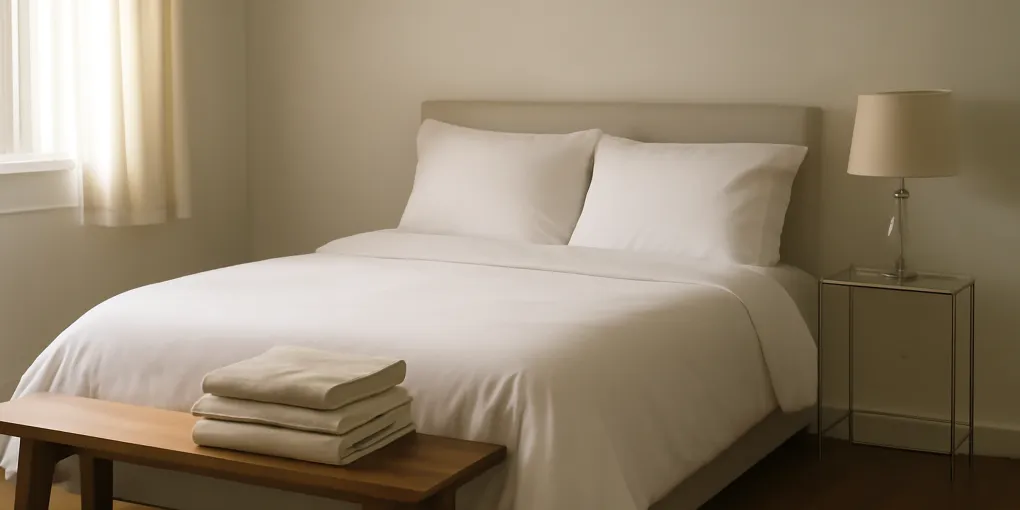
Post-Guest Room Reset Protocol: Clear the Room Without Turning It Into a Cleaning Marathon
ProtocolA guest room often becomes a half-cleaned holding zone: used linens on a chair, forgotten chargers on a dresser, and a bag of items nobody remembers to return. A good reset does not mean deep-cleaning every surface after every visitor. It means closing the visit so the room can function again.
This protocol is for practical households with kids, caregivers, short-term renters, or rotating guests. The point is not guest perfection, it is system consistency.
Use four passes in order
Set a 20-minute timer and make only four passes:
- Belongings: collect obvious guest items into one open return bag or tray.
- Laundry: strip used linens and towels, then start the load or place it in the laundry queue.
- Trash and dishes: remove cups, wrappers, receipts, and recycling.
- Room reset: remake the bed after linens are dry, clear the main surface, and restore the room’s normal furniture layout.
This order matters. Cleaning around a phone charger or forgotten sweater creates two extra trips later.
Build a guest departure note
Use one note for each visit with three fields:
- what left behind,
- what failed in the room,
- when the room should be reviewed again.
Keep the note short:
- guest name,
- linens used count,
- lost/forgotten items,
- maintenance or fixture issues noticed,
- next visit date if already known.
This one note helps in repeated stays.
Clean what was actually used
CDC guidance says regular cleaning is usually enough in normal occupancy unless there is illness risk or a sensitive household member (CDC home cleaning guidance).
Prioritize these high-touch points:
- door handles and light switches,
- bedside and desk surfaces,
- room remote controls,
- bathroom hardware,
- charger ports and remotes.
When cleaning products or disinfectants are used, follow the label for ventilation and contact time.
Create a reset standard for repeat use
Not every guest room should become a hotel-ready suite. Define three room states instead:
- Visit complete: basic reset done.
- Next week expected: replace linens, replace guest supplies, clear overflow.
- High wear: deeper reset within 24 hours of checkout.
Choose a state as soon as check-out is confirmed. A simple rule is better than a variable standard.
Prevent the room from becoming invisible storage
A common failure is turning the guest room into an emergency shelf after every visit. Stop this by limiting overflow surfaces:
- one charging station,
- one coat rack,
- one basket for guest-only items,
- one closed drawer for temporary work materials.
Do not use the room for ongoing office overflow unless the office has its own labeled bin and clear close date.
For higher-traffic homes, keep a visual “return basket” at the room entrance and nothing else goes in.
Handle forgotten items without conflict
When a guest leaves valuable or sensitive items, follow this protocol:
- Capture a photo of each item and location.
- Send a short message within 24 hours.
- Set a decision deadline.
- Keep the items only in the labeled return system.
If the item is a document, lockbox item, or medication, follow a safer handoff path (photo + explicit return question).
The 24-hour reset variant
For one-night use, shorten the protocol:
- strip linen and trash first,
- wipe high-touch points,
- restore bed and surfaces,
- leave a note on any replacement needed.
No deep cleaning unless the room has visible contamination or a higher-risk occupant.
The one-week reset variant
For frequent weekly rentals or rotating family guests:
- pre-visit checklist before arrival,
- post-visit four-pass reset,
- laundry + replace essentials on the next routine day,
- quick inspection before next expected stay.
This keeps the reset from stacking and creates predictability.
Troubleshooting common breakdowns
- Room still “looks off” after reset: reduce visible surfaces by removing extra decor for guests.
- Laundry backlog appears every visit: move from spot washing to timed daily laundry slot.
- Forgotten items keep recurring: move one charging spot and one shelf into dedicated return stations.
- Guests are unclear on what counts as “stay items”: define a short checklist sent before arrival.
Keep room care without overkill
If the visit involved medical care needs, active injury, or severe sensitivity, add one infection-risk pass. For ordinary stays, keep the protocol short so family burden stays realistic.
For a weekly system, use weekend laundry reset system. For humidity or moisture issues, pair with linen closet moisture and airflow guide.
Bottom line
A post-guest room reset works when it leaves no hidden debt for the next person. Collect, launder, clear, reset, then return to a normal room baseline. The goal is a reliable sequence—not a perfect one-off deep clean.
Two-week reset operating cycle
If your home sees frequent visitors, keep a repeated cycle:
- Week 1: run full four-pass reset after each checkout, then set one replacement target (for example, one duvet or one pillowcase).
- Week 2: trim one recurring source of friction and keep everything else the same.
- End of week 2: compare missed items and reset time.
Choose the single item with highest repeat rate. Often it is towels, a missing charger, or an extra dish left on the room surface.
When one category dominates, address only that category and repeat.
Use a decision tree for unusual situations
When an unusual condition appears, do one of three things:
- Condition stable: rerun the same four passes on the next scheduled day.
- Condition unstable (items still scattered): shorten guest window assumptions and add a pre-arrival handoff message.
- Condition high-risk (health concern, water leakage, severe mess): isolate and clean only affected area, then run focused reset and restore one surface at a time.
Avoid adding full room renovation tasks to this protocol. If the room has structural issues, track it under repair workflows instead.
What this protocol should not become
- a full deep-clean schedule for every visit,
- a perfect inventory for every guest,
- a generic housekeeping manifesto.
A guest-room protocol works when it stays executable under stress. If the sequence exceeds 20 minutes, reduce the objective and preserve only one “close room enough” standard.
A simple 7-point closeout card for each visit helps teams coordinate:
- linens replaced, 2. high-touch cleaned, 3. forgotten items labeled, 4. bin cleared, 5. room layout reset, 6. next stay log updated, 7. recovery action assigned if needed.
Frequently Asked Questions
- Usually regular cleaning is enough. CDC says disinfection is generally not needed unless someone is sick or someone in the household is at higher risk of illness.
- Put them in one labeled temporary return bag, message the guest with a photo if needed, and set a pickup or mailing decision date. Do not scatter them into general storage.