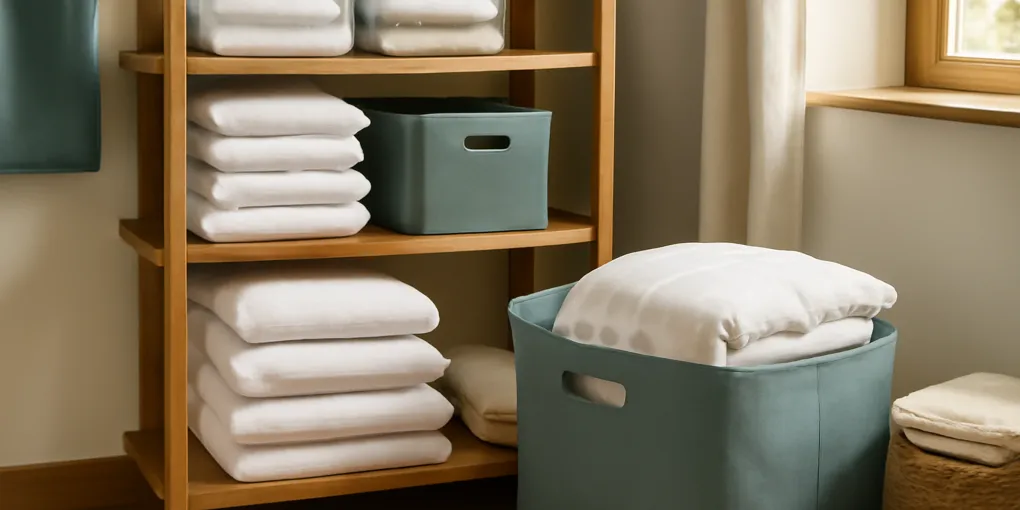
Guest Bedding Turnover Bin Protocol: Store Sheets, Towels, and Pillowcases Without a Linen-Closet Dig
ProtocolQuick picks
Clear lidded linen bin
★ Top pick Best for closet shelves- Best for: One complete guest sheet and towel set on a linen-closet shelf
- Price cue: $16-35
- Watch out for: Bins that are too deep hide missing pillowcases
- Keeps the set together
- Protects from dust
- Easy to pull before guests arrive
- Can be overfilled
- Needs shelf-height clearance
Soft zip bedding storage bag
Best for high shelves- Best for: Occasional guest bedding stored above eye level or under a bed
- Price cue: $12-28 per set
- Watch out for: Floppy sides make it harder to see a missing item
- Compresses lightly
- Works outside a closet
- Often has a clear window
- Less stack-stable
- Zippers fail when overpacked
A guest bedding turnover bin is a small linen-closet system for one job: making the next guest setup easy. It keeps a complete sheet and towel set together so you are not hunting for pillowcases, matching sheets, and clean towels the night before someone arrives.
If your linen closet is already crowded by towels and seasonal bedding, read our best stackable clear bins for linen closets before adding another container.
Quick picks
- Best closet shelf option: Search Amazon for clear lidded linen bins when the set should be visible, dust-protected, and easy to pull.
- Best high-shelf or under-bed option: Search Amazon for soft zip bedding bags when rigid bins do not fit.
The key is not buying a bigger linen bin. The key is packing one complete turnover set and refusing to let unrelated spare linens join it.
Why guest bedding gets messy
Guest bedding is intermittent. Daily sheets return to beds. Daily towels return to bathrooms. Guest sheets, sofa-bed sheets, extra pillowcases, mattress protectors, and spare towels can sit for months between uses. During that time, they drift into the general linen pile.
The failure usually appears under pressure. A guest is arriving, and the fitted sheet is in one closet, pillowcases are in another, towels are in the laundry, and the blanket smells stale from a high shelf. The home does not need more linens at that moment. It needs one complete reset kit.
A turnover bin turns a vague category into a finished packet.
What makes a turnover bin work
A guest bedding bin works when it answers one question without a closet search: can this bed be made tonight? Pack by bed size and finished use, not by linen type. A queen guest-bed bin should contain the fitted sheet, flat sheet if used, pillowcases, mattress protector if needed, and the towel set that actually belongs with that guest setup.
Choose a container that protects clean fabric without hiding missing pieces. Clear sides or a large label help, but the more important feature is restraint: the bin should be full enough to hold one reset and small enough that extra random pillowcases cannot disappear into it. If the blanket needs air or a different shelf, label that location on the bin instead of forcing stale bulk into the same container.
Step 1: Define the guest bed
Start with the bed guests actually use. Is it a queen guest bed, twin daybed, pullout sofa, air mattress, or kids’ floor mattress? Write that size on a temporary label before sorting linens.
Do not build a bin for every imaginary guest scenario. If the home has one queen guest bed, the primary turnover bin should be queen. Air-mattress sheets or seasonal blankets can live in a separate overflow zone only if they are used.
The bed-size decision prevents the classic linen-closet problem: five fitted sheets of unknown size and no confidence on guest night.
Step 2: Pack one complete turnover set
A useful bin contains a complete reset, not a random stack. For most guest beds, pack:
- One fitted sheet in the correct size.
- One flat sheet if your household uses one.
- Two pillowcases for a queen or full bed, one for a twin if that is realistic.
- One towel set per expected guest: bath towel, hand towel, and washcloth if you use them.
- A small card listing what belongs in the bin.
Keep bulky blankets, duvets, and extra pillows separate unless the bin is designed for them. Bulky items make the core set hard to inspect. A blanket can have its own labeled shelf or bag.
Step 3: Choose the container after the set is folded
Fold the full set before shopping. Measure the stack height, width, and depth. Then choose a container that fits the folded set with a little air, not a container that invites three extra sheet sets.
A clear lidded bin works best on a normal shelf because it protects against dust and shows whether the towel set is present. A soft zip bag works better on high shelves or under beds, but it is less stack-stable. If you use a soft bag, choose one with a clear window and do not compress damp or warm laundry inside it.
Avoid opaque storage tubs unless the label is very specific. A black bin labeled “linens” will eventually hold mystery fabric.
Step 4: Add a reset card
The reset card is what keeps the system alive after the first guest visit. It should be short enough to read while folding laundry.
Use a card like this:
- Wash sheets, pillowcases, and guest towels.
- Check for stains, smells, missing buttons, or worn elastic.
- Refold the complete set.
- Return the set to the guest bin.
- Note any missing item before the next guest.
The card prevents a half-reset. Without it, the fitted sheet may return to the bin while pillowcases sit in a general laundry pile.
Step 5: Store for the next arrival, not for display
Put the bin where someone can reach it before guests arrive. Eye-level or chest-level shelves are better than deep overhead shelves if guests come often. If guests are rare, a high shelf is fine as long as the label is clear.
Keep the bin away from damp bathroom floors, musty basements, and cleaning chemicals. Linens should smell clean when opened. If a closet has humidity problems, solve that before sealing bedding for months.
A guest bin should not be decorative storage. It should be easy to remove, open, verify, and return.
What to keep out
Do not add unmatched pillowcases just because they are clean. Do not add old towels you would be embarrassed to hand to a guest. Do not add sentimental quilts that need special care. Do not add spare mattress pads for bed sizes you no longer own.
The bin is a turnover kit, not a fabric archive. If something does not help the next guest setup happen faster, it belongs somewhere else or leaves the house.
After-guest reset
After guests leave, strip the bed and start the reset immediately if possible. Wash the set, dry it fully, and inspect before folding. Damp storage creates odor and can damage fabric. Stained or worn pieces should be replaced or retired before they re-enter the bin.
Then repack using the card. If a towel is still in the laundry, leave the bin open or add a visible note. A closed incomplete bin creates false confidence.
This is also the moment to decide whether the household really needs a backup set. Frequent hosts may need one. Occasional hosts often do better with one excellent ready set and less linen clutter.
FAQ
Can I store guest bedding in the guest room closet?
Yes, if the closet stays clean, dry, and accessible. It can be better than a crowded hall linen closet because the set lives near the bed it serves.
Should I use vacuum bags for guest bedding?
Use them only for bulky seasonal blankets, not for the active turnover set. Vacuum bags make quick inspection harder and can encourage storing more than the household uses.
What if guests use different bed sizes?
Create separate small labels by size and keep only the sizes you actually host. If an air mattress is used once a year, its sheets can live with the air mattress instead of in the main guest bin.
Sources and care notes
- CDC household cleaning and hygiene basics: https://www.cdc.gov/hygiene/about/index.html
- American Cleaning Institute laundry basics and fabric-care guidance: https://www.cleaninginstitute.org/cleaning-tips/clothes/laundry-basics
- This protocol is an organization system, not a textile-preservation method. Follow fabric care labels and store linens fully dry in a clean, dry location.