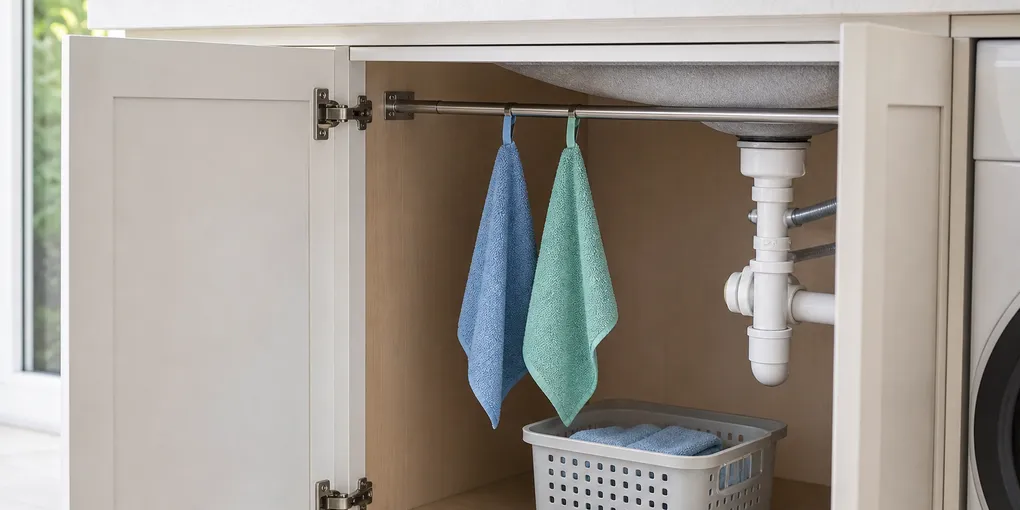
Under-Sink Cleaning Cloth Drying Station Protocol: Keep Cloths Dry, Separate, and Safe
ProtocolIf a cleaning cloth is wet and goes directly into a closed under-sink container, the problem is usually not that the cloth is poor quality. The problem is a process gap.
This protocol uses three zones and one short routine:
- Use zone: where cloths are used.
- Drying zone: where cloths wait briefly before full disposal or laundering.
- Storage zone: only for fully dry, clean cloths.
You can keep a lot of products in the cabinet and still have a bad cloth system if these zones are mixed.
Why this fails in most cabinets
Under-sink spaces are often humid, cluttered, and visually busy with bottles, bins, and plumbing. Damp cloths in a hidden bin accumulate odor quickly because the air exchange is low and the cloth can remain wet under a lid.
The practical failure pattern is predictable:
- Cloth is used, then folded while damp.
- A lid or bin feels tidy, so it is stored.
- The same cloth reappears damp in the next cycle.
- Odor begins, and products become harder to find.
Separating the zones fixes this without requiring expensive hardware.
Build the drying station in three steps
Step 1: Create a three-container layout
If you already have one under-sink organizer, keep the container count low and repurpose existing pieces:
- Clean dry cloth bin: narrow and fully open airflow, only for dry textiles.
- Active drying spot: a hook, strap, or open rail for used cloths that are visibly damp.
- Laundry hold bag: washable bag for used cloths waiting for a full load.
Do not store active drying cloths in the same container as dry clean cloths.
Step 2: Move from event to event
Use this simple event loop:
- Use cloth -> place on drying spot immediately.
- If used with heavy residue -> move to laundry hold.
- Once dry -> move to clean dry bin.
You are not building a permanent zone for every cloth behavior; you are building a timing rule.
Step 3: Define your cabinet reset
At end of each day, open the cabinet once and clear only the active drying spot. Wipe the bin rim, then reset labels if needed. The goal is short, repeatable maintenance, not a weekly overhaul.
Daily process: two minutes, no improvisation
- Before meal cleanup ends, move all visibly wet cloths off the cabinet floor.
- Hang or place them on the active drying surface.
- Sort by use type if needed (surface cleaning vs. floor-only cloths).
- Return only dry cloths to the dry storage bin.
- Move used cloths to laundry path with destination written on the bag or basket.
If anything is still damp after one drying loop, do not return it to the cabinet.
Evidence-backed considerations
The guidance is practical rather than technical: reduce dwell time of moisture in enclosed spaces. That is the same core principle used for home moisture control where damp, organic residue, and poor airflow combine.
For routine household surfaces, use conservative separation:
- No wet textiles above cleaning products.
- No wet textiles with empty bottles or trash bags.
- No wet textiles in same bin as food-surface cloths if there is residue overlap.
These are not productivity tips. They are hygiene and maintenance rules.
Common mistakes
Mistake 1: Treating one bin as a one-size solution
A single under-sink bin works for dust-level clutter, not for damp-textile rotation. It only hides the sequence and delays the fix.
Mistake 2: Using only a hanging rail
A rail helps when cloths are lightly damp, but heavy use cloths still need a dedicated laundering route. Drying must be short, not decorative.
Mistake 3: Keeping an “all-in-one” label
One label for everything increases accidental mixing. If a label must be read often, it usually failed as a sorting cue. Split into clear states.
Practical maintenance schedule
- Every day: move damp cloths out and keep drying spot clear.
- Twice per week: wash bins or rails used for cloth rotation if they have visible residue.
- Weekly: remove all cloths not used this week and reassess zone capacity.
This rhythm catches odor buildup before it becomes a recurring task.
The no-buy two-bag check
If your home has no hook space, use two visible zones only for two weeks:
- A hook or clip line for the active drying spot.
- A basket for used laundry transfer.
Everything else should stay out of the under-sink until those two zones hold reliably for seven days. If a zone overflows, reduce zone count next, not add more products.
At the end of each week, test recovery:
- Are wet cloths appearing less often after cleaning tasks?
- Are two users agreeing on what is safe to return to the cabinet?
- Is the cabinet floor dry after each reset?
If one answer is consistently no, the issue is not brand selection. It is a route and timing issue.
What can go in each zone
- Dry storage zone: clean wipe cloths, low-use backup cloths, and only items confirmed dry.
- Active drying zone: damp cloths from counters and appliances in transition.
- Used laundry zone: soiled or wet cloths with unknown recovery timeline.
When in doubt, move it toward “used” and away from cabinet storage.
Related systems
If your home has no spare cabinet area
You can run this protocol without buying a new hook or rack:
- Use one wall hook or doorknob-mounted ring for active drying.
- Use a basket in a nearby closet for used laundry transfer.
- Move only the minimum two bins into the cabinet to keep the under-sink zone functional.
Sources
- CDC mold and damp-material guidance on minimizing moisture retention in home environments.
- CDC cleaning and hygiene guidance for separating active cleanup tools from reused surfaces.
- Consumer-level home safety sources on storage congestion and material handling under sinks.
Frequently Asked Questions
- A lid can hide moisture, but it does not solve wetness. Wet cleaning cloths need a short drying step before bin storage.
- No. Shared bins increase cross-use, odor transfer, and uncertainty. Keep clean dry cloths, active cloths, and used cloths in separate bins or zones.
- Long enough to remove the obvious damp feel. Most cloths need a full air-dry transition or laundering before they return to a closed cabinet.
- The combination of moisture, dissolved residue, and restricted airflow in a closed space. If all three happen together, odor becomes a repeating daily issue.